
As an ISO/IEC 17025 accredited (CNAS) independent laboratory, we provide complete polymer and plastic testing services to support material selection, production quality control, failure analysis, and regulatory compliance. Our testing covers raw resins, compounded plastics, finished parts, and recycled polymers for automotive, packaging, medical device, electronics, and construction industries.
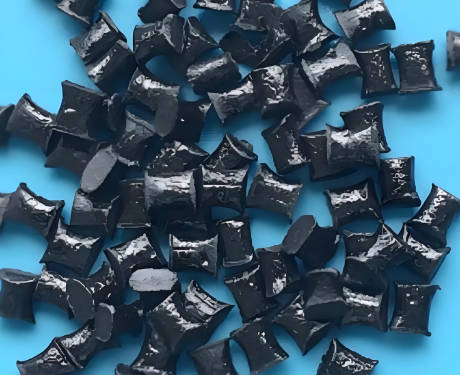
Types of Polymer & Plastic Samples We Regularly Test
Our plastic testing lab accommodates a wide range of sample forms and polymer types:
- Thermoplastics (polyethylene – PE, polypropylene – PP, polystyrene – PS, ABS, polycarbonate – PC, polyamide – PA/nylon, polyoxymethylene – POM, polybutylene terephthalate – PBT, polyethylene terephthalate – PET, polyvinyl chloride – PVC, polymethyl methacrylate – PMMA, thermoplastic polyurethane – TPU)
- Thermosets (epoxy, unsaturated polyester, phenolic, polyurethane, melamine formaldehyde, silicone rubber)
- Elastomers and rubbers (natural rubber, styrene‑butadiene rubber – SBR, nitrile rubber – NBR, ethylene‑propylene‑diene – EPDM, chloroprene – CR, silicone rubber, fluorocarbon rubber – FKM)
- Engineering and high‑performance plastics (polyetheretherketone – PEEK, polyphenylene sulfide – PPS, polyimide – PI, polysulfone – PSU, polyetherimide – PEI, liquid crystal polymer – LCP)
- Biodegradable and bio‑based plastics (polylactic acid – PLA, polyhydroxyalkanoates – PHA, polybutylene succinate – PBS, starch blends, cellulose derivatives)
- Recycled plastics (post‑consumer regrind, flake, pellet – PE, PP, PET, PS, ABS)
- Plastic films, sheets, and laminates (flexible packaging, agricultural film, shrink wrap)
- Pipes, profiles, and injection molded components (automotive parts, appliance housings, consumer goods)
- Foams (polyurethane foam, expanded polystyrene – EPS, extruded polystyrene – XPS, polyethylene foam, melamine foam)
- Masterbatches and filled compounds (color masterbatches, additive masterbatches, glass‑filled or mineral‑filled plastics)
Mechanical Performance Testing
- Tensile properties – Using a universal testing machine with suitable load cell and extensometer. Specimens prepared by injection molding, compression molding, or machined from finished parts. Test speed varies by material (e.g., 1 mm/min for rigid plastics, 50–500 mm/min for films and elastomers). Reports include tensile strength (MPa), yield strength (MPa), modulus (MPa), elongation at break (%), and stress at specified elongation. Important for material specification and design safety.
- Flexural properties – Three‑point bending fixture with support span adjusted to specimen thickness. Test speed typically 2 mm/min for thermoplastics. Determines flexural strength and flexural modulus – key parameters for structural parts like housings and beams.
- Impact resistance (Izod and Charpy methods) – Pendulum impact tester with various energy capacities. Notched or unnotched specimens conditioned at specified temperature (e.g., 23°C, -20°C, -40°C). Reports impact strength in kJ/m² or J/m. Essential for assessing toughness and brittleness of plastic parts under sudden load.
- Compression properties – For load‑bearing plastic components such as spacers, insulators, and foam cores. Specimen height‑to‑diameter ratio controlled. Reports compressive strength, compressive modulus, and deformation at yield.
- Hardness testing – For plastics: Rockwell (R, L, M scales), Shore (D for rigid plastics, A for elastomers), or Ball indentation hardness. Provides quick quality check of surface hardness and cure level.
- Tear strength – For plastic films, sheets, and elastomers. Uses trouser or angle specimen configuration. Reports tear resistance in kN/m or N/mm. Critical for packaging films and flexible membranes.
- Shear strength – For plastic rivets, snap‑fits, and bonded assemblies. Lap shear or punch shear method. Determines load capacity of plastic‑to‑plastic or plastic‑to‑metal joints.
Thermal & Thermo‑Physical Analysis
- Differential scanning calorimetry (DSC) – Measures glass transition temperature (Tg), melting temperature (Tm), crystallization temperature (Tc), and enthalpy changes. Provides degree of crystallinity by comparing heat of fusion to 100% crystalline reference. Essential for identifying polymer type and detecting thermal history variations.
- Thermogravimetric analysis (TGA) – Measures weight loss as a function of temperature under inert or oxidative atmosphere. Determines decomposition temperature, thermal stability, filler content (e.g., calcium carbonate, talc, glass fiber), carbon black content, and moisture/volatile content. Helps diagnose overheating damage during processing.
- Heat deflection temperature (HDT) – Determines temperature at which a plastic bar deflects by specified amount under a constant bending load (e.g., 0.45 MPa or 1.82 MPa). Indicates short‑term heat resistance for load‑bearing applications.
- Vicat softening temperature – Measures temperature at which a flat needle penetrates specimen to specified depth under defined load and heating rate. Used for quality control of amorphous and semi‑crystalline thermoplastics.
- Melt flow index (MFI) or melt volume rate (MVR) – Measures flowability of molten thermoplastic under specified temperature and load. Expressed in g/10 min or cm³/10 min. Critical for verifying consistent viscosity of incoming resin and optimizing injection molding parameters.
- Coefficient of linear thermal expansion (CLTE) – Using thermomechanical analyzer or dilatometer. Measures dimensional change of plastic per degree temperature change. Important for applications with tight tolerances and metal‑plastic assemblies.
- Brittleness temperature (low‑temperature impact) – Determines the temperature at which plastic or elastomer becomes brittle and fails under impact. Essential for cold‑climate applications like automotive exterior parts.
Chemical & Environmental Aging Resistance
- Chemical resistance / immersion testing – Specimens immersed in specified liquids (acids, alkalis, solvents, oils, fuels, cleaning agents) at controlled temperature for defined durations. Evaluates weight change, dimensional change, hardness change, and visual appearance (cracking, swelling, discoloration). Critical for plastics in contact with chemicals.
- Environmental stress cracking resistance (ESCR) – For polyethylene and other crystalline plastics under mechanical stress in presence of active agents (detergents, oils). Bent strip or notched specimen method. Reports time to crack initiation – essential for pipe, bottle, and tank applications.
- Oxidation induction time (OIT) – DSC method under oxygen atmosphere at elevated temperature (e.g., 200°C). Measures time to onset of oxidation. Indicates effectiveness of antioxidant package and remaining thermal‑oxidative stability.
- Hydrolysis resistance – For polyesters, polyamides, and polyurethanes. Expose specimens to hot water or steam (e.g., 70°C to 120°C) and measure retention of mechanical properties (tensile strength, elongation). Key for medical device and dishwasher‑safe components.
- Weathering resistance (outdoor exposure simulation) – Using xenon arc or UV fluorescent chambers with water spray and temperature cycling. Evaluates color change (ΔE), gloss loss, chalking, cracking, and retained mechanical properties. Simulates months to years of outdoor exposure in reduced time.
- Salt spray corrosion of plastic‑metal assemblies – For plated plastic parts or plastic enclosures with metal inserts. Expose to neutral salt fog at elevated temperature (35°C), inspect for corrosion creep and blistering. Critical for automotive and marine applications.
Composition & Additive Analysis
- Polymer identification by infrared spectroscopy – ATR or transmission FTIR identifies base resin type and major additives. Compare unknown sample spectrum with reference library of thousands of commercial polymers. Fast and non‑destructive.
- Filler and reinforcement quantification – Ashing at controlled temperature (e.g., 550°C or 900°C) burns organic matrix, leaving inorganic residue. Residue weighed, then analyzed by microscopy or X‑ray fluorescence to identify filler type (calcium carbonate, talc, silica, glass fiber, carbon fiber, mica). Report filler weight percentage.
- Extractable additive analysis – Selective solvent extraction (Soxhlet or ultrasonication) followed by gas or liquid chromatography‑mass spectrometry. Identifies and quantifies antioxidants (phenolic, phosphite, thioester), UV stabilizers (HALS, benzotriazole), plasticizers (phthalates, non‑phthalates), flame retardants (brominated, phosphorus, metal hydroxide), lubricants (amides, metal stearates), and antistatic agents.
- Carbon black content – For black plastic pipes, films, and masterbatches. Thermal decomposition in inert atmosphere then oxidation at specified temperature. Weight loss difference gives carbon black percentage. Minimum 2% carbon black typical for UV protection.
- Residual monomer and volatile content – Static headspace GC‑MS. Detects residual styrene in PS, vinyl chloride in PVC, caprolactam in PA6, acrylates, and solvents at ppm levels. Important for food contact and medical material compliance.
- Density (specific gravity) – Using displacement method (water or alcohol) or density gradient column. For solid plastics, cellular plastics, or films. Used for material identification and quality check of filled compounds.
Specific Tests for Plastic Products
- Pipe and tube pressure resistance (hydrostatic test) – Plastic pipes sealed and pressurized with water at specified temperature (e.g., 20°C, 60°C, 95°C). Measures time to failure or hoop stress at failure. For water supply, gas, and industrial piping.
- Film puncture resistance – Probe or dart impact method. Measures energy to puncture thin plastic films. Critical for packaging integrity, refuse bags, and agricultural mulch.
- Seal strength and peel strength – For flexible packaging, pouches, and blister packs. Measures force to separate heat seals or adhesive bonds. Determines seal integrity and opening force.
- Coefficient of friction (COF) – For plastic films, sheets, and molded parts. Measures static and kinetic friction against steel or same material. Essential for automated handling and stacking.
- Optical properties – haze and transmittance – For transparent and translucent plastics. Haze meter measures scattered light and total transmittance. Critical for glazing, display panels, and packaging clarity.
- Electrical properties – Surface and volume resistivity, dielectric strength, and dielectric constant. For insulating plastics used in electrical and electronic applications. Tests conducted at specified temperature and humidity conditioning.
- Flammability rating – Small‑scale flame test for horizontal or vertical specimens. Classifies material as HB, V‑2, V‑1, V‑0, or 5VB, 5VA. Essential for electronics enclosures and automotive interior materials.
- Fogging behavior (condensation on glass) – For automotive interior plastics. Specimen heated in closed cell, volatiles condense on cooled glass plate. Measured by gloss reduction and gravimetric condensation. Limits set for windshield clarity.
Report & Compliance
All polymer and plastic testing methods described above are performed under our ISO/IEC 17025 quality system (CNAS accredited). Our polymer and plastic testing reports include: material description, test conditions (temperature, humidity, test speed, conditioning), individual test results with graphical curves (stress‑strain, DSC thermograms, TGA weight loss), acceptance criteria, and a clear pass/fail conclusion. Reports are accepted by global regulators and industry buyers for material certification, product approval, supply chain qualification, and failure investigation. We can also provide expert interpretation of results and recommendations for material improvement or process adjustment.




