
As an ISO/IEC 17025 accredited (CNAS) independent laboratory, we provide professional formula analysis testing services to identify unknown chemical compositions, quantify active ingredients, and reverse engineer competitive products. Our techniques support R&D, quality assurance, patent disputes, and supply chain verification for plastics, coatings, adhesives, inks, cleaning agents, and specialty chemicals.
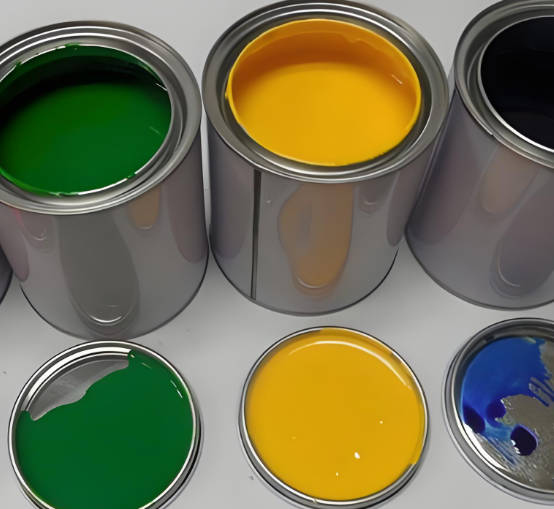
Product Samples We Regularly Test
Our formula analysis covers a wide variety of formulated products and materials:
- Polymer compounds (masterbatches, engineering plastics, elastomer blends)
- Coatings, paints, varnishes, and primers (liquid or powder)
- Adhesives and sealants (epoxy, polyurethane, acrylic, silicone)
- Printing inks and toners (solvent‑based, water‑based, UV‑curable)
- Cleaning agents, detergents, and industrial degreasers
- Lubricants, greases, and cutting fluids
- Metal surface treatment chemicals (phosphating, anodizing, passivation baths)
- Rubber compounds (natural rubber, SBR, NBR, EPDM with fillers and curatives)
- Food additives, flavors, and functional ingredients (non‑regulated analysis)
- Cosmetic formulations (creams, lotions, serums, shampoos)
- Competitor product samples for benchmarking and patent investigation
- Failure analysis residues (deposits, corrosion products, unknown contaminants)
Qualitative & Quantitative Analysis of Organic Components
- Infrared spectroscopy (FTIR) for functional group identification – Using transmission, ATR, or reflectance modes. Identifies polymers, plasticizers, resins, oils, and organic additives. Compare spectra against in‑house libraries containing over 50,000 commercial substances. Reports include spectral match percentage and functional group assignment.
- Gas chromatography with mass spectrometry (GC‑MS) – For volatile and semi‑volatile organic compounds. Technique: sample dissolved or extracted, then injected into a high‑resolution capillary column. We separate and identify solvents, residual monomers, antioxidants, UV stabilizers, plasticizers, and fragrance components. Quantify each component down to low ppm levels.
- Liquid chromatography with mass spectrometry (LC‑MS/MS) – For non‑volatile, polar, or thermally labile substances such as surfactants, dyes, preservatives, and certain polymer additives. High resolution mass analysis provides exact mass and fragmentation pattern for confident identification.
- Thermal desorption GC‑MS – For volatile organic compounds (VOCs) emitted from solid samples like rubbers, foams, or coatings without solvent extraction. Identifies residual solvents, monomers, and degradation products directly.
- Matrix‑assisted laser desorption ionization time‑of‑flight (MALDI‑TOF) – For high molecular weight polymers and proteins. Determine molecular weight distribution, end groups, and copolymer composition.
Inorganic Elemental & Mineral Analysis
- Inductively coupled plasma optical emission spectrometry (ICP‑OES) – For quantification of metals and metalloids. Sample digestion by acid (microwave or hot plate). Typical targets: fillers (calcium, aluminum, silicon, magnesium), catalysts (zinc, tin, titanium), pigments (chromium, iron, cobalt), and trace contaminants. Detection limits down to sub‑ppm.
- X‑ray fluorescence (XRF) – energy dispersive or wavelength dispersive – Non‑destructive analysis for elements from sodium to uranium. Used for rapid screening of filler content (CaCO₃, talc, clay), flame retardants (bromine, antimony), and pigment elements. Reports both semi‑quantitative and fully quantitative results using matrix‑matched calibration.
- Ion chromatography (IC) – For anionic and cationic species: chlorides, sulfates, nitrates, phosphates, ammonium, sodium, potassium. Essential for analyzing ionic contaminants in water‑based formulations or extractable residues.
- Combustion analysis (C, H, N, S, O) – For organic elemental composition. Determine carbon, hydrogen, nitrogen, sulfur, and oxygen percentages in pure substances or polymer matrices. Helps verify theoretical formula or identify unknown organic compounds.
- Ash content and residue analysis – Controlled incineration at specified temperatures (e.g., 550°C for organics, 850°C for carbon residues). The remaining ash is further analyzed by XRF or ICP to identify inorganic fillers and pigments.
Polymer & Plastic Formulation Analysis
- Polymer type identification by FTIR and thermal analysis – Distinguish between polyolefins (PE, PP), styrenics (PS, ABS, SAN), engineering plastics (PA, PC, PBT, POM), and specialty polymers (PEEK, PPS, LCP). Use both transmission FTIR and pyrolysis‑GC‑MS for cross‑linked or heavily filled polymers.
- Filler and reinforcement quantification – After ashing, separate soluble vs. insoluble fractions. Identify glass fiber, carbon fiber, talc, calcium carbonate, silica, or carbon black. Report filler weight percentage and average particle/fiber size by microscopy or laser diffraction.
- Additive package profiling – Extract additives using selective solvents (acetone, methanol, hexane). Identify antioxidants (phenolic, phosphite, thioester), UV stabilizers (HALS, benzophenone, benzotriazole), lubricants (metal stearates, amide waxes), flame retardants (halogenated, phosphorus‑based, metal hydroxides), and antistatic agents. Quantify each additive individually.
- Plasticizer identification and quantification – For flexible PVC, rubber, or adhesives. Use GC‑MS to identify phthalates (DEHP, DBP, DINP), non‑phthalates (DINCH, ATBC, DOA), and trimellitates. Report plasticizer content as % of total formulation.
- Cross‑linking degree measurement – For thermosets (epoxy, unsaturated polyester) or cross‑linked rubbers. Extract soluble fraction in appropriate solvent, calculate gel content percentage. Higher gel content indicates more complete cure.
Coating, Adhesive & Ink Formulation Analysis
- Resin system identification – Pyrolysis‑GC‑MS to identify acrylic, alkyd, epoxy, polyester, polyurethane, or silicone resins. FTIR confirms major functional groups (esters, ethers, amides, urethanes).
- Solvent composition by GC‑MS – For liquid coatings and inks. Identify individual solvents (toluene, xylene, ethyl acetate, butyl acetate, MEK, MIBK, etc.) and their ratio. Critical for VOC compliance and drying behavior prediction.
- Pigment and colorant analysis – Separate pigment from binder by centrifugation or dissolution. Identify inorganic pigments (TiO₂, carbon black, iron oxides, chrome yellow) by XRF or FTIR; organic pigments (phthalocyanine, azo, quinacridone) by LC‑MS or Raman spectroscopy. Measure pigment concentration by ashing or density separation.
- Additive package for coatings – Identify dispersants, wetting agents, defoamers, rheology modifiers, matting agents (silica), and driers (metal soaps). Quantify by extraction followed by LC‑MS or GC‑MS.
- Curing agent analysis for two‑component systems – For epoxy/polyamine or isocyanate/polyol systems. Separate hardener component and analyze by FTIR, titration (amine value, NCO content), or GC‑MS for reactive diluents. Determine mixing ratio from cured residue.
Cleaning Agent, Lubricant & Specialty Chemical Formulation
- Surfactant identification (nonionic, anionic, cationic, amphoteric) – Use LC‑MS and ion chromatography. Determine hydrophile‑lipophile balance (HLB) value from structure. Quantify active surfactant content by two‑phase titration or gravimetry.
- Builder, chelating agent & corrosion inhibitor analysis – Identify phosphonates, EDTA, NTA, citrates, silicates, borates, and amines. Use IC or LC‑MS after sample dilution. Report concentration as weight percentage.
- Lubricant base oil and additive package – Distinguish mineral oil, synthetic ester, polyalphaolefin (PAO), or polyalkylene glycol (PAG). Identify extreme pressure additives (ZDDP, sulfurized compounds), friction modifiers, antioxidants, and anti‑wear agents by GC‑MS and ICP (for Zn, P, S).
- pH and buffer system analysis – For cleaning solutions and metal treatment baths. Measure pH, then identify buffering agents (acetates, phosphates, borates, carbonates) by IC or titration. Report buffer capacity and pKa.
Report & Interpretation
All formula analysis methods described above are performed under our ISO/IEC 17025 quality system (CNAS accredited). Our formula analysis test reports include: full qualitative composition listing (with estimated concentration ranges), quantitative results for key components (accuracy ±5–10% relative), chromatograms and spectra with annotated peaks, comparison tables against reference samples (if provided), and a professional interpretation of the formulation's function, potential manufacturing process, and possible intellectual property implications. Reports are suitable for competitive intelligence, patent infringement investigations, material substitution studies, and production troubleshooting. All raw data is stored for five years and can be shared with legal or technical teams under confidentiality agreements.




