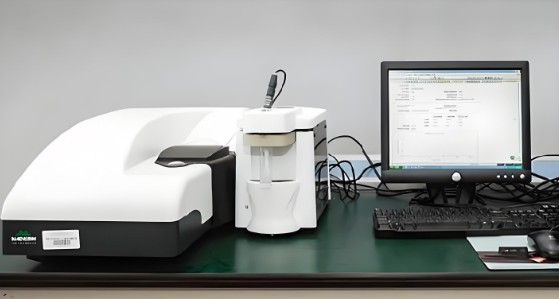
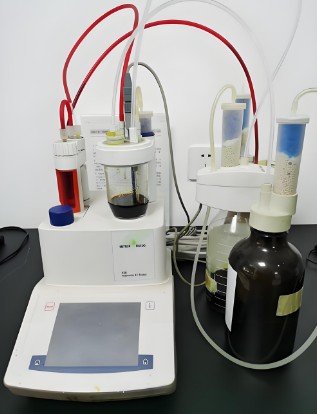
As an ISO/IEC 17025 accredited (CNAS) independent laboratory, we provide full‑scope metal testing services to support raw material verification, production quality control, failure analysis, and regulatory compliance. Our testing covers ferrous and non‑ferrous metals, alloys, welds, castings, forgings, and finished components for automotive, aerospace, construction, oil & gas, medical device, and general manufacturing industries.
Types of Metal Samples We Regularly Test
Our metal testing lab handles a wide variety of sample forms and material grades:
- Ferrous metals (carbon steel, alloy steel, stainless steel – austenitic, ferritic, martensitic, duplex; tool steel, spring steel, bearing steel)
- Non‑ferrous metals (aluminum and its alloys, copper and copper alloys – brass, bronze, copper‑nickel; titanium and titanium alloys, nickel and nickel alloys – Inconel, Monel, Hastelloy; magnesium alloys, zinc alloys, lead, tin)
- Castings (sand cast, die cast, investment cast, continuous cast)
- Forgings (open die, closed die, ring rolled, upset forged)
- Welded assemblies (butt welds, fillet welds, resistance welds, laser welds, brazed joints)
- Metal sheets, plates, bars, rods, wires, tubes, and pipes
- Powder metallurgy parts and sintered components
- Fasteners (bolts, screws, nuts, washers, rivets)
- Springs, shafts, gears, bearings, and structural components
- Weld consumables and filler metals
- Coated or plated metal surfaces (galvanized, anodized, electroplated, painted)
Mechanical Properties Testing
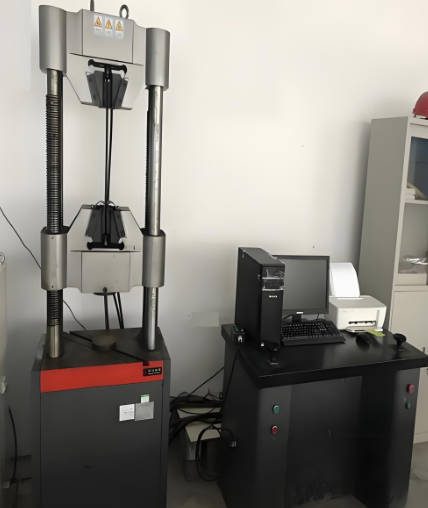
- Tensile testing at ambient and elevated temperatures – Using servo‑hydraulic or electromechanical universal testing machines with capacities from 10 kN to 600 kN. Specimens machined to standard geometries (round or flat). Measures yield strength (proof stress), tensile strength, elongation after fracture, and reduction of area. High‑temperature testing performed in controlled furnaces for alloys used in turbines, engines, and pressure vessels.
- Hardness testing multiple scales – Rockwell (B, C, and other scales) for hardened and unhardened steels; Brinell for castings and coarse‑grained materials; Vickers for thin sections, case‑hardened layers, and small parts; Knoop for brittle materials and coatings. Provides rapid quality check and correlates with tensile strength for many alloys.
- Impact testing (Charpy V‑notch) – Pendulum impact tester with calibrated energy up to 300 J. Specimens cooled or heated to specified temperatures (e.g., -60°C, -40°C, 0°C, 20°C) to determine ductile‑brittle transition temperature. Reports absorbed energy (J) and lateral expansion. Critical for structural steel, pipeline, and pressure vessel applications.
- Bend and re‑bend testing – For sheet metal, rebar, and welded joints. Specimen bent around a mandrel of defined diameter to a specified angle (90° to 180°). Inspect outer surface for cracks, tears, or delamination. Used for assessing ductility and weld quality.
- Compression testing – For tubular sections, springs, bearings, and metallic foam. Determines compressive yield strength, modulus, and maximum load before buckling or crushing.
- Shear testing – Double‑shear for rivets, pins, and fasteners; single‑shear for sheet metal and welds. Measures ultimate shear load and shear strength.
- Torsion testing – For shafts, axles, and torsion bars. Applies twisting moment, records torque vs. angle of twist. Determines torsional yield strength, modulus of rigidity, and ultimate torque capacity.
- Fatigue testing (high‑cycle and low‑cycle) – Rotating bending, axial, or servo‑hydraulic methods. Applies cyclic stress at specified stress ratio (R = -1, 0.1, etc.). Generates S‑N curve showing stress vs. cycles to failure. Determines endurance limit for infinite life design – essential for automotive, aerospace, and structural components under dynamic loading.
- Fracture toughness testing – Using compact tension or three‑point bend specimens with fatigue pre‑crack. Determines plane‑strain fracture toughness (K₁c), critical for flaw tolerance assessment in pressure vessels, pipelines, and high‑strength alloys.
- Creep and stress rupture testing – Constant load or constant stress at elevated temperature (e.g., 500°C to 1100°C). Measures creep strain over time (creep curve) and time to rupture. Critical for turbine blades, superheater tubes, and long‑term high‑temperature service.
Chemical Composition Analysis
- Optical emission spectrometry (OES) – Spark emission technique for rapid, multi‑element analysis of solid metal samples. Determines major alloying elements (C, Si, Mn, Cr, Ni, Mo, V, W, Co, Cu, Al, Ti, Mg) and trace impurities (S, P, N, B, Pb, Sn, etc.). Results reported as weight percentage. Typical accuracy within ±1–5% relative depending on concentration.
- Inductively coupled plasma optical emission spectrometry (ICP‑OES) and ICP‑mass spectrometry (ICP‑MS) – For metal samples dissolved in acid (microwave digestion or hot plate dissolution). Provides ultra‑low detection limits (ppm to ppb) for trace elements. Essential for high‑purity metals, superalloys, and impurity verification.
- Combustion analysis (carbon, sulfur) – High‑frequency induction furnace with infrared detection. Measures carbon and sulfur content in steels, cast irons, and other ferrous alloys. Typical range 0.001% to 6% for carbon, 0.0005% to 0.5% for sulfur.
- Inert gas fusion (oxygen, nitrogen, hydrogen) – For quantifying O, N, H in metals. Critical for determining cleanliness in steel (low oxygen for fatigue resistance), nitrogen in stainless steel, and hydrogen embrittlement risk.
- X‑ray fluorescence (XRF) – handheld or laboratory – Non‑destructive analysis for alloy grade verification. Portable XRF for incoming inspection and scrap sorting; laboratory XRF for more precise coating thickness and element quantification.
- Wet chemistry and gravimetric analysis – For determination of specific elements not easily analyzed by instrumental methods, such as silicon by gravimetry, phosphorus by colorimetry, or chromium by redox titration.
Metallography & Microstructure Examination
- Sample preparation (mounting, grinding, polishing, etching) – Mounting in conductive resin, progressive grinding with silicon carbide papers, polishing with diamond suspension, and chemical or electrolytic etching to reveal grain boundaries, phases, and inclusions.
- Optical microscopy (brightfield, darkfield, polarized light, interference contrast) – Examination of microstructure at magnifications from 50× to 1000×. Assess grain size (comparison or intercept method), phase distribution (ferrite/pearlite, austenite, martensite, bainite), carbide morphology, and intermetallic phases.
- Scanning electron microscopy (SEM) with energy‑dispersive X‑ray spectroscopy (EDS) – High‑magnification imaging (up to 50,000×) of fractures, inclusions, and microstructural details. EDS provides elemental composition of microscopic features (e.g., non‑metallic inclusions, precipitate phases, corrosion pits).
- Inclusion rating – Based on standard charts (e.g., thin/thick series, A, B, C, D, and DS types). Classifies sulfides, alumina, silicates, and globular oxides. Critical for bearing steel, spring steel, and high‑performance alloys.
- Grain size determination – Comparison with standard micrographs or intercept count method. Reports ASTM grain size number. Fine grain size (ASTM 8 or finer) generally indicates better toughness and fatigue resistance.
- Case depth measurement (effective case depth, total case depth) – For carburized, nitrided, or induction‑hardened parts. Measured by microhardness traverse or visual examination after etching. Determines depth of hardened layer from surface to core.
- Decarburization assessment – Measures loss of carbon near the surface of heat‑treated steels. Quantified by microhardness profile or microscopical comparison of surface vs. interior ferrite content. Critical for springs, bearings, and tool steels.
- Intergranular corrosion testing (for stainless steels) – Specimens sensitized (heat treated to precipitate chromium carbides), then exposed to corrosive solution (e.g., copper‑sulfate‑sulfuric acid). After bending, examined for cracking. Indicates susceptibility to weld decay.
Corrosion & Environmental Resistance Testing
- Salt spray (fog) testing – Neutral salt spray (NSS) using 5% sodium chloride solution at elevated temperature (35°C). Specimens placed in chamber for defined duration (24 to 1000 hours). Evaluates corrosion resistance of coatings, plated surfaces, and stainless steels. Reports rating of rusting, blistering, and creep from scribe.
- Cyclic corrosion testing (more realistic than salt spray) – Alternating cycles of salt spray, dry conditions, and high humidity. Simulates outdoor and automotive exposure better than continuous salt spray. Evaluates galvanized steel, painted panels, and fastener coatings.
- Immersion corrosion testing – Specimens fully or partially immersed in specific solutions (acids, alkalis, seawater, organic solvents, fuel, oil) at controlled temperature. Measures weight loss, pitting depth, and change in mechanical properties. For chemical plant equipment, marine hardware, and storage tanks.
- Intergranular corrosion (IGC) for stainless steels and nickel alloys – As described in metallography section. Important for welded structures and heat‑affected zones.
- Stress corrosion cracking (SCC) testing – U‑bend, C‑ring, or slow strain rate testing (SSRT) method. Specimen subjected to constant tensile stress while exposed to corrosive environment (e.g., chloride solution for austenitic stainless steel). Measures time to cracking. Critical for components in aggressive environments (marine, chemical plants).
- Hydrogen embrittlement testing – Sustained load test on plated or coated high‑strength steel fasteners. Maintain at 75% of notch tensile strength for 200 hours. No fracture allowed. Detects internal hydrogen introduced during pickling or electroplating.
- Pitting resistance equivalent number (PREN) verification – For stainless steels and nickel alloys. Chemical composition used to calculate PREN = %Cr + 3.3×%Mo + 16×%N. Higher PREN indicates better resistance to pitting in chloride environments.
Non‑Destructive Testing (NDT) for Metals
- Ultrasonic testing (UT) – Pulse‑echo or through‑transmission technique using frequencies 0.5–20 MHz. Detects internal voids, inclusions, delaminations, and cracks in forgings, castings, plates, and bars. Thickness measurement also possible. Reports defect size, depth, and location.
- Radiographic testing (RT) – X‑ray or gamma ray – For internal defect detection in welds, castings, and assemblies. Film or digital radiography reveals porosity, slag inclusions, lack of fusion, and cracks. Used for critical pressure vessels and structural welds.
- Magnetic particle inspection (MPI) – For ferromagnetic materials. Magnetizes specimen, applies ferrous particles (wet or dry). Surface and near‑surface discontinuities (cracks, seams, laps) produce leakage fields visible under UV or white light. Fast and sensitive.
- Liquid penetrant inspection (LPI or dye penetrant) – For non‑porous metals (both ferrous and non‑ferrous). Applies penetrant, dwell, removes excess, applies developer. Capillary action draws penetrant into surface‑breaking defects. Visible or fluorescent method.
- Eddy current testing (ECT) – For conductive metals. Coil induces eddy currents; changes due to defects (cracks, corrosion, material sorting) alter impedance. Useful for tubing, wire, and surface crack detection.
- Hardness sorting / thermoelectric sorting – Rapid, non‑destructive verification of alloy grade or heat treat condition. Portable instruments provide pass/fail for incoming inspection.
Specific Tests for Welds, Fasteners & Special Products
- Weld procedure qualification (macro etch, bend test, tensile, impact) – Complete mechanical testing of welded coupons to qualify welding procedures and welder performance. Includes transverse tensile, guided bend (face, root, side), Charpy impact from weld centerline and heat‑affected zone, and macro‑etch for fusion and penetration examination.
- Bolt and screw proof load testing – Applies specified proof load (typically 75–90% of yield strength) to fastener without permanent set. Measures elongation under load and permanent elongation after unloading.
- Nut proof load and hardness – Similar to bolts; ensures nut will not strip under specified load.
- Torque‑tension testing (K‑factor determination) – Measures relationship between applied torque and resulting clamp force. Essential for critical bolted joints (engine, pressure vessel flanges).
- Spring testing (compression, extension, torsion) – Determines spring rate, free length, load at specified deflection, and set (permanent deformation after full compression).
- Tube and pipe hydrostatic pressure test – Seals tube ends, fills with water, pressurizes to specified test pressure, holds for set time. Checks for leaks and burst resistance.
- Flattening, flaring, and flange tests for tubes – Assesses ductility and soundness of tubes under deformation. Flatten specimen between parallel plates; flare cone into tube end; observe for cracks.
Report & Compliance
All metal testing services described above are performed under our ISO/IEC 17025 quality system (CNAS accredited). Our metal testing services reports include: detailed material description and sample identification, test conditions, measured values with graphical representations (stress‑strain curves, micrographs, corrosion rating), acceptance criteria (based on material specification, customer drawing, or international consensus), and a clear pass/fail conclusion. Reports are accepted by classification societies (ABS, DNV, LR, BV, CCS), aerospace primes, automotive OEMs, construction authorities, and regulatory bodies for material certification, supplier qualification, and failure investigation. We also provide expert interpretation and root cause analysis for non‑conforming results.