As an ISO/IEC 17025 accredited laboratory, we specialize in the precise analysis of types of plastics through reverse engineering to support manufacturers, exporters, and procurement managers worldwide. Our technical experts deconstruct polymer-based products to identify composition, additives, fillers, and processing history — ensuring your plastic materials meet stringent regulatory requirements for markets including the EU (REACH), US (FDA, ASTM), and China (GB standards).

Product Samples We Regularly Test
Our reverse engineering and plastic analysis services cover a wide range of samples across industries. Typical test specimens include:
- Injection-molded components (automotive parts, electronic housings, consumer goods)
- Extruded profiles, films, sheets, and pipes
- Blow-molded containers, bottles, and industrial drums
- 3D printing filaments and additively manufactured plastic parts
- Recycled plastic pellets, flakes, and regrind materials
- Multilayer packaging films and flexible laminates
- Engineering plastics (PA, POM, PBT, PC, ABS, PEEK)
- Elastomers and thermoplastic vulcanizates (TPE, TPU)
- Failure analysis samples (cracked, discolored, or degraded plastic parts)
- Competitor product benchmarking samples
For Plastic Raw Materials & Resins
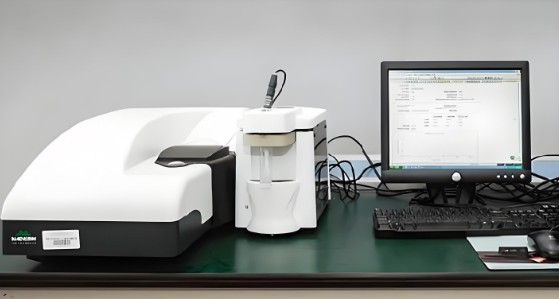
- Polymer identification by FTIR – Using Nicolet iS50 FTIR spectrometer per ASTM E1252, we determine the exact resin type (PE, PP, PS, PET, PA, PC, ABS, etc.) with spectral library matching.
- Thermal analysis (DSC & TGA) – ISO 11357 for differential scanning calorimetry to measure melting point, glass transition (Tg), and crystallinity; ISO 11358 for thermogravimetric analysis to quantify filler content (CaCO3, talc, glass fiber).
- Melt flow index (MFI/MVR) – ISO 1133-1 and ASTM D1238 at standard conditions (190°C/2.16 kg for PE, 230°C/3.8 kg for PP, etc.) to characterize processability.
- Ash content and filler analysis – ISO 3451-1: calcination at 550°C or 850°C to determine inorganic filler percentage, followed by acid digestion for filler type identification (ICP-OES).
For Plastic Components & Parts
- Reverse engineering for polymer composition – Full dissolution, separation, and gravimetric analysis of multi-material systems (co-injection, overmolding, or two-shot parts) to identify each layer's polymer type and thickness.
- Additive package analysis – UHPLC-MS (ISO 17226) for antioxidants (BHT, Irganox 1010), UV stabilizers (Tinuvin), plasticizers (phthalates & non-phthalates), and flame retardants (brominated, phosphorus-based) per RoHS & REACH Annex XVII.
- Mechanical property screening – Micro-tensile testing (ISO 527-2 on dumbbell specimens from actual parts), flexural modulus (ISO 178), and notched Izod impact (ISO 180) using CNC-machined test pieces.
- Contamination and black speck analysis – SEM-EDS (ISO 12219) to identify gels, degraded polymers, or foreign particles, with mapping of element composition.
For Finished Plastic Products & Packaging
- Multilayer film structure analysis – Microtome cross-sectioning + Raman spectroscopy (ISO 18314) to determine layer count, thickness (to 0.1 µm), and polymer type in each layer (e.g., PE/EVOH/PE).
- Residual monomer & oligomer quantification – Headspace GC-MS (ISO 17294) for styrene in PS, caprolactam in PA6, or acetaldehyde in PET, ensuring food contact compliance (EU 10/2011, FDA 21 CFR).
- Weathering & aging simulation – Xenon-arc exposure per ISO 4892-2 to evaluate color change (ΔE per ISO 7724-2) and surface cracking (visual & microscopy).
- Volatile organic compound (VOC) emission – Micro-chamber / thermal desorption GC-MS (ISO 16000-6) for automotive interior parts (VDA 278) and building materials (AgBB scheme).
For Engineering & High-Performance Plastics
- Molecular weight distribution (GPC) – Gel permeation chromatography per ISO 16014 for polycarbonate, PEEK, and polysulfone to detect degradation (reduced Mw) from processing.
- Degree of crosslinking – Solvent extraction method (ASTM D2765) for XLPE or crosslinked elastomers – measure gel content after 24h reflux in decalin or xylene.
- Crystallinity by XRD – Wide-angle X-ray diffraction (ISO 22262) for PEEK, PPS, or PA66 to quantify crystalline vs. amorphous regions influencing stiffness and chemical resistance.
- Thermal stability (OIT) – Oxidation induction time per ISO 11357-6 at 200°C under oxygen for polyolefins – critical for long-term aging predictions.
Report Accreditation & Compliance
All test methods described above are performed under our ISO/IEC 17025:2017 accredited scope (CNAS LXXXX). Our analysis of types of plastics through reverse engineering reports are recognized by major regulatory authorities including the European Chemicals Agency (ECHA), U.S. Consumer Product Safety Commission (CPSC), China Customs (GAC), and Japan’s METI. Each report includes detailed test conditions, raw data, traceability to certified reference materials (CRMs), and a clear statement of conformity against applicable global standards (REACH, RoHS, California Prop 65, UKCA, etc.). Exporters and procurement managers can confidently submit our reports for customs clearance, product registration, and supply chain compliance audits.