Wet Curtain Paper Inspection for Global Evaporative Cooling Markets
As an ISO/IEC 17025 accredited laboratory, we deliver a comprehensive wet curtain paper inspection program that verifies physical durability, water absorption performance, fire safety, chemical compliance, and anti-microbial protection. Our wet curtain paper inspection services are designed for manufacturers and exporters of cellulose cooling pads, corrugated evaporative media, and honeycomb wet curtains supplied to agricultural, industrial, and commercial HVAC markets across the European Union, North America, the Middle East, and Asia. All tests are performed within our CNAS-accredited scope, and our reports are accepted by building authorities, import regulators, and major procurement teams worldwide.

Product Samples We Regularly Test Under Our Wet Curtain Paper Inspection Program
- Corrugated cellulose cooling pad sheets — conventional and high-rigidity designs with varying flute angles and heights
- Honeycomb-structured wet curtain media — bonded multi-layer paper blocks for high-efficiency evaporative cooling
- Resin-impregnated and wet-strength treated papers — specialty grades with anti-wicking and anti-rotting treatments
- Coated and antimicrobial wet curtain paper — papers with biocidal or hydrophilic coatings for enhanced performance
- Evaporative cooling pad assemblies — framed or glued pad modules ready for installation in greenhouses, poultry houses, and factories
- Wet curtain paper samples with special profiles — asymmetric flute geometries and gradient-density media
Wet Curtain Paper Inspection for Physical and Mechanical Properties
- Grammage and thickness determination — measurement of basis weight per ISO 536 and single-sheet thickness per ISO 534 using precision analytical balances and motorized micrometers to verify material consistency and layer uniformity.
- Dry tensile strength and elongation — testing in machine and cross directions according to ISO 1924-2, providing ultimate tensile force and stretch at break crucial for media handling, pleating, and structural retention in the cooling unit.
- Wet tensile strength after immersion — determination of residual strength following complete water saturation per ISO 3781 and TAPPI T456, the single most critical mechanical parameter for wet curtain paper that must retain integrity under continuous water flow.
- Bursting strength — Mullen burst test to ISO 2758 to evaluate resistance to localized pressure punctures caused by water jets, debris, or handling.
- Bending stiffness and resilience — bending resistance measurement using ISO 2493 (two-point method) and ring crush resistance to ISO 12192 to ensure the corrugated flutes do not collapse under the weight of water and accumulated mineral scale.
- Compression resistance of the media block — compressive load testing on assembled pad sections per customized protocols based on ASTM C165 to confirm structural performance in vertical and inclined installations.
Water Absorption, Wicking, and Evaporative Performance Testing
- Water absorptiveness (Cobb test) — measuring the mass of water absorbed per unit area within a specified time according to ISO 535, indicating the surface wettability and rapid wetting characteristics required for even water distribution.
- Capillary rise and vertical wicking speed — Klemm method per ISO 8787 to determine the height to which water rises by capillary action in the paper within 10 minutes, directly correlating to moisture distribution across the cooling pad.
- Water absorption capacity and saturation rate — full immersion soak testing to record weight gain versus time curves, determining total water holding capacity and time to saturation for media sizing and pump cycling optimization.
- Water retention and drainage behavior — measuring the volume of water retained after gravity drainage to evaluate the balance between saturation for cooling efficiency and drainage to prevent channeling and scaling.
- Evaporative efficiency and pressure drop of pad assembly — testing full-scale cooling pad samples in a wind tunnel at defined air velocities, water flow rates, and inlet air conditions per ASHRAE Standard 143 or equivalent internal protocols, generating efficiency-pressure drop curves for system design.
Fire Resistance and Flammability Testing for Wet Curtain Paper
- Small flame ignitability test — application of a defined flame to the edge and surface of the paper specimen according to EN ISO 11925-2, recording ignition, flame spread, and flaming droplets to classify the material under the Euroclass system.
- Euroclass classification for building products — single burning item test (EN 13823) and bomb calorimetry (EN ISO 1716) when required to determine the full reaction-to-fire classification per EN 13501-1, essential for evaporative cooling pads installed in commercial and public buildings.
- Surface burning characteristics per ASTM E84 — Steiner tunnel test to determine flame spread index and smoke developed index, demonstrating Class A or Class B performance for North American markets and insurance requirements.
- Limiting oxygen index (LOI) — measurement of the minimum oxygen concentration required to sustain candle-like combustion per ISO 4589-2, providing a sensitive comparative measure of flame retardancy after chemical treatment.
- Glow-wire and hot-wire ignition resistance — tests per IEC 60695-2-11 and applicable sections to assess resistance to ignition from overheated electrical components in fan and pump enclosures.
Chemical Safety and Restricted Substances Inspection
- Formaldehyde release from the paper and adhesive bonds — determination of formaldehyde content by cold water extraction and acetylacetone spectrophotometry per EN 1541 and ISO 14184-1 adapted methods, ensuring compliance with E1 limits and indoor air quality standards.
- Heavy metals and toxic element migration — microwave-assisted acid digestion and ICP-OES analysis for lead, cadmium, mercury, and chromium in the cellulose substrate, resin, and any applied coatings, verifying conformity to EU REACH Annex XVII and relevant EU RoHS thresholds.
- Wet curtain paper extractable substances — preparation of cold and hot water extracts per EN 645 and EN 647 to quantify total organic carbon, conductivity, and specific leachable ions, demonstrating that the media does not contaminate circulating water or contribute to scaling.
- Phthalates and flame retardant screening — GC-MS determination of restricted phthalates and brominated flame retardants in the base paper and polymeric coatings according to CPSC-CH-C1001-09.4 and IEC 62321 methods, supporting global consumer product regulations.
- Odor and organoleptic assessment — sensory evaluation of the wet curtain paper under humid and elevated temperature conditions to detect objectionable odors that could affect greenhouse crops or livestock, following an adaptation of EN 1230-2 and customer-specific protocols.
Anti-Microbial and Anti-Fungal Efficacy Testing
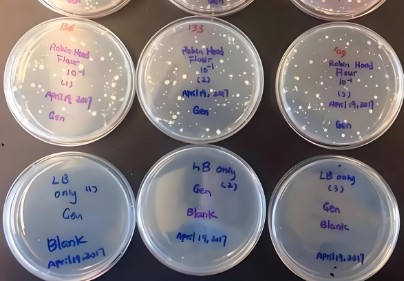
- Antibacterial activity of treated wet curtain paper — quantitative absorption method according to ISO 20743 using Staphylococcus aureus and Escherichia coli, verifying log reduction values for papers with built-in antimicrobial protection.
- Fungal resistance and mold growth evaluation — inoculation with Aspergillus niger, Penicillium funiculosum, and Chaetomium globosum per ASTM G21 to assess visible mold growth on the cellulose substrate after 28 days under high humidity, critical for applications in agriculture and food storage.
- Algae growth inhibition on wet curtain media — extended water circulation and light exposure tests simulating realistic evaporative cooling operation to evaluate the anti-algal efficacy of biocidal treatments over the service interval.
Report Recognition and ISO/IEC 17025 Compliance
All methods in this wet curtain paper inspection plan are covered by our ISO/IEC 17025 scope of accreditation. Our reports are accepted by European notified bodies, U.S. building and fire code officials, and regulatory authorities across the Middle East and Southeast Asia. Whether you require a first-article qualification for a new cooling pad design, batch release verification of fire-retardant treated media, or a failure analysis of a prematurely degraded wet curtain, our laboratory provides the measurement accuracy and technical depth that the global evaporative cooling industry demands.