Water Based Paint Remover Testing Service – Accredited Performance, Safety and Environmental Compliance Evaluation for Global Markets
Our internationally accredited laboratory provides a specialist water based paint remover testing service that empowers formulators, chemical manufacturers, industrial maintenance providers and consumer product brands worldwide to independently verify the stripping efficiency, substrate compatibility, environmental friendliness and user safety of their water‑borne paint strippers. Every test is conducted under the rigorous framework of ISO/IEC 17025, and each report carrying the ILAC mark is unconditionally accepted by regulatory authorities, notified bodies and supply‑chain partners in all major economies. The water based paint remover testing service evaluates how quickly and completely the product lifts or dissolves aged coatings, while simultaneously confirming that it does not corrode or damage the underlying metal, wood or plastic. By measuring the volatile organic compound content, the rinseability, the corrosion potential on airframes or delicate surfaces, and the long‑term storage stability, we provide the legally robust, defensible data needed to substantiate “eco‑friendly”, “non‑toxic” and “high‑performance” marketing claims, and to demonstrate compliance with the strictest VOC regulations and safety standards on every continent.
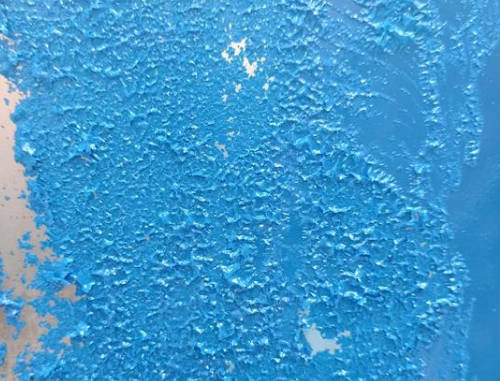
Product Samples We Regularly Subject to Water Based Paint Remover Testing
Our application laboratories, corrosion cabinets, rheometers and gas‑chromatography systems accommodate all forms of aqueous stripping formulations. The following categories represent the most frequently tested items:
- Liquid water‑based paint removers – ready‑to‑use and concentrated solutions thickened with cellulose ethers or clays, designed for the immersion or the flow‑on removal of industrial enamels, epoxies and polyurethanes
- Gel and paste water‑based strippers – thixotropic formulations for vertical‑surface application in the architectural restoration, the furniture refinishing and the graffiti‑removal sectors
- Aerosol and foam water‑based removers – sprayable products that generate a clinging foam to maximise the contact time on complex geometries, used in the automotive repair and the marine maintenance
- Industrial‑grade, immersion‑tank water‑based strippers – hot‑tank and cold‑tank formulations for the stripping of rack‑hooks, jigs, engine components and aircraft parts in the aerospace and the metal‑finishing industries
- Consumer and DIY water‑based paint removers – low‑odour, biodegradable products for the home‑improvement market, evaluated for the dermal irritation, the inhalation toxicity and the ease of use
- Neutralising agents and post‑stripping rinses – the water‑based neutralisers and the corrosion‑inhibiting rinses that are applied after the stripping to passivate the substrate and to remove any residual active chemical
Paint Removal Efficiency and Substrate Compatibility – Water Based Paint Remover Testing According to ASTM D6189 and ISO 4628
- Determination of the coating‑removal efficiency by the panel method according to ASTM D6189 (Standard Test Method for Evaluating the Effectiveness of Chemical Removers for Organic Coatings) and the internal procedures: standardised steel, aluminium or wood panels coated with a known, cured paint system – an alkyd, an epoxy, a polyurethane or an acrylic – are treated with the water‑based remover for a defined contact time. The percentage of the coating that is lifted, dissolved or softened to the point where it can be rinsed away is reported, and the time to the complete removal is recorded. This water based paint remover testing service quantifies the stripping speed and the completeness, which are the primary performance metrics for the formulator and the end‑user.
- Evaluation of the effect on the substrate – the corrosion, the staining and the dimensional change: after the stripping and the rinsing, the bare metal, wood or plastic substrate is examined for the pitting, the intergranular attack, the hydrogen‑embrittlement (for the high‑strength steels), the swelling, the grain‑raising and the discolouration, according to the relevant clauses of ISO 4628 (Paints and varnishes – Evaluation of degradation of coatings) and the ASTM substrate‑specific standards. The test confirms that the water‑based remover is safe for the underlying material, which is critical for the aerospace and the precision‑engineering applications.
- Multi‑cycle stripping efficiency and the bath‑life determination for the immersion‑tank products: the remover bath is repeatedly used to strip a series of the coated parts, and the number of the parts that can be cleaned before the stripping time doubles or the bath loses its effectiveness is reported, providing the economic and the process‑control data for the industrial user.
- Rinseability and the water‑break‑free surface assessment according to ASTM F21 (Standard Test Method for Hydrophobic Surface Films by the Water‑Break Test) and the internal visual standards: after the stripping, the panel is rinsed with water, and the continuity of the water film is observed. A uniform water film indicates a residue‑free surface that is ready for the repainting or the subsequent processing, while the water break‑up signals the presence of the residual surfactant or the dissolved paint that must be removed by an additional wash.
- Compatibility with the sealants, the fillers and the adjacent materials: the paint remover is applied to a test assembly that contains the typical aircraft‑ or automotive‑grade polysulfide sealants, the epoxy fillers and the plastic trim, and the softening, the cracking or the adhesive‑bond degradation is evaluated, ensuring that the remover does not attack the materials that are not intended to be stripped.
Rheology, Coverage and Storage Stability – Water Based Paint Remover Testing According to ASTM D2196 and ISO 2884
- Determination of the viscosity and the thixotropic behaviour according to ASTM D2196 (Standard Test Methods for Rheological Properties of Non‑Newtonian Materials by Rotational Viscometer) and ISO 2884‑1: the viscosity is measured at several shear rates, and the yield stress, the shear‑thinning index and the recovery after the shear are reported. This water based paint remover testing service verifies that the gel or the liquid has the correct flow characteristics for the intended application method – whether it must cling to a vertical surface, flow into the intricate recesses or be sprayable through a conventional airless gun.
- Measurement of the coverage rate and the wet‑film thickness: a known mass of the remover is spread over a coated panel, and the area that can be covered to the target wet‑film thickness is determined, yielding the coverage in square metres per litre or per kilogram, which is the essential cost‑per‑unit‑area data for the commercial user.
- Storage stability and the freeze‑thaw resistance according to the internal protocols and the ASTM D1849 (Standard Test Method for Package Stability of Paint): the product is stored at the elevated temperature, the ambient temperature and the sub‑zero temperature for a defined period, and the change in the viscosity, the pH, the phase separation and the stripping efficiency is measured, guaranteeing that the remover will remain effective after the prolonged warehouse storage and the exposure to the extreme transport temperatures.
- Accelerated shelf‑life prediction by the elevated‑temperature storage and the Arrhenius modelling: the product is stored at several temperatures, and the rate of the degradation of the active ingredient is monitored, enabling the calculation of the expiry date for the retail and the industrial packaging.
Corrosion, Rinse‑Water Toxicity and Material Safety – Water Based Paint Remover Testing According to ASTM F483, ASTM D1308 and the OECD Guidelines
- Total‑immersion corrosion test for the aircraft and the precision‑metal applications according to ASTM F483 (Standard Practice for Total Immersion Corrosion Test for Aircraft Maintenance Chemicals) and ASTM D1308 (Standard Test Method for Effect of Household Chemicals on Clear and Pigmented Organic Finishes): the remover is tested on the aluminium alloys, the magnesium, the titanium and the high‑strength steels, and the weight loss, the pit‑depth and the hydrogen‑pickup are measured, providing the certification data that the product meets the airframe‑manufacturer's material‑compatibility requirements.
- Determination of the acute dermal and the inhalation toxicity according to the OECD Test Guideline 402 (Acute Dermal Toxicity) and OECD 403 (Acute Inhalation Toxicity): the product is evaluated for its potential to cause the skin irritation, the eye damage and the respiratory sensitisation, and the results are used to generate the safety‑data‑sheet hazard classifications and the child‑resistant packaging recommendations.
- Assessment of the rinse‑water ecotoxicity and the biodegradability according to the OECD 301 (Ready Biodegradability) and the OECD 202 (Daphnia magna Acute Immobilisation Test): the rinsing effluent that would be discharged from the stripping operation is analysed for the acute aquatic toxicity and the biological‑oxygen‑demand, supporting the environmental‑permit application and the eco‑labelling of the product.
- Flash‑point and the flammability testing according to ASTM D56 (Standard Test Method for Flash Point by Tag Closed Cup Tester) and the relevant transport‑of‑dangerous‑goods regulations: the flash point of the water‑based remover is measured, and the product is classified as a non‑flammable or a combustible liquid for the shipping and the storage, providing the documentation required by the international maritime and the air‑transport codes.
Volatile Organic Compound Content and Chemical Characterisation – Water Based Paint Remover Testing According to EPA Method 24 and ISO 11890
- Determination of the VOC content by the gas‑chromatographic and the gravimetric methods according to EPA Method 24 (Determination of Volatile Organic Compound Content of Surface Coatings) and ISO 11890‑2 (Paints and varnishes – Determination of volatile organic compound content – Part 2: Gas‑chromatographic method): the sample is dissolved or dispersed, and the individual volatile components are separated, identified and quantified. The total VOC content in grams per litre is reported, providing the data that the manufacturer uses to demonstrate compliance with the European Decopaint Directive, the US Ozone Transport Commission regulations and the LEED v4 low‑emitting materials credit.
- Identification and the quantification of the active stripping agents – the dibasic esters, the benzyl alcohol, the dimethyl sulfoxide and the other water‑compatible solvents – by the GC‑MS and the HPLC: the formulation is deconstructed, and the concentration of each active ingredient is measured, supporting the reverse‑engineering, the patent‑protection and the quality‑assurance of the incoming raw materials.
- Measurement of the pH, the conductivity and the specific gravity for the process control: the physical‑chemical properties are measured according to the ASTM and the ISO standard methods, and the data are included in the certificate of analysis for each production batch.
- Screening for the restricted substances – the methylene chloride, the N‑methyl‑2‑pyrrolidone, the phenols and the heavy metals – according to the REACH Annex XVII, the EU RoHS and the US EPA Significant New Alternatives Policy: the product is analysed by the GC‑MS and the ICP‑MS, and the absence or the below‑limit concentration of the banned or the restricted chemicals is verified, ensuring the continued market access and the avoidance of the costly product‑recall actions.
Report Acceptance and Global Regulatory Compliance
All measurements performed within our water based paint remover testing service are executed under the fully accredited scope of our ISO/IEC 17025 quality management system. Each test report that carries the ILAC mark is therefore automatically recognised by regulatory authorities, notified bodies, customs offices and supply‑chain partners in all major economies. For chemical formulators, industrial paint‑stripper manufacturers and consumer‑product brands anywhere in the world, the report constitutes legally robust, internationally accepted evidence that the stripping efficiency, the substrate compatibility, the rheological stability, the VOC content, the toxicity and the environmental impact of the water‑based paint remover have been determined in accordance with the applicable ASTM, ISO, OECD and customer‑specified methods. The documentation can be directly used to support the CE marking, the issue of inspection certificates according to EN 10204 or equivalent national standards, the compilation of the safety data sheet and the product‑registration dossier, and the resolution of commercial and technical disputes concerning the performance and the safety of any water‑borne paint stripping formulation.