Warning Reflective Tape Inspection Service for Global Road and Workplace Safety
As an ISO/IEC 17025 accredited laboratory, our specialized warning reflective tape inspection service verifies retroreflective performance, mechanical durability, weatherability, and chemical compliance to meet the most stringent international traffic and occupational safety standards. Whether you are exporting high-intensity vehicle conspicuity tape, engineer-grade signage sheeting, or industrial hazard marking film to the European Union, North America, or the Middle East, our CNAS-accredited testing ensures your products fully comply with ASTM D4956, EN 12899-1, AS/NZS 1906.1, and other global regulatory frameworks.

Product Samples We Regularly Test
- Microprismatic and glass bead reflective sheeting — for truck conspicuity markings, chevron panels, and traffic control signs
- Warning reflective fabric tapes — high-visibility heat transfer films for protective clothing and personal protective equipment
- Vehicle outline marking tapes — flexible and rigid contour strips for compliance with ECE R104 and ECE R48
- Industrial floor and hazard marking tapes — photoluminescent and reflective films for warehouses, parking structures, and evacuation routes
- Marine and offshore reflective safety tapes — salt-water-resistant films for life rings, lifeboats, and offshore platform signage
- Custom printed and patterned warning reflective tapes — digital-printed retroreflective graphics for corporate branding on fleet vehicles and emergency service units
Retroreflective Performance Testing in Our Warning Reflective Tape Inspection Service
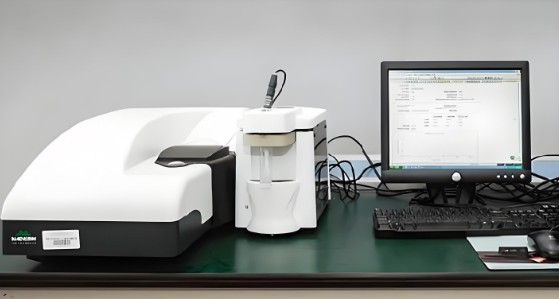
- Coefficient of retroreflection (RA) per ASTM E810 and EN 12899-1 — the tape sample is mounted on a goniometer and the retroreflected light intensity is precisely measured at defined observation and entrance angles, quantifying the night-time brightness and long-distance visibility that define the performance class of the warning reflective tape for traffic and industrial safety applications.
- Daytime and night-time chromaticity coordinates per ASTM D4956 and CIE 54.2 — the colour of the tape under standard illuminant D65 and under retroreflective geometry is measured to verify conformity with the strict colour boundaries required for red, yellow, white, and fluorescent orange warning tapes in different regulatory regions.
- Angularity and wide-angle observation performance — the retroreflection is measured at multiple combinations of entrance angle and observation angle to simulate how the tape performs for drivers of trucks, passenger cars, and motorcycles viewing the tape from different heights and lateral positions on curved and flat vehicle surfaces.
- Luminance factor and daytime visibility per ASTM E1349 and ISO 3864-4 — the diffuse reflection of the tape surface is compared to a perfect diffuser to confirm the daytime conspicuity and colour recognition required by safety colour codes.
Physical and Mechanical Durability Assessment
- Tensile strength and elongation at break per ASTM D882 and ISO 527-3 — the tape is stretched to failure in the machine and cross directions, ensuring the carrier film and adhesive system can withstand application tension, thermal expansion, and aerodynamic forces without cracking or lifting from the substrate.
- Peel adhesion to aluminium, stainless steel, and painted surfaces per ASTM D3330 Method A and EN 12068 — the force required to peel the warning reflective tape from standard test panels is measured under controlled environmental conditions, verifying the adhesive bond meets the minimum requirements for the intended substrate and service environment.
- Liner release and unwind force per ASTM D3811 and PSTC-8 — the force to remove the protective liner and to unwind the tape from the roll is quantified to ensure efficient manual and machine application on assembly lines without adhesive transfer or tearing.
- Abrasion resistance by falling sand and Taber methods per ASTM D968 and ASTM D4060 — the tape surface is subjected to controlled abrasive wear, simulating the effect of road grit, brush cleaning, and cargo handling, with post-test retroreflectance measurement to confirm that the optical performance is maintained after mechanical abrasion.
- Cold crack resistance and low-temperature flexibility per ASTM D522 and EN 12899-1 Annex C — the tape is bent around a mandrel at sub-zero temperatures to verify that the warning reflective film does not crack or delaminate during winter application and service on vehicles or outdoor equipment in cold climates.
Environmental and Weathering Resistance Testing
- Accelerated weathering by xenon-arc exposure per ASTM G155 and ISO 4892-2 — the warning reflective tape is subjected to intense simulated sunlight, heat, and water spray cycles equivalent to years of outdoor service, and the retained retroreflectance, colour, and adhesion are measured to validate the durability class and the manufacturer's warranty period.
- Fluorescent UV lamp exposure per ASTM G154 — isolating the ultraviolet degradation mechanism to assess the photostability of the polymer matrix and fluorescent pigments in high-visibility warning reflective tapes used for emergency vehicles and roadside workers.
- Neutral salt spray and cyclic corrosion resistance per ISO 9227 and ASTM B117 — the tape applied to a metal panel is exposed to continuous salt fog to evaluate under-film corrosion creep, edge blistering, and delamination, ensuring long-term reliability in coastal, marine, and cold-climate road environments where de-icing salts are heavily used.
- Water immersion and moisture resistance per ASTM D870 and EN ISO 9142 — the tape is immersed in water or exposed to condensing humidity, and the adhesive bond strength and retroreflective performance are retested to confirm no moisture-induced degradation occurs in consistently wet or tropical environments.
- Thermal cycling and heat ageing per ASTM D573 and customer protocols — the tape is repeatedly cycled between -30 °C and +70 °C or aged at an elevated constant temperature, followed by adhesion and optical tests to predict the resistance to thermal expansion mismatch and to guarantee long-term stability on dark-coloured vehicle panels and metal containers.
Chemical Safety and Fire Performance Testing
- RoHS compliance per IEC 62321 and EU Directive 2011/65/EU — quantitative screening for lead, mercury, cadmium, hexavalent chromium, PBBs, and PBDEs in the film, adhesive, pigment, and release liner to ensure the warning reflective tape meets the maximum concentration values for unrestricted global trade.
- REACH Annex XVII and SVHC screening — targeted analysis of Substances of Very High Concern including phthalate plasticizers, organotin stabilizers, and restricted flame retardants present in the polymer layers of the tape.
- Horizontal and vertical flame spread per FMVSS 302 and ASTM D6413 — the warning reflective tape is exposed to a defined flame source to verify the material self-extinguishes and meets the low-flammability requirements for automotive interior and building interior applications.
- Heavy metals in packaging per EU Directive 94/62/EC — verification that the sum of lead, cadmium, mercury, and hexavalent chromium in the cardboard core, plastic bag, and label does not exceed the 100 ppm regulatory limit.
Report Recognition and ISO/IEC 17025 Compliance
All test methods described in this warning reflective tape inspection service are included within our ISO/IEC 17025 scope of accreditation. Our comprehensive inspection reports are accepted by European notified bodies for CE marking of construction and traffic safety products, by North American motor vehicle safety authorities, and by procurement and customs agencies across the Gulf, Australia, and Asia. Whether you require a complete qualification dossier for a new prismatic reflective tape, a batch release inspection of a container shipment, or a root cause failure analysis of a delamination complaint, our laboratory provides the measurement precision and regulatory expertise that the global conspicuity and marking industry demands.