Vehicle Display Cover Detection Service for Global Automotive Optics Compliance
As an ISO/IEC 17025 accredited laboratory, we deliver a specialized vehicle display cover detection service that verifies the optical clarity, mechanical strength, surface durability, environmental resilience, and chemical safety of transparent covers used in automotive displays, touch panels, instrument clusters, and infotainment screens. Our vehicle display cover detection service supports manufacturers and exporters who must demonstrate conformity to ISO 13468, ISO 14782, ASTM D3363, ASTM D4060, IEC 60068, and regional automotive interior standards across the European Union, North America, East Asia, and the Middle East. Every test is performed under our CNAS-accredited quality system, producing reports accepted by notified bodies, automotive OEMs, and procurement teams worldwide.

Product Samples We Regularly Test in Our Vehicle Display Cover Detection Service
- Tempered glass display covers — for center information displays, digital instrument clusters, and head-up display combiner surfaces
- Polycarbonate and PMMA display lenses — for infotainment screens, rear-seat entertainment panels, and HVAC control displays
- Anti-glare and anti-reflective coated covers — with optical coatings for readability in bright sunlight and varying viewing angles
- Anti-fingerprint and oleophobic treated display covers — for touchscreen interfaces requiring easy cleaning and smudge resistance
- Curved and 3D-shaped display covers — for wrap-around cockpits, digital dashboards, and panoramic displays
- Composite and laminated display cover assemblies — with integrated touch sensors, heating elements, or privacy filters
- Custom-shaped and OEM-specific display cover components — with precision-machined edges, cutouts, and mounting features
Optical and Visual Performance Testing for Vehicle Display Covers
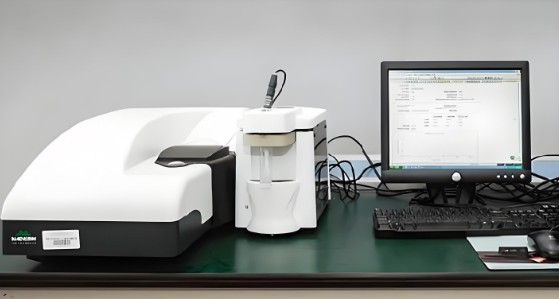
- Total luminous transmittance and haze measurement per ISO 13468 and ISO 14782 — the percentage of visible light transmitted through the display cover and the scattered light are measured using an integrating sphere spectrophotometer, ensuring the cover provides the specified clarity and brightness for the underlying display.
- Spectral transmittance and color neutrality per ISO 9050 — the display cover is scanned across the visible spectrum to verify it does not introduce undesirable color shift or reduce the color accuracy of the display.
- Gloss and surface reflectance per ISO 2813 and ASTM D523 — the specular reflectance of the display cover surface is measured at defined angles to verify the specified gloss level and to evaluate the effectiveness of anti-glare treatments.
- Anti-glare and anti-reflective coating performance per ASTM D4039 — the reduction in specular reflection and the increase in diffuse scattering are quantified to verify the anti-glare performance under bright ambient lighting conditions.
- Optical distortion and image clarity per ASTM D637 and internal protocols — the display cover is evaluated for wave distortion, striae, and optical defects that would impair the readability of the displayed information.
- Visual defect inspection under D65 illumination — systematic examination for bubbles, inclusions, scratches, and coating defects against agreed acceptance criteria and master reference samples.
Mechanical and Surface Durability Testing for Vehicle Display Covers
- Scratch and pencil hardness per ASTM D3363 and ISO 15184 — pencils of increasing hardness are drawn across the display cover surface to determine the grade at which permanent scratching occurs, verifying resistance to fingernails, keys, and cleaning tools.
- Abrasion resistance by Taber abrader per ASTM D4060 and ISO 7784-2 — the display cover is subjected to controlled abrasive wear and the change in haze, gloss, and optical clarity is measured to rank the durability of the surface under repeated contact and cleaning.
- Impact resistance and ball drop testing per ASTM D5420 and customer protocols — a steel ball or standardized impactor is dropped onto the display cover to simulate accidental impacts from objects in the vehicle cabin, verifying the cover withstands mechanical shock without cracking or shattering.
- Flexural strength and modulus of rupture per ASTM C158 and ISO 178 — three-point or four-point bending tests determine the stiffness and bending resistance of the display cover material, ensuring it withstands installation and service loads without fracture.
- Vibration and mechanical shock resistance per IEC 60068-2-6 and IEC 60068-2-27 — the display cover assembly is vibrated and subjected to shock pulses to simulate vehicle operation and transport, with post-test optical and mechanical verification.
- Fingerprint and smudge resistance evaluation per internal validated protocols — the display cover surface is tested with artificial fingerprints and skin oils, and the ease of removal and the retention of the anti-fingerprint function are evaluated to ensure long-term user satisfaction.
Environmental and Thermal Durability Testing for Vehicle Display Covers
- Thermal cycling and thermal shock per IEC 60068-2-14 and AEC-Q102 — the display cover is rapidly cycled between hot and cold temperature extremes to verify the material, coatings, and any bonded layers withstand thermal expansion and contraction without cracking or delamination.
- Damp heat and humidity exposure per IEC 60068-2-78 — the display cover is stored at high temperature and high relative humidity, followed by optical and adhesion retests to ensure no moisture-induced hazing, coating degradation, or loss of clarity.
- UV and xenon-arc accelerated weathering per ASTM G155 and ISO 4892-2 — the display cover and any anti-glare or anti-fingerprint coatings are exposed to simulated sunlight to evaluate yellowing, embrittlement, and loss of surface function after prolonged vehicle interior exposure.
- Low-temperature operation and cold impact per ASTM D2137 — the display cover is conditioned at sub-zero temperatures and tested for brittleness to ensure reliable performance in cold climates.
- Resistance to condensation and fogging per internal protocols — the display cover is tested for anti-fog performance under rapid temperature and humidity changes, ensuring clear visibility for the driver and passengers.
Chemical Resistance and Cleaning Agent Testing for Vehicle Display Covers
- Resistance to cleaning agents and interior cleaners per ISO 2812-1 and ASTM D543 — the display cover surface is exposed to common automotive interior cleaners, glass cleaners, and disinfectants to verify no staining, hazing, or coating damage occurs during routine maintenance.
- Resistance to skin oils, sunscreens, and hand lotions per customer protocols — the display cover is tested with cosmetic products frequently transferred by user touch to ensure no degradation of the anti-fingerprint or anti-glare function.
- Resistance to fuels and automotive fluids per ASTM D471 — for display covers near fuel fillers or engine bays, the material is tested with gasoline, diesel, and hydraulic fluids to verify chemical compatibility.
- Coating adhesion and delamination resistance per ASTM D3359 and ISO 2409 — the adhesion of any anti-glare, anti-reflective, or anti-fingerprint coating to the display cover substrate is tested by cross-cut tape peel to ensure the coating remains bonded under cleaning and environmental stress.
Chemical Safety and Restricted Substance Compliance for Vehicle Display Covers
- RoHS compliance per IEC 62321 and EU Directive 2011/65/EU — quantitative screening for lead, mercury, cadmium, hexavalent chromium, PBBs, and PBDEs in the display cover material, coatings, and any printed or conductive elements.
- REACH Annex XVII and SVHC screening — targeted analysis of Substances of Very High Concern including phthalate plasticizers and organotin stabilizers in polymer components and coatings.
- Heavy metals in packaging per EU Directive 94/62/EC — verification that lead, cadmium, mercury, and hexavalent chromium sum concentration in the packaging is below the 100 ppm regulatory limit.
- Volatile organic compound emission per ISO 16000-3 — chamber testing verifies that the display cover does not release harmful VOCs into the vehicle cabin during normal operation and after sun exposure.
- Polycyclic aromatic hydrocarbons per AfPS GS 2019:01 PAK — for dark-colored or coated display cover components, the 15 restricted PAHs are extracted and quantified to confirm compliance with European product safety limits.
Report Recognition and ISO/IEC 17025 Compliance
Every test method described in this vehicle display cover detection service is covered by our ISO/IEC 17025 scope of accreditation. Our technical reports and certificates of analysis are accepted by European notified bodies for automotive components, by North American and Asian vehicle OEMs referencing ASTM and IEC standards, and by customs and procurement authorities across the Middle East, Australia, and Asia. Whether you require a complete qualification dossier for a new display cover design, a batch release inspection for an export shipment, or a root cause failure analysis of a field performance issue, our laboratory provides the measurement accuracy and automotive optics expertise that the global vehicle display industry demands.