Ultimate Tensile Strength Testing Service – Accredited Mechanical Strength Evaluation for Global Markets
Our internationally accredited laboratory provides a comprehensive ultimate tensile strength test service that supplies manufacturers, metal stockholders, plastics converters, textile mills, composite fabricators and industrial designers worldwide with the independent, traceable data they need to verify the maximum stress a material can withstand while being stretched or pulled before breaking. Every test is performed within the rigorous framework of ISO/IEC 17025, and each report carrying the ILAC mark is unconditionally accepted by regulatory authorities, notified bodies and supply‑chain partners in all major economies. The ultimate tensile strength test determines the peak engineering stress that a specimen endures during a uniaxial tension test, providing the fundamental design parameter that engineers use to guarantee the structural integrity, the load‑bearing capacity and the safety margin of everything from a bridge cable to a medical suture.
Product Samples We Regularly Subject to Ultimate Tensile Strength Tests
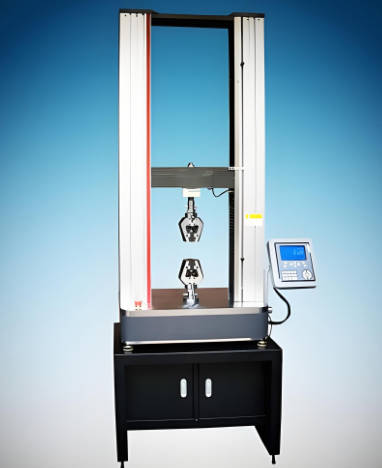
Our electromechanical and servo‑hydraulic tensile testing machines accommodate specimens from fine wires to heavy‑section steel plates. The following categories represent the materials most frequently evaluated through our ultimate tensile strength test programme:
- Metallic materials – cold‑rolled and hot‑rolled steel sheet and plate, reinforcing bars, structural sections, aluminium and copper alloys, cast irons, titanium alloys, welded joints and brazed connections
- Plastics and polymer composites – unreinforced and glass‑fibre or carbon‑fibre reinforced thermoplastics, thermosetting resins, plastic films, pipes and injection‑moulded components
- Textiles, nonwovens and flexible materials – woven and knitted fabrics, coated fabrics, geotextiles, technical textiles, conveyor belts and elastomeric membranes
- Rubber and elastomers – natural rubber, silicone rubber, EPDM, nitrile and fluoroelastomer sheets, O‑rings and extruded profiles
- Paper, board and fibre‑based products – kraft paper, corrugated board, tissue, filter media and laminated paper‑plastic composites
- Thin films, foils and flexible laminates – metallic foils, polymer films, multilayer packaging laminates and battery separator films
- Adhesives, sealants and bonded joints – cured adhesive films, structural‑bond test coupons and peel‑test laminates where the tensile strength of the bond line or the backing is of interest
Metallic Materials – Ultimate Tensile Strength Test According to ISO 6892‑1 and ASTM E8
- Determination of the ultimate tensile strength, yield strength and elongation of metallic materials according to ISO 6892‑1 (Metallic materials – Tensile testing – Part 1: Method of test at room temperature) and ASTM E8 (Standard Test Methods for Tension Testing of Metallic Materials): a proportional or fixed‑gauge‑length tensile specimen is machined from the sample and loaded to failure at a controlled strain rate. The maximum force sustained by the specimen, divided by the original cross‑sectional area, is reported as the ultimate tensile strength in megapascals. The yield strength, the percentage elongation after fracture and the reduction of area are also measured and documented. This ultimate tensile strength test is the primary material‑certification procedure for structural steels, pressure‑vessel plates and reinforcing bars, and it directly supports the issuing of inspection certificates according to EN 10204.
- Hot‑tensile testing at elevated temperatures according to ISO 6892‑2: specimens are heated in a three‑zone furnace with an argon or vacuum atmosphere, and the ultimate tensile strength is determined at service temperatures up to 1 200 °C, providing the data required for the design of power‑plant components, turbine blades and pressure‑vessel steels.
- Tensile testing of reinforcing steel (rebar) according to ISO 15630‑1: full‑section bars are tested to verify the characteristic yield strength, the ultimate tensile strength and the ratio of tensile strength to yield strength, which are mandatory for the conformity assessment of the reinforcement for concrete structures.
- Welded joint tensile tests according to ISO 4136: transverse all‑weld‑metal and cross‑weld specimens are pulled to fracture to verify that the ultimate tensile strength of the welded joint meets the minimum specified value for the base metal and that the fracture occurs in the parent material when required.
- Ultimate tensile strength of fasteners, bolts and threaded components according to ISO 898‑1 and ASTM F606: machined or full‑size bolts and screws are loaded to failure, and the ultimate tensile load and the stress at fracture are reported, supporting the certification of the property class and the grade of the fastener.
Plastics, Polymers and Composites – Ultimate Tensile Strength Test According to ISO 527, ASTM D638 and ASTM D3039
- Determination of the tensile strength at yield and at break of plastics according to ISO 527‑1 (Plastics – Determination of tensile properties) and ASTM D638: dumbbell‑shaped specimens are injection‑moulded or cut from sheet and loaded at a constant test speed. The ultimate tensile strength, the tensile strength at yield, the nominal strain at break and the tensile modulus are reported. This ultimate tensile strength test distinguishes the ductile thermoplastics – such as polyethylene and polycarbonate – from the brittle grades, and the data are used by compounders and moulders to verify that the incoming resin meets the supplier's specification.
- Tensile testing of fibre‑reinforced composites according to ISO 527‑4 and ASTM D3039: specimens with a unidirectional or a multi‑directional lay‑up are tested, and the ultimate tensile strength, the modulus and the failure strain in the fibre direction and the transverse direction are reported. The data are essential for the validation of the laminate‑design models and for the certification of the composite structures for aerospace, automotive and wind‑energy applications.
- Film and thin‑sheet tensile testing according to ASTM D882: for films with a thickness below 1 mm, a dedicated low‑force tensile tester with pneumatic grips and a high‑resolution extensometer measures the ultimate tensile strength, the elongation at break and the modulus, providing the data that packaging converters need to guarantee the puncture resistance and the form‑fill‑seal performance of plastic films.
- Ultimate tensile strength of elastomers and thermoplastic elastomers according to ISO 37 and ASTM D412: ring, dumbbell or strip specimens are stretched at a high elongation rate, and the tensile strength, the elongation at break and the modulus at a given strain are reported, verifying that the rubber compounds and the flexible hoses meet the strength specification for their intended function.
Textiles, Fabrics and Flexible Materials – Ultimate Tensile Strength Test According to ISO 13934‑1, ASTM D5034 and ISO 283
- Determination of the maximum force and the elongation at break of woven and knitted fabrics by the strip method according to ISO 13934‑1 and ASTM D5034: a 50 mm‑wide fabric strip is clamped in a constant‑rate‑of‑extension tensile tester with a gauge length of 200 mm, and the force and the elongation are recorded. The ultimate tensile strength in newtons and the elongation at break are reported. The data are used by garment manufacturers and technical‑textile weavers to verify that the fabric meets the strength specification for the intended end‑use.
- Wide‑width tensile testing of geotextiles and geosynthetics according to ISO 10319: specimens of 200 mm width are tested, and the ultimate tensile strength and the strain at the maximum load are reported, providing the design parameters for reinforced‑earth structures, landfill liners and erosion‑control mats.
- Tensile testing of conveyor belts, transmission belts and coated technical fabrics according to ISO 283 and ISO 9856: full‑thickness specimens are tested, and the ultimate tensile strength, the elongation at a reference load and the adhesion between the plies are measured, supporting the specification of the belt tension and the take‑up length in conveyor installations.
- Ultimate tensile strength of nonwoven fabrics and filter media according to ISO 9073‑18 and ASTM D5035: the tensile strength and the elongation are measured in the machine direction and the cross direction, providing the quality‑control data that hygiene‑product manufacturers and filter converters use to guarantee the tensile integrity of the web during converting and use.
Paper, Board and Fibre‑Based Products – Ultimate Tensile Strength Test According to ISO 1924‑2 and TAPPI T 494
- Determination of the tensile strength and the elongation of paper and board according to ISO 1924‑2 (Paper and board – Determination of tensile properties – Part 2: Constant rate of elongation method) and TAPPI T 494: a strip of paper or board is stretched at a constant rate, and the ultimate tensile strength in kilonewtons per metre, the elongation at break and the tensile energy absorption are reported. This ultimate tensile strength test provides the data that paper mills and converters use to control the runnability of the web on high‑speed printing and converting machines.
- Tensile strength of corrugated board and solid fibreboard according to ISO 13820 and TAPPI T 494: the combined board is tested in both the machine direction and the cross direction, and the ultimate tensile strength and the elongation are correlated with the ability of the packaging to absorb shocks during transport and with the ease of die‑cutting and folding.
- Wet tensile strength of paper and tissue according to ISO 3781 and the relevant TAPPI methods: the specimen is wetted in a controlled manner, and the residual ultimate tensile strength is measured and compared with the dry strength, providing the wet‑strength retention data that are critical for tissue, towel and filter‑paper applications.
- Tensile properties of laminated paper‑plastic composites and liquid‑packaging board: the ultimate tensile strength of the laminate and the individual layers is determined, supporting the design of aseptic cartons and flexible packaging for the food and the pharmaceutical industries.
Report Acceptance and Global Regulatory Compliance
All measurements performed within our ultimate tensile strength testing service are executed under the fully accredited scope of our ISO/IEC 17025 quality management system. Each test report that carries the ILAC mark is therefore automatically recognised by regulatory authorities, notified bodies, customs offices and supply‑chain partners in all major economies. For metal producers, plastics compounders, textile manufacturers, packaging converters and composite fabricators anywhere in the world, the report constitutes legally robust, internationally accepted evidence that the ultimate tensile strength, the yield strength, the elongation and the related mechanical properties have been determined in accordance with the applicable ISO, ASTM, EN, TAPPI and customer‑specified methods. The documentation can be directly used to support CE marking, the issue of inspection certificates according to EN 10204 or equivalent national standards, the compilation of technical files for type‑examination, and the resolution of commercial and technical disputes concerning the tensile performance and the structural reliability of any material.