
UV-Visible Spectrophotometer (UV-Vis) Testing Service – Accredited Quantitative and Qualitative Optical Analysis for Global Markets
Our internationally accredited laboratory delivers a comprehensive UV-Visible Spectrophotometer (UV-Vis) testing service that provides pharmaceutical manufacturers, chemical producers, environmental agencies, food and beverage companies, cosmetics formulators and materials researchers around the world with the precise, traceable optical absorbance, transmittance and reflectance data they need to verify composition, quantify active ingredients, monitor pollutants and assess the optical properties of materials. All analyses are performed within the rigorous framework of ISO/IEC 17025, and each report bearing the ILAC mark is unconditionally accepted by regulatory authorities, customs offices and notified bodies in all major economies. The UV-Vis testing service exploits the fundamental principles of the Beer‑Lambert law to relate the measured absorbance of a solution or a solid to the concentration of the absorbing species, and it is one of the most widely used techniques for the determination of transition metals, organic dyes, aromatic compounds, nitrate, phosphate and a host of other chromophoric substances. By employing double‑beam scanning spectrophotometers with spectral bandwidths down to 0.5 nm, integrating spheres for diffuse reflectance, and temperature‑controlled cell holders, we provide our global clients with the legally robust, defensible data that support pharmacopoeial compliance, environmental discharge permits, nutritional labelling and product development.
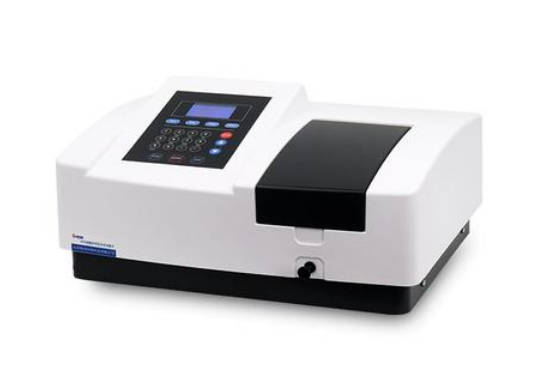
Product Samples We Regularly Subject to UV-Vis Spectrophotometer Testing
Our spectrophotometers accept liquid samples in cuvettes, solid specimens, thin films and gaseous analytes. The following categories represent the most frequently tested items submitted for our UV-Visible Spectrophotometer testing service:
- Pharmaceutical raw materials and finished dosage forms – active pharmaceutical ingredients, tablets, capsules, syrups, injectable solutions and ophthalmic preparations
- Environmental waters and wastewaters – drinking water, surface water, groundwater, industrial effluents, leachates and seawater
- Chemical products and industrial intermediates – acids, alkalis, solvents, surfactants, dyes, pigments, plating solutions and catalysts
- Food, beverages and agricultural commodities – fruit juices, wines, edible oils, milk, honey, cereal extracts and animal feeds
- Cosmetics and personal‑care products – creams, lotions, shampoos, hair dyes, sunscreens and fragrances
- Petroleum products and fuels – gasoline, diesel, biodiesel, lubricating oils and fuel‑ethanol blends
- Polymers, plastics and packaging materials – plastic sheets, films, optical filters, UV‑blocking coatings and transparent barriers
- Clinical and biological specimens – urine, blood serum, cerebrospinal fluid and tissue homogenates
Quantitative Analysis by UV-Vis Spectrophotometer – Absorbance, Transmittance and Concentration Determination According to Pharmacopoeial and ISO Methods
- Assay of active pharmaceutical ingredients and finished drug products according to USP ⟨857⟩, Ph. Eur. 2.2.25 and the harmonised ICH Q2(R1) validation guideline: the sample is dissolved in a suitable solvent, and the absorbance is measured at the wavelength of maximum absorption. The concentration of the analyte is calculated from a calibration curve prepared with a certified reference standard, and the result is reported in percentage of the label claim or in milligrams per unit dose. This UV-Visible Spectrophotometer testing service provides the assay data that are mandatory for the batch release and stability testing of medicines sold in every regulated market.
- Determination of nitrate, nitrite, phosphate, ammonia and total nitrogen in water and wastewater according to EPA Method 352.1, EPA Method 353.2 and ISO 7890: the analyte is converted to a coloured complex through a specific chemical reaction – such as the Griess reaction for nitrite or the ascorbic‑acid method for phosphate – and the absorbance is measured at the characteristic wavelength. The concentration is calculated from a calibration curve, and the method detection limits in the low microgram per litre range meet the requirements of the EU Water Framework Directive, the US Clean Water Act and the national discharge standards of most industrialised countries.
- Quantification of hexavalent chromium in industrial effluents and surface coatings according to EPA Method 7196A and ISO 11083: chromium(VI) is complexed with diphenylcarbazide, and the absorbance of the violet complex is measured at 540 nm. The method provides the specific discrimination between the toxic hexavalent chromium and the relatively benign trivalent form required by the RoHS Directive and the EU End‑of‑Life Vehicles Directive.
- Determination of iron, copper, nickel and other transition metals by colourimetric chelation: the metal ion is complexed with a selective chromogenic reagent such as 1,10‑phenanthroline for iron(II), bathocuproine for copper(I) or dimethylglyoxime for nickel(II), and the absorbance is measured. The data are used for the quality control of plating baths, industrial process waters and boiler feedwater.
- Measurement of formaldehyde and other carbonyl compounds in indoor air, textiles and cosmetics: the analyte is derivatised with 2,4‑dinitrophenylhydrazine or acetylacetone, and the absorbance of the resulting chromophore is measured. The results support compliance with the formaldehyde‑release limits for wood‑based panels, the textile Oeko‑Tex standard and the EU Cosmetics Regulation.
Qualitative and Structural Analysis – UV-Vis Spectrophotometer Testing Service for Spectral Identification and Purity Assessment
- Spectral identification and identity testing of pharmaceutical substances according to Ph. Eur. 2.2.25 and USP ⟨197⟩: the full absorption spectrum of the sample from 200 nm to 800 nm is recorded, and the positions and relative intensities of the absorption maxima and minima are compared with those of a reference spectrum. The technique provides a rapid, non‑destructive confirmation of the identity of the active ingredient and can detect gross adulteration or degradation.
- Assessment of DNA and protein purity by the A260/A280 ratio according to the Warburg‑Christian method and ASTM E169: the absorbance of the nucleic‑acid or protein solution is measured at 260 nm, 280 nm and 320 nm, and the ratios are calculated. A pure DNA sample yields an A260/A280 ratio of approximately 1.8, while a pure RNA or protein sample gives characteristic values that indicate freedom from cross‑contamination. This UV-Vis testing service is a routine quality‑control step in molecular‑biology laboratories and biopharmaceutical production facilities worldwide.
- Determination of the colour, chromaticity and yellowness index of liquids, plastics and transparent solids according to ASTM E313, ASTM D1209 and the Gardner and Saybolt colour scales: the transmission spectrum is converted to tristimulus values under the CIE standard illuminant and observer, and the chromaticity coordinates, the yellowness index and the haze are reported. These optical indices are critical for the quality control of solvents, resins, edible oils, architectural glazing and automotive headlamp lenses.
- Evaluation of UV‑blocking efficacy and cut‑off wavelength of sunscreens, films and packaging materials: the transmission spectrum is recorded over the UVA and UVB regions, and the critical wavelength, the SPF‑correlated absorbance and the UV‑A protection factor are calculated. The data support the labelling claims of sunscreen products regulated by the FDA, the EU and the Therapeutic Goods Administration.
UV-Vis Spectrophotometer Testing Service for Specific Industries – Pharmaceuticals, Food, Environmental and Materials
- Dissolution testing of solid oral dosage forms according to USP ⟨711⟩, Ph. Eur. 2.9.3 and the corresponding ICH guidelines: the tablet or capsule is placed in a dissolution apparatus containing a specified medium, and the concentration of the released drug is monitored over time by UV‑Vis spectroscopy at a defined wavelength. The dissolved amount as a function of time is compared with the acceptance criteria, and the results are used for the development of generic medicines, for the demonstration of bio‑equivalence and for the routine quality control of production batches.
- Determination of antioxidants, polyphenols and flavonoids in foods, beverages and botanicals using the Folin‑Ciocalteu, aluminium‑chloride and DPPH colourimetric methods: the absorbance of the reduced reagent or the radical‑scavenging complex is measured, and the total phenolic content or the antioxidant capacity is expressed as gallic‑acid equivalents or Trolox equivalents. The data are used for the marketing of functional foods, for the authentication of superfruit extracts and for the substantiation of health claims.
- Measurement of chemical oxygen demand in wastewater according to EPA Method 410.4 and ISO 15705: the sample is digested with potassium dichromate in sulfuric acid, and the decrease in absorbance due to the reduction of Cr(VI) to Cr(III) is measured at 600 nm. The method provides a rapid, small‑scale alternative to the titrimetric COD determination and is widely used in the monitoring of industrial effluent treatment plants.
- Colourimetric determination of ammonia, chloride and sulfide in power‑plant waters and petrochemical process streams: the analytes are converted to the indophenol‑blue, the mercury‑thiocyanate‑iron or the methylene‑blue chromophores, and the absorbance is measured. The data are used to control corrosion, to prevent stress‑corrosion cracking and to ensure compliance with the steam‑purity specifications of turbine manufacturers.
- Determination of the optical band gap and the absorption edge of semiconductor nanoparticles, thin films and photovoltaic materials: the diffuse‑reflectance or transmission spectrum is recorded, and the Tauc plot is constructed to extract the direct and indirect band‑gap energies. This UV-Visible Spectrophotometer testing service supports the research, development and quality control of photocatalysts, quantum dots and perovskite solar cells.
Quality Assurance, Calibration and Validation – The Foundation of Our UV-Vis Testing Service
- Wavelength accuracy and photometric linearity verification using certified reference materials traceable to NIST, NPL or other national metrology institutes: holmium oxide and didymium glass filters are scanned to verify the wavelength calibration, and neutral‑density filters or potassium dichromate solutions are used to confirm the absorbance accuracy and linearity over the operational range of the instrument. The results are recorded and reviewed before any client sample is analysed.
- Stray‑light and resolution performance checks according to the European Pharmacopoeia and ASTM E925: the stray‑light level is determined by measuring the absorbance of a cut‑off filter at wavelengths where the filter is essentially opaque, and the spectral resolution is assessed by measuring the ratio of the absorbances at the peak and the valley of a benzene or toluene vapour spectrum. The results demonstrate that the instrument is capable of meeting the pharmacopoeial requirements for the specific test method.
- Method validation and estimation of measurement uncertainty according to the EURACHEM/CITAC guide and ISO 21748: for each analyte‑matrix combination, the method is validated for specificity, linearity, range, precision, accuracy, limit of detection and limit of quantification. The expanded measurement uncertainty, typically between 1 % and 5 % of the reported value, is stated on the test report, giving the client full transparency and confidence in the data.
- Participation in international proficiency‑testing programmes: our laboratory regularly participates in proficiency‑testing schemes for the assay of pharmaceutical actives, the determination of nitrate and phosphate in water, and the colour measurement of transparent liquids, and our performance is monitored by the relevant accreditation bodies.
Report Acceptance and Global Regulatory Compliance
All measurements performed within our UV-Visible Spectrophotometer testing service are executed under the fully accredited scope of our ISO/IEC 17025 quality management system. Each test report that carries the ILAC mark is therefore automatically recognised by regulatory authorities, notified bodies, customs offices and supply‑chain partners in all major economies. For pharmaceutical manufacturers, environmental agencies, chemical producers, food‑safety laboratories, cosmetics formulators and materials developers anywhere in the world, the report constitutes legally robust, internationally accepted evidence that the optical absorbance, transmittance and concentration data have been determined in accordance with the applicable USP, Ph. Eur., EPA, ISO, ASTM, AOAC and customer‑specified methods. The documentation can be directly used for drug‑registration submissions, environmental‑permit applications, food‑safety clearance, cosmetic‑product notification, the issue of inspection certificates according to EN 10204 or equivalent national standards, and the resolution of commercial and technical disputes concerning the composition, purity and optical properties of any substance.




