Twist Fatigue Testing Service – Accredited Torsional Fatigue and Durability Evaluation for Global Markets
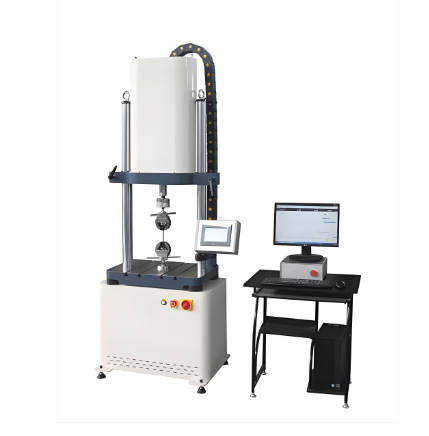
Our internationally accredited laboratory provides a dedicated twist fatigue testing service that supports manufacturers of automotive drivetrain components, aerospace structural parts, spring and torsion‑bar producers, fastener suppliers, biomedical implant developers and industrial machinery builders worldwide in assessing the long‑term durability and failure resistance of their products under cyclic torsional loading. Every test is performed within the rigorous framework of ISO/IEC 17025, and each report bearing the ILAC mark is unconditionally accepted by regulatory authorities, notified bodies and supply‑chain partners in all major economies. The twist fatigue testing service applies precisely controlled angular displacement, torque‑controlled or strain‑controlled cyclic loading to quantify the fatigue limit, the S‑N curve, the crack‑initiation life and the crack‑propagation behaviour of materials and components subjected to repeated twisting. By employing servo‑hydraulic torsional actuators, multi‑axial load cells, high‑resolution encoders and environmental chambers, we generate the legally robust, traceable fatigue data that underpin product qualification, lightweight design optimisation and compliance with the relevant ISO, ASTM, SAE and customer‑specified standards.
Product Samples We Regularly Subject to Twist Fatigue Testing
Our torsional test rigs accommodate specimens from miniature biomedical screws to full‑scale automotive half‑shafts and wind‑turbine couplings. The following categories represent the most frequently tested items:
- Solid and hollow drive shafts – propeller shafts, half‑shafts, intermediate shafts and power‑take‑off shafts for passenger cars, commercial vehicles, agricultural machinery and marine propulsion
- Torsion bars and stabiliser bars – automotive torsion‑bar springs, anti‑roll bars, track‑bar assemblies and trailer‑axle torsion elements
- Coil springs and wire forms – helical compression and extension springs, valve springs, clutch springs, die springs and wave springs
- Fasteners and bolted joints – high‑strength bolts, studs, screws and threaded connections subjected to torsional shear and combined tension‑torsion loading
- Couplings, universal joints and flexible connectors – disc couplings, gear couplings, elastomeric couplings, constant‑velocity joints and rubber‑element flexible shafts
- Welded and bonded tubular assemblies – welded drive‑shaft yokes, friction‑welded joints, adhesive‑bonded tubular structures and composite overwrapped shafts
- Biomedical and dental implants – orthopaedic bone screws, spinal‑fixation rods, dental‑implant abutment screws and intramedullary nails
- Wind‑turbine and power‑generation components – pitch‑system torsion shafts, generator‑rotor twist elements and steam‑turbine governor‑drive shafts
Torsional Fatigue Testing of Metallic Materials and Shafts – ASTM E2207, ISO 1352 and Related Standards
- Pure torsion fatigue testing of cylindrical specimens according to ISO 1352 (Metallic materials – Torque‑controlled fatigue testing): a polished cylindrical specimen is gripped in a torsional fatigue machine and subjected to a sinusoidal torque cycle at a frequency typically between 1 Hz and 30 Hz. The test is conducted under torque‑control or angle‑control mode, and the S‑N curve is constructed by testing multiple specimens at different shear‑stress amplitudes until either failure or a defined number of cycles (commonly 10⁶ or 10⁷) is reached. The torsional fatigue limit τf in megapascals and the slope of the finite‑life region are reported. This twist fatigue testing service provides the fundamental material data required for the design of rotating shafts, torsion springs and power‑transmission elements.
- Axial–torsional fatigue testing of thin‑walled tubular specimens according to ASTM E2207 (Standard Practice for Strain‑Controlled Axial‑Torsional Fatigue Testing): a thin‑walled hollow specimen is subjected to combined axial and torsional cyclic loading at controlled strain amplitudes. The cyclic shear‑stress–strain curve, the cyclic hardening or softening behaviour and the fatigue life under proportional and non‑proportional loading paths are determined. The data are essential for the prediction of the multiaxial fatigue life of engine crankshafts, landing‑gear axles and pressure‑vessel nozzles where combined bending and torsion occur.
- Influence of mean stress and stress concentration on torsional fatigue strength: specimens with circumferential notches, transverse holes or keyway geometries are tested at various mean torque levels, and the Haigh diagram for torsion is constructed. The fatigue‑notch factor Kf and the sensitivity to mean shear stress are reported, providing the design engineer with the parameters needed to account for the geometric discontinuities that are inevitable in real shafts and spindles.
- Fretting‑fatigue interaction under oscillatory torsional micro‑slip: a shaft‑and‑hub or a splined‑connection assembly is subjected to cyclic torsion while the contact surfaces undergo micro‑slip. The reduction of the fatigue life due to fretting damage at the interface is quantified, and the effectiveness of surface treatments – such as shot‑peening, nitriding or anti‑fretting coatings – is evaluated. This twist fatigue testing service supports the optimisation of interference‑fit joints, keyed connections and spline geometries in gearboxes and rotor assemblies.
- Elevated‑temperature torsional fatigue testing according to ISO 1352 with a furnace or induction‑heating attachment: the specimen is heated to service temperatures up to 800 °C in an inert atmosphere, and the torsional S‑N curve is determined. The data are used to select materials and to specify the heat‑treatment for turbocharger shafts, exhaust‑gas‑recirculation valve spindles and aero‑engine accessory‑drive shafts.
Torsional Fatigue Testing of Springs, Torsion Bars and Elastic Elements – SAE HS‑795, EN 13906 and Customer Specifications
- Cyclic torsion testing of helical coil springs according to the principles of SAE HS‑795 (Manual on Design and Application of Helical and Spiral Springs) and EN 13906‑1: the spring is installed in a test fixture that applies a reciprocating torsional or compressive motion, and the force‑versus‑deflection characteristic is monitored continuously. The number of cycles to the first detectable crack, to a specified loss of spring rate, or to complete fracture is recorded. This twist fatigue testing service validates the shot‑peening process, the preset treatment and the material grade of valve springs, clutch springs and suspension‑coil springs, ensuring that the spring will achieve the design life of the engine or the vehicle.
- Torsion‑bar fatigue and sag‑resistance testing: the torsion bar is pre‑loaded to the static design stress and then subjected to a superimposed cyclic angular displacement that simulates the suspension articulation. The change in the free angle (sag) and the fatigue life are measured. The test verifies that the bar will maintain the vehicle ride height and the spring rate over the life of the vehicle, and it is a mandatory part of the validation programme for light‑truck and military‑vehicle torsion‑bar suspensions.
- Multi‑axial spring‑fatigue testing with combined torsion and compression: a spring is loaded simultaneously by a compressive force and a twisting moment, replicating the complex stress state in a MacPherson‑strut spring or a progressively wound suspension spring. The S‑N curve under the combined loading is reported, and the data are used to calibrate the finite‑element fatigue‑life prediction of the spring design.
- Fatigue testing of wave springs, disc springs and Belleville washers: the spring is cycled between two defined deflections, and the load loss and the cycle life are reported. The test supports the qualification of these compact, high‑force springs for aerospace actuators, down‑hole oilfield tools and pressure‑relief valves.
Torsional Fatigue Testing of Fasteners, Couplings and Welded Joints – Verification of Torque‑Retaining Capability
- Cyclic torsional‑shear testing of bolted and riveted joints: a single‑lap or double‑lap joint is subjected to a cyclic transverse force that induces a torsional shear stress in the fasteners. The slip‑resistance, the torque‑retaining capacity and the fatigue life of the joint are determined. This twist fatigue testing service is critical for the validation of bolted connections in engine cylinder‑heads, wind‑turbine tower flanges and railway‑bogie frames where loss of preload can lead to fatigue failure.
- Torsional fatigue of flexible couplings and universal joints: a complete coupling assembly is installed between a driving and a driven shaft, and a sinusoidal torsional vibration is superimposed on a mean transmitted torque. The temperature rise, the wear of the elastomeric or metallic flexible element and the fatigue life of the coupling are measured, providing the data that power‑transmission engineers use to specify the coupling size and to set the maintenance interval.
- Fatigue of welded tubular joints under torsional loading: a welded tube‑to‑flange or tube‑to‑yoke assembly is tested in torsion, and the crack‑initiation site, the crack‑growth rate and the number of cycles to failure are recorded. The test qualifies the welding procedure, the filler‑metal selection and the post‑weld heat‑treatment for drive‑shaft, axle‑housing and structural‑tube applications.
- Combined tension–torsion fatigue of threaded fasteners: a bolt is loaded simultaneously by a cyclic axial tension and a cyclic torsional shear, simulating the stress state in a connecting‑rod bolt or a cylinder‑head stud during engine operation. The fatigue‑limit envelope in the tension–shear stress space is reported, providing the data that the engine designer needs to specify the correct tightening torque and the bolt strength class.
Report Acceptance and Global Regulatory Compliance
All measurements performed within our twist fatigue testing service are executed under the fully accredited scope of our ISO/IEC 17025 quality management system. Each test report that carries the ILAC mark is therefore automatically recognised by regulatory authorities, notified bodies, customs offices and supply‑chain partners in all major economies. For manufacturers of drive shafts, springs, fasteners, couplings and biomedical implants anywhere in the world, the report constitutes legally robust, internationally accepted evidence that the torsional fatigue strength, the S‑N curve and the crack‑initiation life have been determined in accordance with the applicable ISO, ASTM, SAE, EN and customer‑specified methods. The documentation can be directly used to support CE marking, the issue of inspection certificates according to EN 10204 or equivalent national standards, the compilation of technical files for type‑examination, and the resolution of commercial and technical disputes concerning the durability and the fatigue performance of any product subjected to cyclic torsional loading.