Transmittance Testing Service – Accredited Spectral Transmission and Optical Clarity Evaluation for Global Markets
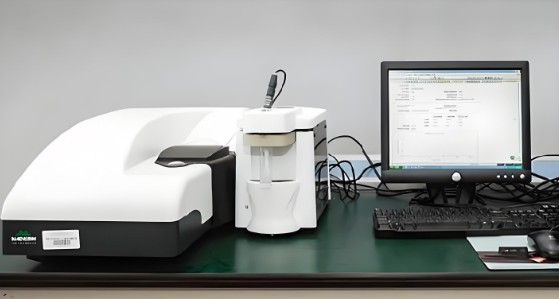
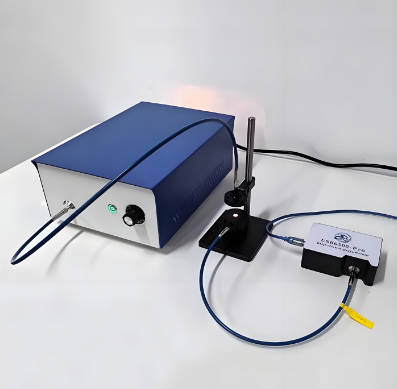
Our internationally accredited laboratory delivers a specialist transmittance testing service that provides glass manufacturers, plastic film producers, coating developers, automotive suppliers, solar‑panel makers and optical‑component fabricators worldwide with the independent, traceable data they require to quantify the light‑transmission properties of their materials and products. Every measurement is performed within the rigorous framework of ISO/IEC 17025, and each report bearing the ILAC mark is unconditionally accepted by regulatory authorities, customs offices and notified bodies in all major economies. The transmittance testing service employs high‑precision spectrophotometers, integrating spheres, haze meters and Fourier‑transform infrared spectrometers to measure total, diffuse and specular transmittance across the ultraviolet, visible and near‑infrared spectral regions. For an exporter of architectural glass, a manufacturer of greenhouse films, or a producer of optical filters, this service delivers the legally robust, defensible optical data that underpin product certification, compliance with building codes, energy‑label verification and international trade.
Product Samples We Regularly Subject to Transmittance Testing
The sample compartments and integrating‑sphere accessories of our spectrophotometers accept solid sheets, films, liquids and laminated assemblies. The following categories represent the most frequently tested materials:
- Flat glass and glazing products – clear float glass, tinted and reflective architectural glass, low‑emissivity coated glass, laminated safety glass and insulating glass units
- Plastic films and sheets – polyethylene, polypropylene, polyester and polycarbonate films for packaging, agricultural, medical and industrial applications
- Optical coatings and filters – anti‑reflective coatings, band‑pass filters, neutral‑density filters, dichroic mirrors and cold‑mirror coatings on glass or polymer substrates
- Photovoltaic materials – cover glass for solar modules, encapsulant films, transparent conductive oxides and perovskite or thin‑film cells on transparent substrates
- Automotive glazing and displays – windscreens, side windows, sunroofs, head‑up‑display combiner screens and automotive‑interior touch‑panel cover lenses
- Lenses, eyewear and optical components – spectacle lenses, camera lenses, telescope corrector plates, laser‑protection windows and safety goggles
- Liquids and solutions – dyes, pigments, optical brighteners, light‑absorbing additives in solvents and biochemical‑assay reagents
- Textiles and coated fabrics – awning fabrics, roller‑blind materials, shade‑net fabrics and inflatable‑structure membranes
Plastic Films, Packaging and Transparent Sheets – Transmittance Testing According to ISO 13468 and ASTM D1003
- Determination of the total luminous transmittance and haze of transparent plastics according to ISO 13468 (Plastics – Determination of the total luminous transmittance of transparent materials) and ASTM D1003 (Standard Test Method for Haze and Luminous Transmittance of Transparent Plastics): the specimen is placed at the entrance port of an integrating‑sphere spectrophotometer, and the total hemispherical transmittance for CIE standard illuminant D65 and the CIE 2° observer is recorded. The haze – the percentage of transmitted light that is scattered by more than 2.5° from the incident beam – is measured simultaneously. This transmittance testing service provides the optical‑clarity data that packaging converters need to certify the visibility of the packaged product and that greenhouse‑film manufacturers use to guarantee the photosynthetically active radiation transmission.
- Spectral transmittance of agricultural and horticultural films according to the methods of EN 13206 and the European Committee for Standardization guidelines for covering films: the transmittance in the UV‑B, UV‑A, PAR and far‑red regions is measured, and the integrated values are reported. The test verifies that the film provides the correct spectral‑filtering effect for the target crop and that the UV‑stabiliser package is effective.
- Measurement of the transmittance of plastic films after accelerated weathering: the film is exposed to xenon‑arc radiation and moisture cycles according to ISO 4892‑2, and the change in the total luminous transmittance and the haze is determined. The test predicts the loss of optical clarity over the service life of the film in outdoor applications.
- Determination of the infrared transmittance of thermal‑insulating and heat‑reflecting films: the transmittance in the near‑infrared and mid‑infrared regions is measured with an FTIR spectrometer, and the shading coefficient and the solar heat‑gain factor are calculated. The data are used to specify window films for energy‑saving building retrofits.
- Measurement of the transmittance of UV‑blocking and UV‑transmitting films: the spectral transmittance in the UV‑A and UV‑B regions is recorded, and the UV‑cut‑off wavelength and the average UV transmittance are reported. This test certifies the protection offered by food‑packaging films, sun‑control films and protective eyewear against ultraviolet radiation.
Glass, Glazing and Architectural Windows – Transmittance Testing According to ISO 9050 and EN 410
- Determination of the light transmittance, solar direct transmittance and total solar energy transmittance of glazing according to ISO 9050 (Glass in building – Determination of light transmittance, solar direct transmittance, total solar energy transmittance, ultraviolet transmittance and related glazing factors) and EN 410: the spectral transmittance and reflectance of the glass pane or the insulating glass unit are measured from 300 nm to 2500 nm, and the light transmittance τv, the solar direct transmittance τe, the UV transmittance τuv and the total solar energy transmittance (solar factor g) are calculated. This transmittance testing service provides the mandatory data for the CE marking of glass for use in buildings under the Construction Products Regulation and for the energy‑performance certification of windows, curtain walls and skylights.
- Measurement of the colour rendering index and the colour transmittance of tinted and coated glasses: the transmittance spectrum is convoluted with the spectral power distribution of the illuminant and the colour‑matching functions, and the chromaticity coordinates and the colour‑rendering index Ra are reported. The test verifies that the glass meets the aesthetic and visual‑comfort requirements of the architect.
- Determination of the angular transmittance of coated glass and solar‑control films: the transmittance is measured at incidence angles of 0°, 15°, 30°, 45°, 60° and 75°, and the angular‑selective performance is reported. The data are used by building‑energy modellers to calculate the dynamic solar gain of a façade.
- Measurement of the UV transmittance of laminated glass and the effectiveness of the PVB interlayer as a UV filter: the transmittance in the UV‑A and UV‑B regions is recorded, and the UV‑blocking factor is reported. The test confirms that the interlayer protects interior furnishings from fading and meets the requirements of the automotive and architectural specifications.
- Condensation‑resistance and emissivity‑correlated transmittance testing of low‑E glazing: the infrared reflectance and transmittance are measured, and the normal emissivity of the low‑E coating is calculated. The data are used to verify the declared thermal‑insulation performance of the coated glass and to model the risk of internal condensation.
Optical Coatings, Filters and Lenses – Transmittance Testing Service for Precision Optical Components
- Measurement of the spectral transmittance and the optical density of interference filters and neutral‑density filters according to ISO 15368 and the relevant MIL‑PRF‑13830 requirements: the filter is placed in a dual‑beam spectrophotometer, and the transmittance at the pass‑band and the blocking band is recorded. The peak transmittance, the full‑width at half‑maximum, the centre wavelength and the out‑of‑band optical density are reported. This transmittance testing service certifies the spectral‑blocking and transmission performance of filters used in fluorescence microscopy, Raman spectroscopy and laser‑based instrumentation.
- Determination of the transmittance and the reflectance of anti‑reflective coatings on glass and polymer substrates: the transmittance and the reflectance are measured over the visible spectrum, and the average transmittance and the peak transmittance are reported. The test verifies that the coating meets the specification for the reduction of ghost images and the increase of the light throughput in camera lenses and display screens.
- Measurement of the transmittance of polarising films and polarising beam splitters: the transmittance of the two orthogonal polarisation states is measured, and the extinction ratio and the degree of polarisation are calculated. The data are used to qualify polarisers for liquid‑crystal displays, 3D cinema glasses and optical‑isolator components.
- Transmittance measurement of spectacle lenses and protective eyewear according to ISO 8980‑3 and ANSI Z80.3: the transmittance in the UV‑A, UV‑B and visible regions is recorded, and the UV‑cut‑off wavelength and the luminous transmittance are reported. The test classifies the lens into the appropriate filter category for driving, general‑purpose or sunglare protection, and the report supports the CE marking and the FDA registration of the eyewear.
- High‑angle transmittance of head‑up‑display combiner screens and augmented‑reality waveguides: the transmittance and the reflectance are measured at the specific angle of incidence used in the HUD system, and the combiner efficiency and the ghost‑image contrast are calculated. This transmittance testing service supports the development and the quality control of advanced driver‑assistance and pilot‑awareness systems.
Photovoltaic Materials and Solar Cells – Transmittance Testing Service for Energy Conversion Devices
- Determination of the transmittance of photovoltaic module cover glass and encapsulants according to the methods of IEC 60904‑8 and ASTM E903: the spectral transmittance in the range of 300 nm to 1200 nm is measured with an integrating‑sphere spectrophotometer, and the weighted‑average transmittance under the AM1.5G solar spectrum is calculated. The data are used to quantify the optical loss in the module and to select the glass with the highest photon‑transmission efficiency.
- Measurement of the haze and the diffuse transmittance of textured and antireflection‑coated cover glass: the total transmittance is separated into the specular and the diffuse components, and the haze is reported. A moderate haze is desirable for light trapping in crystalline‑silicon modules, and the test provides the process‑control feedback for the texturing and coating steps.
- Transmittance and reflectance measurement of transparent conductive oxides and buffer layers on glass substrates: the spectral transmittance and the reflectance are measured, and the absorptance and the sheet resistance are derived. The data are used to evaluate the trade‑off between the electrical conductivity and the optical transparency of the electrode, which is critical for the efficiency of thin‑film and perovskite solar cells.
- Determination of the transmittance of building‑integrated photovoltaic glazing according to the combined requirements of IEC 61215 and ISO 9050: the light transmittance and the solar‑factor of the BIPV module are reported, providing the data that architects and building‑energy assessors need to model the daylighting and the thermal load of the building.
- Measurement of the photodegradation and the yellowing of encapsulants by the change in the transmittance after damp‑heat and UV‑exposure tests: the transmittance is measured before and after the accelerated‑ageing sequence, and the yellowness index and the loss of the short‑circuit‑current density are calculated. This transmittance testing service supports the qualification of the encapsulation system for the 25‑year module‑warranty.
Automotive Glazing, Displays and Specialised Transparent Materials – Transmittance Testing Service for Regulatory and Performance Compliance
- Measurement of the light transmittance of automotive glazing according to ECE R43 (Uniform provisions concerning the approval of safety glazing materials), ANSI Z26.1 and the relevant national regulations: the transmittance of the windscreen, the side windows and the rear window is measured with an integrating‑sphere spectrophotometer, and the result must exceed the minimum requirement – typically 70 % for the windscreen and 70 % for the front side windows in the EU. The test report is part of the type‑approval documentation for the vehicle.
- Measurement of the transmittance of automotive‑interior display cover lenses, touch‑screens and head‑up‑display mirrors: the spectral transmittance and the reflectance are recorded, and the clarity and the contrast‑reduction under ambient‑light conditions are evaluated. The data are used to optimise the anti‑reflection and anti‑glare treatments for infotainment and instrument‑cluster displays.
- Determination of the transmittance of sunroof glass and photochromic or electrochromic variable‑transmission glazing: the transmittance is measured in the clear state and, where applicable, in the darkened state, and the switching range and the residual tint are reported. The test certifies the comfort‑ and energy‑saving function of the variable‑transmission roof.
- Measurement of the transmittance of protective screens, safety‑visor materials and welding‑helmet filters according to the relevant ISO and ANSI standards: the luminous transmittance and the UV‑ and IR‑blocking performance are measured, and the shade number is assigned. The test ensures that the filter protects the wearer from harmful radiation while providing adequate visibility.
- Transmittance measurement of transparent armour, bullet‑resistant glazing and security‑window laminates: the transmittance is measured before and after ballistic‑impact testing, and the loss of transparency due to delamination or spall is assessed. The test is part of the certification of the glazing for military vehicles, armoured cars and high‑security buildings.
Report Acceptance and Global Regulatory Compliance
All measurements performed within our transmittance testing service are executed under the fully accredited scope of our ISO/IEC 17025 quality management system. Each test report that carries the ILAC mark is therefore automatically recognised by regulatory authorities, notified bodies, customs offices and supply‑chain partners in all major economies. For glass manufacturers, film producers, optical‑component fabricators, automotive suppliers and solar‑energy companies anywhere in the world, the report constitutes legally robust, internationally accepted evidence that the spectral transmittance, the haze and the related optical parameters have been determined in accordance with the applicable ISO, ASTM, EN, IEC and customer‑specified methods. The documentation can be directly used to support CE marking under the Construction Products Regulation or the Medical Device Regulation, to obtain national type‑approval certificates, to issue inspection certificates according to EN 10204 or equivalent national standards, and to resolve commercial and technical disputes concerning the light‑transmission and optical‑clarity performance of any transparent or translucent material.