
Thermal Expansion Coefficient Experiment – Accredited Dilatometry and CTE Measurement for Global Markets
Our internationally accredited laboratory delivers a specialist thermal expansion coefficient experiment service that enables manufacturers of metals, ceramics, polymers, composites, glasses, construction materials and electronic components worldwide to independently measure the coefficient of thermal expansion, the glass transition temperature, the softening point and the dimensional stability of their materials under precisely controlled heating and cooling cycles. Every measurement is performed within the rigorous framework of ISO/IEC 17025, and each report bearing the ILAC mark is unconditionally accepted by regulatory authorities, notified bodies and supply‑chain partners in all major economies. The thermal expansion coefficient experiment quantifies the reversible and the irreversible length change of a specimen as a function of temperature, providing the fundamental data that design engineers, finite‑element analysts, quality managers and material scientists need to predict thermal stresses, to match the expansion of dissimilar materials in an assembly, to set the correct clearances in a high‑temperature mechanism and to verify the conformance of the material to the relevant ISO, ASTM, EN and customer‑specified standards.
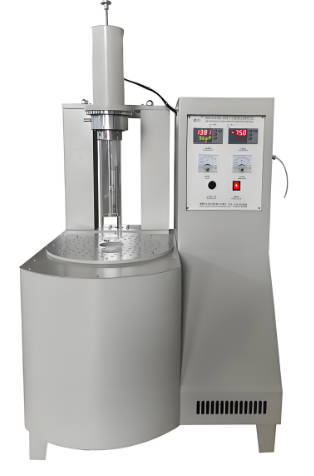
Product Samples We Regularly Subject to the Thermal Expansion Coefficient Experiment
The push‑rod dilatometers, optical dilatometers and thermomechanical analysers in our facility accommodate specimens ranging from a few millimetres to over 100 mm in length. The following categories represent the materials most frequently evaluated through our thermal expansion coefficient experiment programme:
- Metals and alloys – carbon and stainless steels, aluminium alloys, copper alloys, titanium alloys, nickel‑base superalloys, Kovar and Invar controlled‑expansion alloys, and solders for electronic packaging
- Ceramics and glasses – alumina, zirconia, silicon carbide, silicon nitride, fused silica, borosilicate glass, glass‑ceramics and porcelain for insulators, substrates and kiln furniture
- Polymers and polymer‑matrix composites – thermoplastics, thermosets, fibre‑reinforced laminates, printed‑circuit‑board base materials, epoxy moulding compounds and underfill encapsulants
- Construction and building materials – concrete, mortar, natural stone, clay bricks, calcium‑silicate blocks, aerated concrete, gypsum plaster and asphalt mixtures
- Carbon and graphite materials – isotropic and extruded graphite, carbon‑fibre‑reinforced carbon composites, graphite foils and electrodes for high‑temperature furnaces
- Electronic and semiconductor materials – silicon wafers, germanium, gallium arsenide, alumina substrates, low‑temperature‑cofired ceramics and the solder‑mask and dielectric layers of printed‑circuit boards
- Thin films, coatings and multi‑layer stacks – the thermal‑expansion mismatch of a coating on a substrate, measured by the curvature method or by in‑situ X‑ray diffraction
Metals, Alloys and Technical Ceramics – Thermal Expansion Coefficient Experiment According to ASTM E228, ASTM E831 and ISO 11359‑2
- Determination of the linear thermal expansion and the mean coefficient of thermal expansion of solid materials by push‑rod dilatometry according to ASTM E228 (Standard Test Method for Linear Thermal Expansion of Solid Materials with a Push‑Rod Dilatometer) and ISO 11359‑2 (Plastics – Thermomechanical analysis – Determination of the coefficient of linear thermal expansion): a cylindrical or a rectangular bar specimen is placed in a fused‑silica or an alumina push‑rod dilatometer, and the length change is recorded as the furnace temperature is ramped at a controlled rate – typically 1 °C/min, 3 °C/min or 5 °C/min – from a sub‑ambient starting temperature up to the maximum service temperature, which can be as high as 1 600 °C for the ceramic‑capable instruments. The instantaneous coefficient of linear thermal expansion α in ppm/K and the mean coefficient over any specified temperature interval are calculated and reported. This thermal expansion coefficient experiment provides the essential data for the design of metal‑to‑ceramic seals, the calculation of the thermal‑stress in a brazed joint and the verification of the alloy composition against the declared grade.
- Measurement of the coefficient of thermal expansion of low‑expansion and controlled‑expansion alloys by the absolute or the differential method: the specimen and a reference material of a known expansion – usually fused silica – are measured in the same thermal cycle, and the differential expansion is converted to the absolute CTE. The data are reported for the critical temperature windows of the electronic‑packaging and the aerospace‑optical applications, and the match with the target material – for example, a silicon chip or a borosilicate glass window – is verified.
- Determination of the glass‑transition temperature Tg and the softening point from the dilatometric curve according to ASTM E831 and ISO 11359‑2: the sharp change in the slope of the expansion‑versus‑temperature curve marks the glass‑transition, and the temperature of the onset and the midpoint of the transition are reported. For a glass or a glass‑ceramic, the dilatometric softening point – the temperature at which the specimen begins to contract under the push‑rod load – is also determined, providing the data that the firing‑curve designer uses to set the maximum sintering or the sealing temperature.
- Measurement of the phase‑transformation‑induced volume change and the coefficient of thermal expansion of shape‑memory alloys: the dilatometer records the sudden length change associated with the martensitic‑to‑austenitic transformation in nickel‑titanium, copper‑aluminium‑beryllium or iron‑manganese‑silicon alloys, and the transformation temperatures As, Af, Ms and Mf are reported together with the transformation strain and the CTE of each phase. This thermal expansion coefficient experiment supports the development and the quality control of the shape‑memory‑alloy actuators, the couplings and the medical‑device components.
- Determination of the thermal‑expansion anisotropy in oriented or textured materials: the CTE is measured in two or three orthogonal directions relative to the rolling, the extrusion or the fibre direction, and the anisotropy ratio is reported. The data are used to design the lay‑up of a composite laminate, the forging of a turbine disc or the welding of a dissimilar‑metal joint to avoid the distortion and the cracking caused by the directional expansion mismatch.
Thermal Expansion Coefficient Experiment for Polymers, Composites and Electronic Materials – Thermomechanical Analysis According to ISO 11359‑2 and IPC‑TM‑650
- Measurement of the coefficient of thermal expansion of a polymer film, a sheet or a moulded part by a thermomechanical analyser according to ISO 11359‑2: the specimen is placed under a small, constant compressive or tensile load, and the thickness or the length change is recorded as the temperature is ramped. The CTE before and after the glass transition, the Tg and the softening behaviour are reported. This thermal expansion coefficient experiment verifies that the polymer meets the CTE specification for the encapsulation of an electronic component, the lamination of a photovoltaic module or the injection‑moulding of a dimensionally stable automotive part.
- Determination of the in‑plane and the through‑thickness CTE of a printed‑circuit‑board laminate according to IPC‑TM‑650 Method 2.4.24 (Glass transition temperature and Z‑axis thermal expansion by TMA): the specimen is cut from the finished board, and the Z‑axis expansion is measured from room temperature to 250 °C. The CTE below Tg, the CTE above Tg and the total expansion at the soldering temperature are reported, providing the data that the board designer uses to guarantee the reliability of the plated‑through‑holes during the lead‑free soldering process.
- Measurement of the CTE of an adhesive, a sealant or an underfill material by TMA or by the fibre‑optic‑strain‑sensor method: the cured adhesive is placed in the TMA, or a strain‑sensor‑instrumented specimen is thermally cycled, and the CTE and the glass‑transition temperature are determined. The thermal expansion coefficient experiment ensures that the adhesive CTE is sufficiently close to that of the adherends to prevent the thermal‑cycle‑induced delamination of the bonded joint.
- Determination of the thermal‑expansion hysteresis and the irreversible expansion of a polymer or a composite after the first thermal cycle: the specimen is heated to a defined maximum temperature and cooled back to room temperature, and any residual expansion or contraction is measured. The data identify the relaxation of the moulded‑in stress, the post‑cure shrinkage or the moisture‑desorption‑induced dimension change that can affect the accuracy of a precision‑moulded component.
- Coefficient of thermal expansion of a composite laminate as a function of the fibre orientation and the fibre‑volume fraction: the CTE is measured on specimens cut at 0°, 90° and 45° to the fibre direction, and the data are used to validate the micromechanical model of the laminate and to design the quasi‑isotropic lay‑up that minimises the thermal warpage of an optical bench or a satellite‑antenna reflector.
Construction, Geological and Energy‑Related Materials – Thermal Expansion Coefficient Experiment for Civil and Environmental Engineering
- Determination of the coefficient of thermal expansion of concrete, mortar and aggregate according to ASTM C531, EN 1770 and the US Army Corps of Engineers CRD‑C 39 method: a concrete cylinder or a mortar prism is instrumented with a length‑comparator or an embedded strain gauge, and the length change is recorded over a temperature cycle from 0 °C to 60 °C. The CTE of the concrete and the aggregate is reported, providing the data that the pavement, the bridge‑deck and the dam designer uses to calculate the joint spacing and to predict the thermal‑cracking risk.
- Thermal expansion of rock, stone and mineral aggregates by the dilatometer method: the CTE of the rock core or the crushed‑stone sample is measured, and the data are correlated with the mineralogical composition and the porosity. This thermal expansion coefficient experiment supports the assessment of the thermal‑weathering resistance of the building‑stone, the dimension‑stone and the railway‑ballast materials.
- Measurement of the linear thermal expansion of glass, glazing and transparent ceramics for building‑envelope and solar‑energy applications: the CTE of the glass pane, the low‑E coating and the edge‑seal are measured, and the compatibility of the expansion coefficients is verified to prevent the seal‑failure and the gas‑leakage of the insulating‑glass unit.
- Determination of the thermal‑expansion behaviour of a thermal‑barrier coating and its metallic bond‑coat on a superalloy substrate: the CTE of each layer is measured by the dilatometer or by the in‑situ high‑temperature X‑ray diffraction, and the mismatch‑induced stress is calculated. The data guide the development of the next‑generation coatings for the gas‑turbine blades and the diesel‑engine pistons.
- Thermal expansion of a battery electrode, a solid‑electrolyte and a separator during the charge–discharge cycle: the dimensional change of the electrode film is measured by an electrochemical dilatometer, and the swelling and the contraction are correlated with the state of the charge and the cycle number. This thermal expansion coefficient experiment provides the critical data that the cell designer uses to predict the mechanical degradation and the lifetime of the lithium‑ion battery.
Report Acceptance and Global Regulatory Compliance
All measurements performed within our thermal expansion coefficient experiment programme are executed under the fully accredited scope of our ISO/IEC 17025 quality management system. Each test report that carries the ILAC mark is therefore automatically recognised by regulatory authorities, notified bodies, customs offices and supply‑chain partners in all major economies. For metal producers, ceramic manufacturers, polymer compounders, electronic‑packaging engineers and construction‑material suppliers anywhere in the world, the report constitutes legally robust, internationally accepted evidence that the coefficient of thermal expansion, the glass‑transition temperature and the dimensional stability of the material have been determined in accordance with the applicable ASTM, ISO, IPC and customer‑specified methods. The documentation can be directly used to support CE marking, the issue of inspection certificates according to EN 10204 or equivalent national standards, the compilation of technical files for type‑examination, and the resolution of commercial and technical disputes concerning the thermal‑expansion behaviour and the thermomechanical compatibility of any material.




