Testing Service for Externally Galvanized and Internally Lined Plastic Steel Pipes – Accredited Quality and Performance Evaluation for Global Markets
Our internationally accredited laboratory provides a dedicated testing service for externally galvanized and internally lined plastic steel pipes that supplies pipe manufacturers, water and gas utility companies, fire‑protection contractors, building‑services consultants and importers across the globe with the independent, traceable data required to verify that these composite pipes meet the structural, corrosion‑resistance and hygienic requirements of the applicable international standards. Every test is conducted within the rigorous framework of ISO/IEC 17025, and each report bearing the ILAC mark is unconditionally accepted by regulatory authorities, notified bodies and supply‑chain partners in all major economies. This testing service for externally galvanized and internally lined plastic steel pipes evaluates the full pipe system – the hot‑dip galvanized or electro‑galvanized outer coating, the thermoplastic or thermoset internal lining, the steel core and the pipe‑end connections – through a programme that covers coating thickness and adhesion, lining continuity and cure, hydrostatic and burst strength, bending and flattening resistance, long‑term corrosion durability and, where required, the migration of substances into drinking water. For a pipe mill exporting to the Middle East, a European contractor installing a high‑rise sprinkler system, or a municipal water authority specifying pipes for a desalination plant, our reports deliver the legally robust evidence needed for product certification, CE marking, NSF/ANSI approval and compliance with EN, ISO, ASTM and national standards.
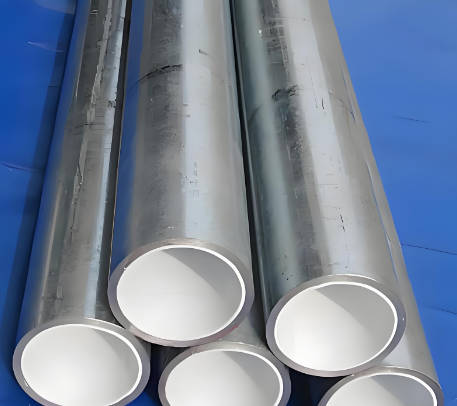
Product Samples We Regularly Subject to Testing for Externally Galvanized and Internally Lined Plastic Steel Pipes
Our laboratory receives finished pipes, coated sections and raw materials from every continent. The following categories represent the most frequently tested items:
- Galvanized steel pipes with polyethylene internal lining – pipes for potable water, chilled water, fire mains and industrial process water in nominal sizes from DN15 to DN300
- Galvanized steel pipes with epoxy internal lining – fusion‑bonded epoxy or liquid‑epoxy lined pipes for aggressive water, wastewater, fire suppression and oil‑field service
- Galvanized steel pipes with PVC or PP internal lining – pipes for chemical effluents, swimming‑pool circulation, marine cooling and desalination pre‑treatment
- Electro‑galvanized pipes with polyamide or PTFE lining – precision tubes for pneumatic systems, automotive brake lines and instrumentation air
- Hot‑dip galvanized pipes with cement‑mortar lining – large‑diameter pipes for raw‑water transmission and sewage rising mains
- Galvanized steel conduits with internal plastic sheathing – electrical conduits, cable protection pipes and telecommunication ducts
- Pipe samples with factory‑applied end treatments – grooved, threaded or flanged ends with internal lining brought flush to the gasket seating surface
Galvanized Coating Evaluation – Testing Service for Externally Galvanized and Internally Lined Plastic Steel Pipes According to ISO 1461 and ASTM A123
- Measurement of the galvanized coating thickness by magnetic induction according to ISO 2808 and ASTM E376: the coating thickness is measured at multiple points along the pipe circumference and length, and the minimum, maximum and average values are reported in micrometres. The results are compared with the minimum coating mass and thickness requirements of ISO 1461 for hot‑dip galvanized coatings on steel pipes, typically 55 µm for pipes up to 6 mm wall thickness and 70 µm for thicker sections. This testing service for externally galvanized and internally lined plastic steel pipes verifies that the external corrosion protection meets the design life specified by the project.
- Adhesion and cohesion of the galvanized layer by the bend test according to ISO 1461 and ASTM A143: a section of the pipe is bent around a mandrel, and the galvanized coating is inspected for cracking, flaking and delamination. The test confirms that the zinc‑iron intermetallic layers are well‑bonded and that the coating will not separate during handling, transport or thermal expansion of the pipe.
- Uniformity of the galvanized coating by the copper sulfate test according to ASTM A239: the pipe end is immersed in a copper sulfate solution for a specified number of dips, and any exposed iron is detected by the formation of a copper film. This classical test provides a rapid, on‑site‑transferable check of coating continuity for pipes destined for high‑corrosion environments.
- Surface finish and freedom from defects according to ISO 1461 and EN 10240: the pipe is visually inspected under good lighting for bare spots, gross dross inclusions, ash deposits and blisters. Any repairable areas are identified, and the report states whether the coating conforms to the acceptable‑quality limits of the standard.
Internal Plastic Lining Evaluation – Continuity, Cure and Bond Strength of the Lining Layer
- Determination of the internal lining thickness and concentricity by optical microscopy and mechanical gauging: a cross‑section of the pipe is polished, and the thickness of the plastic lining is measured at eight equally‑spaced points around the circumference. The mean, minimum and eccentricity are reported and checked against the manufacturer's declared nominal thickness, typically 0.5 mm to 3 mm for PE‑lined pipes and 0.3 mm to 1 mm for epoxy‑lined pipes.
- Holiday and pinhole detection by high‑voltage spark testing according to ASTM G62, NACE SP0188 and ISO 21809-2: the entire internal surface of the lining is scanned with a high‑voltage electrode, and any electrical discharge that indicates a pinhole, crack or thin spot is recorded. The test voltage is set according to the lining thickness, and the pipe is accepted only if no holidays are detected over the entire length. This testing service for externally galvanized and internally lined plastic steel pipes provides the definitive proof that the lining will form an impermeable barrier between the transported fluid and the steel substrate.
- Adhesion strength of the internal lining by pull‑off or peel test according to ISO 4624 and ASTM D4541: a dolly is glued to the lining surface, and the force required to detach the lining is measured. The failure mode – cohesive within the lining, adhesive at the interface or cohesive within the substrate – is recorded. For epoxy linings, the adhesion strength must typically exceed 5 MPa; for polyethylene linings, the peel force per unit width is reported.
- Degree of cure of epoxy internal linings by differential scanning calorimetry according to ISO 11357 and ASTM E2160: a small sample of the lining is heated in a DSC, and the residual exothermic energy is measured. The degree of cure is calculated from the ratio of the residual heat of reaction to the total heat of reaction of the uncured resin, and the lining is considered fully cured when the degree exceeds 95 %, ensuring that the lining will not leach unreacted amine or solvent into the water.
- Chemical resistance of the internal lining to disinfectants and process fluids: the lined pipe section is immersed in sodium hypochlorite solution, chloramine, acids or alkalis at the maximum service temperature for 28 days, and the change in appearance, adhesion and thickness is measured. The test verifies the long‑term compatibility of the lining with the chemicals used in water treatment and industrial processes.
Mechanical and Pressure Performance Testing – Hydrostatic Burst, Bending and Flattening Resistance
- Hydrostatic burst test according to ISO 1167, ASTM D1599 and EN 10255: a length of pipe with end caps is filled with water and pressurised at a controlled rate until failure. The burst pressure, the hoop stress at failure and the fracture morphology are recorded. The pipe must burst at a pressure well above the rated working pressure, demonstrating that the steel‑core strength is not compromised by the galvanizing or lining processes.
- Sustained pressure and leak‑tightness test according to ISO 1167 and ASTM D1598: the pipe is pressurised to 1.5 times the nominal pressure for a minimum of 1 hour, and any pressure drop or visible leakage is monitored. The test is repeated at elevated temperature if the pipe is intended for hot‑water service.
- Bending test of the composite pipe according to ISO 8491 and ASTM A370: a full‑section pipe is bent around a mandrel to a specified angle without fracture of the steel or cracking of the galvanized coating and the internal lining. The test validates the ductility of the pipe system and the ability of the lining to follow the deformation.
- Flattening test according to ISO 8492 and ASTM A370: a ring section of the pipe is compressed between two parallel platens until the distance between the platens reaches a defined fraction of the original diameter. The galvanized coating and the internal lining are inspected for cracking, and the steel weld is checked for splitting.
- Impact resistance of the internal lining at low temperature according to ASTM D2794 and EN 10255: the lined pipe is conditioned at -20 °C and impacted by a falling weight. The lining is then inspected for cracks or disbondment, simulating the handling of pipes during winter installation.
Corrosion Resistance and Durability Testing – Salt Spray, Humidity and Cyclic Exposure
- Neutral salt spray test of the galvanized external surface according to ISO 9227 and ASTM B117: the pipe section is exposed to a continuous salt fog for 200, 500 or 1 000 hours, and the time to first red rust is recorded. The test confirms that the galvanized coating can protect the steel core in the coastal or de‑icing‑salt environments encountered in global infrastructure projects.
- Damp heat and condensation resistance of the complete pipe according to ISO 6270-2: the pipe is placed in a condensing‑humidity chamber, and the external galvanized surface and the internal lining are inspected for blistering, delamination and rust after 500 and 1 000 hours. This testing service for externally galvanized and internally lined plastic steel pipes simulates prolonged storage in tropical warehouses and the internal condensation that occurs in idle fire mains.
- External corrosion under insulation and under gasket conditions: the pipe is wrapped with a wet insulation material or a gasket to simulate the crevice‑corrosion environment, and the corrosion of the galvanized coating is assessed after a defined period. The test identifies the risk of corrosion at pipe supports and flanged joints.
- Internal lining resistance to hot water cycling and chlorine exposure: the pipe is cycled between 23 °C and 80 °C water containing a residual chlorine concentration of 4 mg/L, simulating the conditions in a potable‑water distribution system. The adhesion and the barrier properties of the lining are re‑evaluated after 1 000 cycles.
Hygienic and Drinking‑Water Compliance Testing – Migration, Taste and Microbial Growth
- Testing of the internal lining for the migration of substances into drinking water according to EN 12873, AS/NZS 4020 and NSF/ANSI 61: the lined pipe is filled with test waters of defined pH and alkalinity, and the water is analysed for total organic carbon, heavy metals, specific monomers and additives after static and dynamic contact periods. The results are compared with the acceptance criteria of the relevant standard, and the pipe is certified for use in public water supplies.
- Chlorine demand and disinfection by‑product formation potential: the lined pipe is exposed to chlorinated water, and the decay of chlorine and the formation of trihalomethanes are measured. The data demonstrate that the lining does not consume excessive chlorine and does not contribute to the formation of harmful disinfection by‑products.
- Microbial growth and biofilm support potential according to BS 6920 and ASTM D6329: the internal surface is inoculated with a standard bacterial suspension, and the growth of the biofilm is quantified after incubation. The lining must not support microbial growth that could degrade the water quality.
- Odour and flavour assessment of water in contact with the lining according to EN 1420 and EN 1622: a trained sensory panel evaluates the odour and flavour of water that has been in contact with the pipe, and the threshold odour number and flavour profile are reported. The test ensures that the lining does not impart any unacceptable taste or smell to the water.
Report Acceptance and Global Regulatory Compliance
All measurements performed within our testing service for externally galvanized and internally lined plastic steel pipes are executed under the fully accredited scope of our ISO/IEC 17025 quality management system. Each test report that carries the ILAC mark is therefore automatically recognised by regulatory authorities, notified bodies, customs offices and supply‑chain partners in all major economies. For pipe manufacturers, water‑utility specifiers, fire‑protection contractors and building‑services consultants anywhere in the world, the report constitutes legally robust, internationally accepted evidence that the composite pipe meets the coating, mechanical, corrosion‑resistance and hygienic requirements of the applicable ISO, ASTM, EN, AS, NSF and national standards. The documentation can be directly used to support CE marking, NSF certification, IMO type‑approval, the issue of inspection certificates according to EN 10204 or equivalent national standards, and the resolution of commercial and technical disputes concerning the quality and performance of externally galvanized and internally lined plastic steel pipes.