Global Testing of Borosilicate Foam Glass Bricks for Insulation and Fire Safety
As an ISO/IEC 17025 accredited laboratory, we deliver a comprehensive testing of borosilicate foam glass bricks service that verifies thermal performance, mechanical strength, fire resistance, moisture durability, and dimensional accuracy. Our testing of borosilicate foam glass bricks program supports manufacturers and exporters supplying industrial insulation, building envelopes, cryogenic systems, and passive fire protection to the European Union, North America, the Middle East, and Asia Pacific. Every test is conducted under our CNAS-accredited quality system, producing reports accepted by notified bodies, building authorities, and major specification writers worldwide.

Product Samples We Regularly Test
- Borosilicate foam glass blocks and boards — for flat roofing, cavity walls, and underground insulation
- Pre-fabricated foam glass pipe sections and shells — for cryogenic and high-temperature process piping
- Tapered and fabricated foam glass shapes — for drainage falls and complex architectural geometries
- Laminated foam glass panels with facing sheets — for rainscreen cladding and ventilated facades
- Foam glass aggregate and loose-fill insulation — for ground insulation and lightweight fill applications
Core Testing of Borosilicate Foam Glass Bricks for Thermal and Mechanical Performance
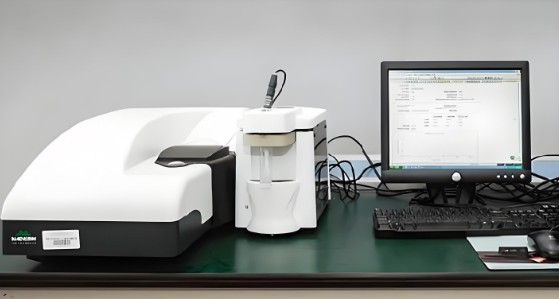
- Declared thermal conductivity and lambda value — measurement at 10 °C and 23 °C mean temperature according to EN 12667, ISO 8301, and ASTM C518 using heat flow meter apparatus, establishing the core lambda for CE marking to EN 14305 and energy code compliance.
- Compressive strength at 10% deformation — uniaxial compression per EN 826 and ASTM C165 on cubic specimens, determining the stress at yield or 10% strain to verify the load-bearing capacity under floor slabs, foundations, and heavy industrial loads.
- Flexural strength and modulus of rupture — three-point bending test per EN 12089 and ASTM C203 to assess the board's ability to span minor irregularities in the substrate without cracking during installation and service.
- Bulk density and apparent porosity — determination of dry mass and geometric volume per EN 1602 and ASTM C303, providing the density value that controls both thermal resistance and mechanical stiffness of the borosilicate foam glass brick.
- Dimensional stability under heat and humidity — exposure to 70 °C and 90% relative humidity per EN 1604, followed by measurement of linear and volumetric changes to ensure the foam glass remains stable in hot, humid service conditions.
Fire Resistance and Reaction-to-Fire Testing of Borosilicate Foam Glass Bricks
- Non-combustibility classification per EN 13501-1 — furnace testing per EN ISO 1182 and calorific potential per EN ISO 1716 to verify that the borosilicate foam glass brick achieves Euroclass A1, the highest fire safety rating for construction products.
- Surface flame spread and smoke development — ASTM E84 Steiner tunnel test to determine the flame spread index and smoke developed index for the North American market, typically achieving Class A due to the purely inorganic nature of the glass matrix.
- Fire resistance of complete insulated assemblies — full-scale furnace testing of wall and ceiling systems incorporating borosilicate foam glass bricks per EN 1364-1 and ASTM E119 to establish integrity and insulation ratings for fire compartmentation.
- Smoke toxicity and obscuration — ISO 5659-2 and FTIR analysis to confirm that no organic smoke or toxic gases are released from the inorganic borosilicate foam glass when exposed to fire, supporting life safety in tunnels and public buildings.
Moisture, Frost, and Vapor Transmission Testing of Borosilicate Foam Glass Bricks
- Water absorption by total immersion — testing per EN 12087 and ASTM C272 for 28 days to measure the mass of water absorbed into the closed-cell glass structure, with typical values well below 0.5% ensuring permanent buoyancy and frost resistance.
- Freeze-thaw resistance — saturated specimens are cycled between -20 °C and +20 °C per EN 12091, with post-test compressive strength and visual inspection confirming no spalling or strength loss due to the negligible water absorption.
- Water vapor permeability and resistance factor — wet cup and dry cup methods per EN 12086 and ASTM E96 to determine the μ-value, supporting condensation risk analysis for building physics models and interstitial condensation prevention.
- Capillary water uptake — partial immersion per EN 1609 to confirm that the borosilicate foam glass brick does not wick ground moisture into the building envelope.
Chemical Durability and Environmental Resistance Testing
- Resistance to acids, alkalis, and organic solvents — immersion per ISO 175 and ASTM D543 in representative aggressive media, verifying that the borosilicate glass chemistry resists chemical attack in industrial plant and chemical storage environments.
- Biological resistance and mold growth — inoculation with fungal spores per ASTM G21 and ISO 846, demonstrating that the inert glass surface does not support mold growth or bacterial colonization in humid and food-processing areas.
- Leaching of heavy metals and hazardous substances — per EN 12457 and EPA Method 1311, the foam glass is extracted to verify that no regulated metals leach into soil or groundwater, supporting environmental safety and green building certification.
- VOC and formaldehyde emission testing — chamber methods per ISO 16000-3 and EN 16516 to confirm that the purely inorganic borosilicate foam glass does not contribute to indoor air pollution.
Dimensional and Visual Quality Inspection of Borosilicate Foam Glass Bricks
- Length, width, thickness, and squareness — precision measurement with laser micrometers and calibrated steel rules per EN 822 and EN 824, verifying conformity to the declared work size tolerances for flat and tapered products.
- Flatness and edge straightness — using a calibrated straightedge and feeler gauge set to measure bow, twist, and edge profile deviation, ensuring close-butted joints and a level finished surface.
- Visual defect inspection under controlled lighting — systematic examination for chipped edges, surface cracks, contamination, and non-uniform cell structure against agreed acceptance criteria and master reference samples.
- Surface roughness and cellular structure assessment — stylus profilometry per ISO 4287 and microscopic imaging of the cut surface to verify the homogeneous closed-cell structure that defines the thermal and mechanical performance of the borosilicate foam glass.
Report Recognition and ISO/IEC 17025 Compliance
All methods described in this testing of borosilicate foam glass bricks program are covered by our ISO/IEC 17025 scope of accreditation. Our test reports are accepted by European notified bodies for CE marking under the Construction Products Regulation, by North American building officials referencing ASTM C552 and IBC requirements, and by regulatory and customs authorities across the Gulf, Australia, and Asia Pacific. Whether you need a complete initial type testing package, a batch release verification of factory production control, or a failure investigation of a site performance issue, our laboratory delivers the measurement accuracy and code expertise that the global insulation and fire protection industries demand.