
Test Piece Compression Experiment – Accredited Compressive Strength and Deformation Evaluation for Global Markets
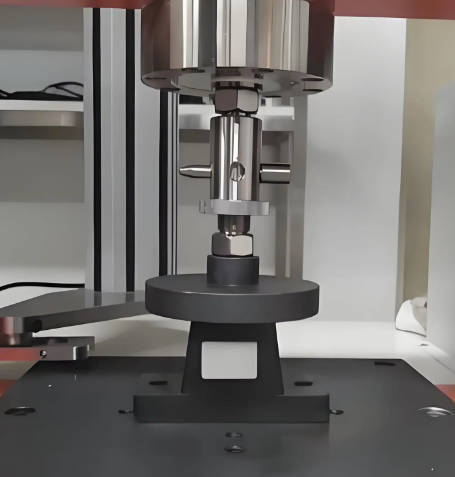
Our internationally accredited laboratory delivers a comprehensive test piece compression experiment service that enables manufacturers, materials engineers, construction companies, packaging producers and industrial designers worldwide to determine the compressive strength, modulus of elasticity, yield point and deformation behaviour of their materials and components under precisely controlled axial loading. Every test is performed within the rigorous framework of ISO/IEC 17025, and each report bearing the ILAC mark is unconditionally accepted by regulatory authorities, notified bodies and supply‑chain partners in all major economies. The test piece compression experiment subjects a specimen to a steadily increasing compressive force between two parallel platens, recording the load‑deflection curve until failure or a defined strain limit is reached. The resulting data are fundamental to the safe design of structures, the quality control of production batches and the certification of products to the applicable international standards.
Product Samples We Regularly Subject to Compression Experiments
Our servo‑hydraulic and electromechanical compression testing machines accommodate specimens from a few millimetres to over a metre in height. The following categories represent the most frequently tested materials and products:
- Metallic materials and alloys – steel, aluminium, copper and titanium alloy bars, tubes and forgings where the compressive yield strength and the ductility under compression must be verified
- Concrete, mortar, natural stone and masonry units – cubes, cylinders, drilled cores, clay bricks, calcium‑silicate blocks and aerated concrete blocks for structural engineering applications
- Plastics and polymer composites – thermoplastics, thermosets, glass‑fibre and carbon‑fibre reinforced laminates, and plastic pipes where the compressive modulus and the crush strength are critical
- Rigid foams and cellular materials – expanded polystyrene, extruded polystyrene, polyurethane and phenolic insulation boards, and lightweight core materials for sandwich panels
- Wood and wood‑based panels – structural timber, glued‑laminated timber, cross‑laminated timber, plywood, oriented strand board and particleboard
- Packaging and transport containers – corrugated fibreboard boxes, solid board cartons, plastic crates, pallets and intermediate bulk containers
- Ceramics, glass and advanced technical materials – sintered ceramics, porcelain, glass, hardmetals and cermets where the compressive strength is the primary quality parameter
- Biomedical and dental materials – bone cements, dental composites, ceramic implants and bioresorbable scaffolds evaluated for their load‑bearing capacity
Metallic Materials – Compression Testing According to ISO 6892‑1, ASTM E9 and EN 12390‑4
- Determination of the compressive yield strength, the ultimate compressive strength and the modulus of elasticity of metallic materials according to ASTM E9 (Standard Test Methods of Compression Testing of Metallic Materials at Room Temperature) and the principles of ISO 6892‑1: cylindrical specimens with a height‑to‑diameter ratio of 1.5 to 2.5 are compressed between two hardened, flat‑parallel platens. The 0.2 % proof strength in compression, the compressive yield point, the maximum compressive stress before buckling or barrelling, and the compressive modulus are reported. The test piece compression experiment provides the data that bearing manufacturers, fastener producers and machine‑frame designers use to verify that the material meets the specified grade requirements.
- Compression testing of grey and ductile cast iron according to EN 1561 and EN 1563: samples machined from separately cast test bars are compressed, and the compressive strength – which is typically several times higher than the tensile strength – is measured, providing the design data for press columns, machine beds and brake components.
- Elevated‑temperature compression testing of metallic alloys up to 800 °C according to ISO 6892‑2: the specimen is heated in a three‑zone furnace under an argon or vacuum atmosphere, and the yield strength and the stress‑strain curve are determined at the service temperature, supporting the design of power‑plant steam‑piping, turbine discs and aero‑engine compressor blades.
- Compression testing of sintered and powder‑metallurgy materials according to ASTM B925: the green and the sintered compacts are tested, and the compression‑strength evolution with the density and the sintering parameters is reported, guiding the optimisation of the manufacturing process.
Concrete, Mortar and Masonry Units – Compression Experiment According to EN 12390‑3, ASTM C39 and EN 772‑1
- Determination of the compressive strength of hardened concrete cubes and cylinders according to EN 12390‑3 (Testing hardened concrete – Compressive strength of test specimens) and ASTM C39/C39M: a 150 mm cube or a 150 mm × 300 mm cylinder is loaded to failure at a constant stress rate of 0.6 MPa/s. The maximum load is recorded, and the compressive strength in megapascals is reported. This test piece compression experiment is the primary acceptance criterion for structural concrete and is mandatory for the conformity assessment of the concrete delivered to every major construction site.
- Compressive strength of masonry units and natural stone according to EN 772‑1 and EN 1926: whole bricks, blocks or stone cubes are capped or ground flat, and the compressive load is applied perpendicular to the bed face. The normalised compressive strength and the failure pattern are reported, and the units are classified for the load‑bearing or the facing‑masonry applications.
- Testing of lightweight and aerated autoclaved concrete according to EN 1354 and EN 679: the compressive strength of the cellular concrete is measured, and the dry density is determined on the same specimen, yielding the strength‑to‑density ratio that classifies the product for the thermal‑insulation and the structural purposes.
- Determination of the static modulus of elasticity in compression according to EN 12390‑13: the concrete specimen is instrumented with precision extensometers and loaded cyclically up to one‑third of the anticipated compressive strength, and the secant modulus of elasticity is reported, providing the essential parameter for the deformation analysis of concrete structures.
Plastics, Polymer Composites and Cellular Materials – Compression Experiment According to ISO 604, ASTM D695 and ISO 844
- Determination of the compressive properties of rigid plastics according to ISO 604 (Plastics – Determination of compressive properties) and ASTM D695: prismatic or cylindrical specimens are compressed between two parallel anvils at a constant crosshead speed. The compressive yield stress, the compressive strength at break, the compressive modulus and the strain at the yield or at the break are calculated and reported. This test piece compression experiment distinguishes the ductile thermoplastics from the brittle grades and verifies that the injection‑moulded or the extruded component can withstand the design compressive load.
- Compressive testing of fibre‑reinforced plastic composites according to ISO 14126 and ASTM D6641: specimens with a short gauge length are loaded in a combined‑loading compression fixture to prevent the Euler buckling, and the in‑plane compressive strength and the modulus in the fibre direction and the transverse direction are determined, providing the data for the design of the composite bridge‑decks, the aircraft‑stiffeners and the wind‑turbine spar caps.
- Compressive behaviour of rigid cellular plastics according to ISO 844 (Rigid cellular plastics – Determination of compression properties) and ASTM D1621: the specimen is compressed between two parallel platens, and the compressive stress at 10 % relative deformation and the maximum compressive strength are reported. The test classifies the insulation board for the load‑bearing applications in the floors, the flat roofs and the foundation protection.
- Compressive creep and long‑term deformation of cellular plastics according to EN 1606: a constant compressive stress is applied to the foam specimen for 28 days or longer, and the creep deformation is monitored, providing the data that the building‑physics engineer uses to predict the long‑term thickness loss of the insulation under the permanent load.
Wood, Timber and Wood‑Based Panels – Compression Experiment According to EN 408 and ASTM D143
- Compressive strength parallel to the grain according to EN 408 (Timber structures – Structural timber and glued laminated timber – Determination of some physical and mechanical properties): a clear, straight‑grained specimen of 40 mm × 40 mm × 180 mm is loaded in compression between a spherically seated platen and a fixed platen, and the maximum load is recorded. The compressive strength and the modulus of elasticity in compression parallel to the grain are reported, supporting the assignment of the timber to the strength classes C14 to C50 according to EN 338.
- Compressive strength perpendicular to the grain: the specimen is loaded through a steel plate across the full width, and the stress at 1 % and 3 % deformation is determined, providing the bearing‑capacity data for the supports and the connections in the timber frames and the trusses.
- Compression testing of wood‑based panels – plywood, OSB and particleboard according to EN 789 and ASTM D3501: specimens are tested in compression in the plane of the board and perpendicular to the plane, and the compressive strength and the modulus are used by the furniture and the packaging industries to confirm the panel's ability to sustain the racking and the stacking loads.
- Compressive behaviour of cross‑laminated timber and glued‑laminated timber columns: larger‑scale specimens that represent the full cross‑section are compressed, and the failure mode – the crushing, the buckling or the splitting – is documented, validating the design assumptions for the multi‑storey timber buildings.
Packaging, Ceramics and Advanced Materials – Compression Experiment for Specific Industries
- Top‑to‑bottom compression test for corrugated fibreboard boxes according to ISO 12048 (Packaging – Complete, filled transport packages – Compression and stacking tests using a compression tester): the empty or the filled box is compressed between two rigid platens at a constant speed of 10 mm/min, and the maximum compression force and the force‑deflection curve are reported. The safe stacking height and the safety factor are calculated, supporting the packaging specification for the e‑commerce and the export‑container shipments.
- Compressive strength of advanced technical ceramics according to ASTM C1424 (Standard Test Method for Monotonic Compressive Strength of Advanced Ceramics at Ambient Temperature): small, precisely machined specimens are compressed in a carefully aligned fixture, and the characteristic strength and the Weibull modulus are reported, providing the design data for the ceramic armour, the cutting‑tool inserts and the medical implants.
- Compressive strength of glass and glass‑ceramics: cylindrical specimens with optically polished ends are tested, and the compressive strength – which is typically an order of magnitude higher than the tensile strength – is reported, supporting the structural design of the glass columns, the fins and the beams in the architectural projects.
- Compression testing of hardmetals and cermets according to ISO 4506 (Hardmetals – Compression test): the ultimate compressive strength and the yield point of the cemented‑carbide blanks are measured, providing the quality‑control data for the cutting‑tool and the wear‑part manufacturers.
Report Acceptance and Global Regulatory Compliance
All measurements performed within our test piece compression experiment service are executed under the fully accredited scope of our ISO/IEC 17025 quality management system. Each test report that carries the ILAC mark is therefore automatically recognised by regulatory authorities, notified bodies, customs offices and supply‑chain partners in all major economies. For metal producers, construction‑material suppliers, plastics converters, packaging manufacturers and advanced‑ceramic developers anywhere in the world, the report constitutes legally robust, internationally accepted evidence that the compressive strength, the modulus of elasticity and the deformation behaviour of the test piece have been determined in accordance with the applicable ISO, ASTM, EN and customer‑specified methods. The documentation can be directly used to support CE marking, the issue of inspection certificates according to EN 10204 or equivalent national standards, the compilation of technical files for type‑examination, and the resolution of commercial and technical disputes concerning the load‑bearing capacity of any material or product.




