Study on Adhesive Strength of Thin Film – Accredited Bonding, Pull‑Off and Peel Adhesion Evaluation for Global Markets
Our internationally accredited laboratory delivers a specialist study on adhesive strength of thin film service that provides manufacturers of optical coatings, electronic displays, semiconductor devices, flexible packaging, decorative laminates and photovoltaic modules worldwide with the independent, traceable data they need to quantify the bonding performance, the interfacial adhesion and the delamination resistance of their sub‑micrometre to sub‑millimetre film layers. Every measurement is performed under the rigorous framework of ISO/IEC 17025, and each report bearing the ILAC mark is unconditionally accepted by regulatory authorities, notified bodies and supply‑chain partners in all major economies. The study on adhesive strength of thin film employs a comprehensive suite of nano‑mechanical, micro‑mechanical and macro‑mechanical techniques – including nano‑scratch testing, micro‑tensile pull‑off, cross‑cut tape adhesion, peel testing and four‑point bending delamination – to characterise the practical work of adhesion, the fracture toughness of the interface, the cohesive failure mode and the environmental durability of the film‑substrate system. For a flat‑panel‑display producer qualifying a transparent conductive oxide on glass, a hard‑coating developer certifying a scratch‑resistant lens coating, or a flexible‑electronics manufacturer evaluating the adhesion of a barrier layer on a polymer substrate, our platform provides the legally robust, defensible data that underpin product design, process optimisation and compliance with the relevant ISO, ASTM, EN and customer‑specified standards.
Product Samples We Regularly Subject to the Study on Adhesive Strength of Thin Film
Our nano‑indenters, micro‑scratch testers, peel‑force analysers and environmental chambers accommodate specimens from individual coupons to full‑size coated panels. The following categories represent the items most frequently evaluated through our study on adhesive strength of thin film programme:
- Optical coatings and anti‑reflective layers – magnesium fluoride, silicon dioxide, titanium dioxide and multi‑layer dielectric stacks on glass, sapphire and polymer substrates for lenses, displays and laser optics
- Transparent conductive oxides and electrode films – indium tin oxide, aluminium‑doped zinc oxide and fluorine‑doped tin oxide on glass and flexible polymer substrates for touch‑screens, photovoltaic cells and organic light‑emitting diode lighting
- Hard, protective and tribological coatings – diamond‑like carbon, titanium nitride, chromium nitride and tungsten carbide‑carbon films deposited by physical vapour deposition or plasma‑enhanced chemical vapour deposition on tool steels, cemented carbides and mould inserts
- Barrier films and encapsulation layers – silicon nitride, silicon oxide, aluminium oxide and multi‑layer organic‑inorganic barrier stacks on polymer webs for the food‑packaging, the pharmaceutical‑blister and the flexible‑electronic industries
- Semiconductor and micro‑electro‑mechanical system thin films – gate oxides, inter‑layer dielectrics, metal interconnect lines, diffusion‑barrier layers and piezoelectric films on silicon wafers
- Decorative, metallised and lacquer coatings – vacuum‑metallised aluminium, sputtered chromium, electroplated nickel‑chromium and UV‑cured clear‑coats on acrylonitrile‑butadiene‑styrene, polycarbonate and polypropylene components for automotive trim, cosmetic packaging and consumer‑electronic housings
- Self‑adhesive and pressure‑sensitive thin‑film tapes – transfer adhesives, double‑sided mounting tapes and the adhesive layers of the retro‑reflective sheeting and the graphic‑marking films
Nano‑Mechanical and Micro‑Mechanical Methods – Scratch, Indentation and Micro‑Tensile Testing According to ISO 20502, ASTM C1624 and ASTM D7027
- Determination of the scratch‑induced delamination and the critical load for the adhesive failure of a thin film by the linearly‑increasing‑load nano‑scratch test according to ISO 20502 (Fine ceramics – Determination of the adhesion of ceramic coatings by scratch testing) and ASTM C1624: a diamond stylus of a defined tip radius is drawn across the coated surface under a progressively increasing normal load, and the tangential force, the penetration depth and the acoustic‑emission signal are recorded simultaneously. The critical load Lc at which the first cohesive crack appears, the load at which the first adhesive delamination occurs, and the load at which the coating is completely removed are reported. The scratch track is then examined by optical and scanning‑electron microscopy to identify the failure mode, and the practical work of adhesion is calculated from the critical load and the coating‑substrate mechanical properties. This study on adhesive strength of thin film is the primary method by which the tool‑coating, the optical‑coating and the hard‑coating industries qualify the adhesion of their sub‑micrometre and nanometre‑thick layers.
- Rockwell‑C indentation adhesion test according to the VDI 3198 guideline and the internal procedures for the hard coatings: a Rockwell C diamond indenter is pressed into the coated surface with a defined force, and the cracking pattern and the spallation around the indentation are classified into the adhesion‑quality classes HF1 to HF6. The method provides a rapid, semi‑quantitative assessment of the coating adhesion and is widely used for the quality control of the physical‑vapour‑deposition and the chemical‑vapour‑deposition tool coatings.
- Micro‑tensile pull‑off test for the thin films according to ASTM D7027 (Standard Test Method for Evaluation of Scratch Resistance of Polymeric Coatings and Plastics Using an Instrumented Scratch Machine) and the internal protocols for the micro‑scale adhesion: a small, flat‑faced cylindrical or a mushroom‑shaped dolly is glued to the surface of the thin film with a high‑strength cyanoacrylate or an epoxy adhesive, and the dolly is pulled in the pure tension by a precision micro‑tensile stage inside a scanning‑electron microscope or a dedicated micro‑test frame. The force at the failure and the fracture‑surface analysis by the energy‑dispersive X‑ray spectroscopy are reported, providing the direct, quantitative measurement of the interfacial bond strength in the megapascal range.
- Determination of the interfacial fracture toughness by the four‑point bending delamination test according to the principles of ASTM D5528 and the semiconductor‑industry standards: a sandwich specimen consisting of the film‑coated substrate bonded to a second un‑coated substrate by an adhesive is notched to the interface and loaded in the four‑point bending. The critical strain‑energy release rate Gc for the interfacial crack propagation is calculated from the load‑displacement curve, and the mode‑mixity at the crack tip is reported. This study on adhesive strength of thin film provides the fracture‑mechanics parameter that the finite‑element analyst uses to predict the thermo‑mechanical reliability of the multi‑layer thin‑film structures in the integrated circuits and the micro‑electro‑mechanical systems.
- Nano‑indentation and the contact‑damage analysis of the film‑substrate system: a Berkovich diamond indenter is driven into the film at a controlled depth, and the pop‑in events in the load‑displacement curve that correspond to the crack initiation and the delamination are recorded. The indentation is then imaged by the atomic‑force microscope or the scanning‑electron microscope, and the size of the delaminated region is correlated with the interfacial toughness, providing the complementary adhesion data at the nanometre scale.
Macro‑Mechanical and Peel‑Based Methods – Cross‑Cut, Tape‑Adhesion and Peel Testing According to ISO 2409, ASTM D3359 and ASTM D3330
- Cross‑cut (grid‑cut) adhesion test according to ISO 2409 (Paints and varnishes – Cross‑cut test) and ASTM D3359: a lattice pattern of six or eleven cuts in each direction is scribed through the film to the substrate, a standardised pressure‑sensitive tape is applied and rapidly pulled off, and the area of the detached coating is compared with the reference chart. The adhesion class from 0 (perfect) to 5 (severe failure) is reported. This study on adhesive strength of thin film is the most widely used rapid, field‑portable test for the quality assurance of the paint, the lacquer and the printed‑ink coatings on the production line and the incoming inspection.
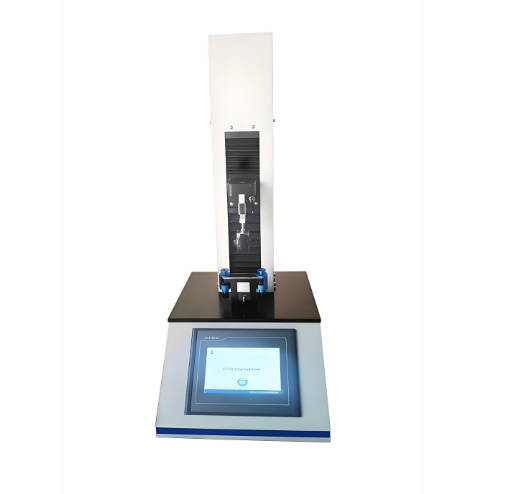
- 180‑degree and 90‑degree peel test for the flexible and the semi‑flexible films according to ASTM D3330 (Standard Test Method for Peel Adhesion of Pressure‑Sensitive Tape) and ASTM D6862: the film is peeled from the rigid substrate at a constant angle and speed, and the steady‑state peel force per unit width is recorded. The peel‑force curve, the average peel adhesion and the failure mode – adhesive at the interface, cohesive within the film or mixed – are reported, providing the data that the pressure‑sensitive‑tape manufacturer, the laminator and the label converter use to specify the correct adhesive and the surface preparation.
- Tensile‑pull‑off adhesion of the thin films and the coatings according to ISO 4624 (Paints and varnishes – Pull‑off test for adhesion) and ASTM D4541: a dolly is glued to the film surface, and a portable or a bench‑top pull‑off tester applies a tensile force perpendicular to the surface until detachment occurs. The pull‑off strength in megapascals and the fracture‑surface analysis are reported. The test is particularly suited to the thick films, the repair coatings and the in‑situ adhesion assessment on the installed structures.
- Peel‑stop and the razor‑blade test for the brittle thin films on the rigid substrates: a razor blade is inserted at the film‑substrate interface, and the crack length ahead of the blade is measured under an optical microscope. The interfacial fracture energy is calculated from the blade‑wedge geometry and the elastic properties of the film, providing a simple, rapid estimate of the adhesion for the research‑and‑development screening.
Environmental Durability and the Accelerated‑Ageing Adhesion Study – Combined Stress and the Long‑Term Performance
- Adhesion retention after the damp‑heat, the thermal‑cycling and the salt‑spray exposure according to the relevant parts of IEC 60068 and ISO 6270‑2: the coated specimens are exposed to +85 °C and 85 % relative humidity for 1 000 h, to the thermal cycling between -40 °C and +85 °C, or to the neutral salt spray according to ISO 9227, and the adhesion is remeasured by the cross‑cut, the pull‑off or the scratch test. The percentage retention of the adhesion and the shift in the failure mode are reported, providing the evidence that the film‑substrate bond will survive the environmental stresses of the target application.
- Adhesion after the UV‑radiation and the xenon‑arc weathering: the transparent or the pigmented coatings are exposed to the accelerated solar radiation with the water‑spray cycles, and the yellowing, the gloss loss and the adhesion are evaluated. This study on adhesive strength of thin film verifies that the photo‑oxidative degradation of the polymer matrix or the interface does not cause the premature delamination of the outdoor‑exposed coating.
- Effect of the cleaning agents, the sterilisation and the chemical exposure on the film adhesion: the coated component is immersed in the disinfectant, the autoclave‑sterilised or exposed to the aggressive process fluid, and the adhesion is retested. The data support the selection of the coating for the medical devices, the food‑processing machinery and the chemical‑plant components.
- Adhesion‑degradation kinetics and the Arrhenius life‑prediction for the film‑substrate bond: the adhesion is measured as a function of the time at several elevated temperatures, and the activation energy of the adhesion loss is calculated. The time to reach the critical adhesion at the service temperature is predicted, and the result is used to set the warranty period and the maintenance interval for the coated product.
Report Acceptance and Global Regulatory Compliance
All measurements performed within our study on adhesive strength of thin film service are executed under the fully accredited scope of our ISO/IEC 17025 quality management system. Each test report that carries the ILAC mark is therefore automatically recognised by regulatory authorities, notified bodies, customs offices and supply‑chain partners in all major economies. For optical‑coating manufacturers, semiconductor‑device producers, hard‑coating developers, flexible‑packaging converters and decorative‑trim suppliers anywhere in the world, the report constitutes legally robust, internationally accepted evidence that the adhesive strength, the interfacial toughness and the delamination resistance of the thin film have been determined in accordance with the applicable ISO, ASTM, EN and customer‑specified methods. The documentation can be directly used to support CE marking, the issue of inspection certificates according to EN 10204 or equivalent national standards, the compilation of technical files for type‑examination, and the resolution of commercial and technical disputes concerning the bonding performance and the long‑term adhesion of any thin‑film‑coated product.