Stainless Steel Woven Net Inspection Service for Global Filtration and Separation
As an ISO/IEC 17025 accredited laboratory, we provide a dedicated stainless steel woven net inspection service that confirms alloy identity, weave precision, mechanical strength, corrosion resistance, and cleanliness. Our stainless steel woven net inspection service is designed for manufacturers and exporters of wire mesh, filter elements, screen packs, and architectural woven metal who must satisfy ASTM, EN, ISO, and regional specifications in the European Union, North America, the Middle East, and Asia Pacific. Every test and measurement is performed within our CNAS-accredited scope, delivering reports that are accepted by notified bodies, customs agencies, and procurement authorities worldwide.

Product Samples We Regularly Test Under Our Stainless Steel Woven Net Inspection Service
- Plain and twill weave stainless steel wire cloth — for general filtration, screening, and protective guards
- Dutch weave and reverse Dutch weave filter mesh — high-flow, high-strength media for hydraulic and fuel filtration
- Stainless steel sintered mesh laminates — multi-layer woven wire bonded under heat and pressure for polymer and gas filtration
- Architectural and decorative woven wire mesh — rigid panels and flexible curtains for facades, balustrades, and interior design
- Test sieve and analytical sieve cloth — high-precision mesh mounted on frames for particle size analysis per ASTM E11 and ISO 3310
- Screen printing and electronic grade stainless steel mesh — ultra-fine and high-tension bolting cloth for printed circuits and display manufacturing
- Welded and formed stainless steel mesh components — filter discs, cones, baskets, and strainer elements
Core Stainless Steel Woven Net Inspection Services for Chemical and Alloy Verification
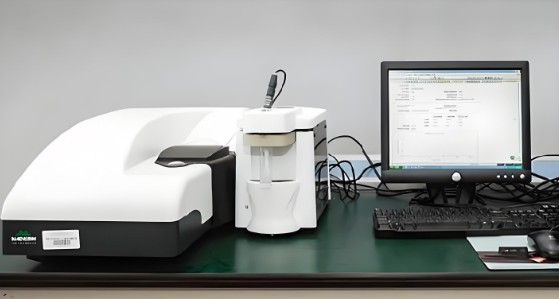
- Optical emission spectrometry for positive material identification — full spectral analysis per ASTM E1086 and ISO 14284 determines the precise chromium, nickel, molybdenum, and carbon content, confirming that the wire conforms to AISI 304, 304L, 316, 316L, 321, 904L, or duplex grades as claimed.
- Ferrite content measurement on austenitic and duplex wires — a calibrated ferrite scope per ISO 8249 quantifies the delta ferrite number in the drawn wire to verify that the microstructure is free from excessive ferrite that could lead to hydrogen embrittlement or corrosion in service.
- Intergranular corrosion testing on sensitized meshes — according to ASTM A262 Practice C (Huey) or ISO 3651-2, the woven net is boiled in nitric acid to detect grain boundary carbide precipitation, a critical check for meshes that will be welded or exposed to hot acids.
- Trace element and sulfur content analysis by combustion — LECO combustion per ASTM E1019 for carbon and sulfur ensures that weldability-critical elements are within the tight ranges required for mesh that will be seam-welded into filter elements.
Mesh Count, Wire Diameter, and Weave Geometry Inspection
- Mesh count and warp/weft wire diameter by optical microscopy — using a calibrated microscope and image analysis per ISO 9044 and ASTM E2016 to count openings per linear inch and measure individual wire diameters, verifying compliance with the declared mesh designation.
- Nominal aperture size and opening width measurement — the clear opening between adjacent wires is measured with a video measuring system to ensure the filtration rating or cut point is maintained within the specified tolerance, using the statistically required number of apertures per ASTM E11.
- Open area percentage and weight calculation — the open area is calculated from the mesh count and wire diameter data, then cross-checked against the specified weight per square meter measured per ISO 9044, providing both throughput and material consumption data.
- Weave crimp and wire profile analysis — cross-section micrographs of the woven intersection quantify crimp depth and angle, confirming uniform wire deformation that directly influences mesh rigidity and filter cake release properties.
- Weave pattern verification and defect mapping — visual inspection over a light table identifies double wires, missing wires, broken wires, and weaving faults across the full roll width and length.
Mechanical and Tensile Testing of Stainless Steel Woven Nets
- Tensile strength and elongation of the wire and mesh specimen — breaking force is measured on single wires per ISO 6892-1 and on mesh strip specimens per ISO 13934-1 or ASTM D5034, providing the ultimate tensile load the woven net can support before rupture in press frames or tensioned sieves.
- Burst strength of the sintered and unsintered woven assembly — applying hydraulic pressure through a test rig per ISO 2941 and ASTM F316 to measure the differential pressure at which the woven disc or laminate ruptures, determining the safety margin for filter element design.
- Stiffness and bending resistance — a cantilever bend test per ISO 4604 or ASTM D1388 measures the flexural rigidity of the woven net, a key parameter for automated pleating, forming, and insertion operations.
- Weld shear and tensile strength on seam-welded mesh components — transverse tensile testing per ISO 14273 on the welded seam of filter tubes and cones verifies that the weld is as strong as the parent wire, preventing bypass paths for unfiltered fluid.
- Fatigue testing under cyclic tension and vibration — for mesh used in vibrating screens and dynamic filter systems, specimens are cycled at a defined stress amplitude to generate S-N data that predicts service life.
Corrosion Resistance and Environmental Durability in Stainless Steel Woven Net Inspection
- Neutral salt spray testing per ISO 9227 and ASTM B117 — panels and discs of the woven net are exposed to continuous salt fog for 240, 500, or 1000 hours to evaluate red rust development, pitting, and white corrosion on the wire surface and weld zones.
- Pitting corrosion resistance in chloride solutions — conducting ASTM G48 Method A ferric chloride pitting tests at elevated temperatures to determine the critical pitting temperature of the stainless steel woven mesh, crucial for seawater and chemical process filtration.
- Stress corrosion cracking resistance of drawn and bent wires — U-bend or constant-load specimens of the mesh are exposed to boiling magnesium chloride per ASTM G36 to verify resistance to chloride stress corrosion cracking, especially for meshes formed into filter baskets and support grids.
- High-temperature oxidation and thermal stability — the woven net is aged in muffle furnaces at temperatures up to 600 °C or 800 °C, followed by weight change and tensile strength measurement to confirm mesh integrity in exhaust filtration and hot gas applications.
- Chemical compatibility with process solvents and cleaning agents — immersion tests in representative acids, alkalis, and CIP solutions per ISO 175 and ASTM D543, with post-exposure mechanical and dimensional checks confirming the mesh retains full performance.
Surface Quality, Cleanliness, and Contamination Inspection
- Residual oil and grease determination by solvent extraction — the woven net is washed in a suitable solvent and the extract residue is weighed gravimetrically per ISO 787-2, ensuring that the mesh meets the specified cleanliness level for oxygen service, food contact, or electronic manufacturing.
- Particle counting and non-volatile residue on cleaned mesh — rinse fluids are passed through a liquid particle counter per ISO 4406, and a defined area of mesh is extracted for microbalance NVR determination to demonstrate semiconductor and pharmaceutical grade cleanliness.
- Surface roughness and wire finish evaluation — stylus profilometry per ISO 4287 measures the Ra and Rz of individual wires, confirming that the specified bright, dull, or electropolished finish has been achieved and that no surface defects will trap bacteria or product residue.
- Visual inspection for pits, scratches, and weaving imperfections — under controlled D65 lighting and magnification, the mesh surface is inspected for the presence of inclusions, slivers, wire drawing marks, and handling damage against agreed limit samples.
- Passivation layer verification by copper sulfate or ferroxyl testing — spot tests per ASTM A967 and ASTM A380 confirm that the passive chromium oxide layer is intact and will resist corrosion after manufacturing and cleaning operations.
Report Recognition and ISO/IEC 17025 Compliance
All methods detailed in this stainless steel woven net inspection service are covered by our ISO/IEC 17025 scope of accreditation. Our technical reports are accepted by European notified bodies under the Pressure Equipment Directive, by FDA for food contact materials, by North American filter OEMs referencing ASTM specifications, and by customs and regulatory authorities in the Gulf, Australia, and Southeast Asia. Whether you require a first-article qualification for a new mesh specification, a batch release inspection of incoming filter cloth, or a failure investigation of a returned component, our laboratory provides the measurement rigor and regulatory knowledge that the global wire mesh industry demands.