Spray Particle Size Testing Service – Accredited Droplet and Aerosol Characterisation for Global Markets
Our internationally accredited laboratory provides a specialist spray particle size testing service that supplies manufacturers of agricultural nozzles, pharmaceutical inhalers, paint guns, fire‑suppression systems, aerosol valves and industrial atomisers around the world with the independent, high‑resolution droplet‑size data they need to guarantee performance, comply with regulatory limits and secure market access. Every measurement is performed within the rigorous framework of ISO/IEC 17025, and each report bearing the ILAC mark is unconditionally accepted by regulatory authorities, customs offices and notified bodies in all major economies. The spray particle size testing service employs laser diffraction, high‑speed imaging, phase‑Doppler anemometry and cascade‑impactor techniques to characterise the full droplet‑size distribution, the volume median diameter, the fine‑fraction mass and the spray‑plume geometry. For an exporter shipping nozzles to Brazil, a pharmaceutical company seeking FDA approval for a generic inhaler, or a fire‑safety engineer designing a water‑mist system for a European data centre, this service delivers the legally robust proof that the spray meets the atomisation requirements of the relevant international standards, pharmacopoeial monographs and customer specifications, directly supporting CE marking, type‑examination and global marketing authorisation.
Product Samples We Regularly Subject to Spray Particle Size Testing
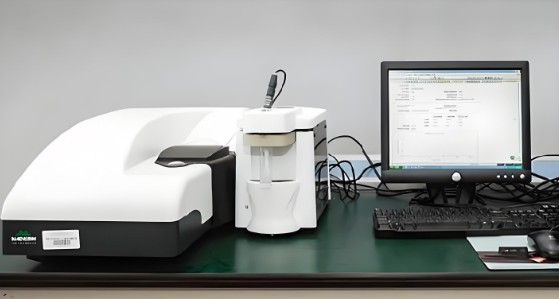
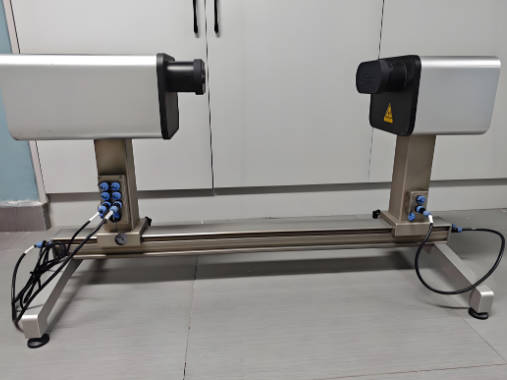
The Malvern laser‑diffraction systems, Sympatec analysers, high‑speed shadowgraph cameras and cascade impactors in our facility accept nozzles, actuators and complete devices from every industrial sector. The following categories represent the most frequently tested items:
- Agricultural spray nozzles and drift‑reducing tips – flat‑fan, hollow‑cone and air‑induction tips for field sprayers, orchard misters and vineyard applicators
- Pharmaceutical inhalation devices – pressurised metered‑dose inhalers, dry‑powder inhalers, soft‑mist inhalers and nasal‑spray pumps
- Industrial atomisers and coating nozzles – air‑assisted and airless paint‑spray guns, electrostatic bells, lubricant misters and humidification nozzles
- Fire‑suppression nozzles and water‑mist systems – pendent and sidewall sprinklers, water‑mist nozzles for machinery spaces and deluge‑system heads
- Aerosol consumer products – antiperspirant valves, hair‑spray actuators, air‑freshener and insecticide aerosol cans
- Fuel injectors and combustion nozzles – direct‑injection gasoline and diesel injectors, oil‑burner nozzles and gas‑turbine fuel atomisers
- Ink‑jet and additive‑manufacturing print heads – continuous‑inkjet and drop‑on‑demand heads, binder‑jetting and material‑jetting nozzles
- Disinfectant and sanitiser sprayers – trigger‑spray bottles, electrostatic disinfection guns and fogging machines
Agricultural Spray Nozzles and Drift‑Reducing Technologies – Spray Particle Size Testing According to ISO 22856 and ISO 24253
- Droplet‑size distribution by laser diffraction according to the principles of ISO 22856 (wind‑tunnel method) and ISO 13320: the nozzle is mounted in a purpose‑built spray chamber, and a Malvern or Sympatec laser‑diffraction system traverses the sheet at multiple positions. The volume median diameter, the Dv10, Dv50 and Dv90, and the percentage of droplets below 100 µm – the driftable‑fine fraction – are reported. This spray particle size testing service provides the objective data that nozzle manufacturers worldwide use to label their tips with the drift‑reduction class required by the EU Sustainable Use Directive and equivalent regulations in North America and Asia.
- Classification of drift‑reducing nozzles according to the German JKI, ISO 22369 and national schemes: the measured droplet spectrum is compared with the reference nozzles defined in the respective scheme, and the drift‑reduction percentage is calculated. A tip that achieves 50 %, 75 % or 90 % drift reduction is classified accordingly, and the certificate is accepted by agricultural authorities globally.
- Transverse distribution and spray‑sheet uniformity according to ISO 5682‑1: a patternator trough collects the liquid across the full swath width, and the coefficient of variation of the distribution is calculated. The test verifies that the nozzle produces a uniform overlap pattern when mounted on a boom at the specified spacing.
- Influence of operating pressure and liquid properties on droplet size: the droplet spectrum is measured at several pressures and with water, a surfactant solution and a simulated pesticide mixture. The effect of viscosity and surface tension is quantified, enabling the agronomist to select the correct nozzle for a given tank mix.
- Wind‑tunnel drift potential and airborne‑fraction measurement according to ISO 22856: a high‑speed wind tunnel is used to separate the driftable droplets from the main spray, and the airborne mass is collected on filters. The drift potential in percent is reported, and the data are correlated with the laser‑diffraction results to develop a robust drift‑prediction model.
Pharmaceutical Inhalers and Nasal Sprays – Aerodynamic Particle Size Distribution According to Ph. Eur. 2.9.44 and USP ⟨601⟩
- Aerodynamic particle size distribution of pressurised metered‑dose and dry‑powder inhalers by cascade impactor according to the European Pharmacopoeia (Ph. Eur. 2.9.44) and the United States Pharmacopeia (USP ⟨601⟩): the device is actuated into a next‑generation impactor or an Andersen cascade impactor, and the mass of active pharmaceutical ingredient deposited on each stage is determined by high‑performance liquid chromatography. The fine‑particle dose, the mass median aerodynamic diameter and the geometric standard deviation are calculated. This spray particle size testing service is mandatory for quality‑control release and bio‑equivalence demonstration of generic inhalers placed on any regulated market and is audited by the FDA, EMA and other authorities.
- Spray pattern and plume geometry for nasal sprays and soft‑mist inhalers according to Ph. Eur. 2.9.44 and FDA guidance: the spray is imaged by a high‑speed camera orthogonal to the plume axis, and the plume angle, the plume width and the spray‑pattern ovality are measured. The results are compared with the originator's specification and with the acceptance criteria of the ICH M9 guideline.
- Droplet‑size distribution by laser diffraction of nasal‑spray pumps and soft‑mist devices: the device is actuated into the laser beam of a Malvern Spraytec, and the Dv10, Dv50, Dv90 and the span are recorded for each actuation. The shot‑to‑shot variability is calculated, and the device is qualified for consistent atomisation performance.
- Delivery dose uniformity and fine‑particle mass through life: the inhaler is tested at the beginning, middle and end of its labelled number of actuations, and the fine‑particle dose and the emitted dose are measured. The trend over the life of the inhaler is reported, confirming that the patient receives the correct dose until the last puff.
Industrial, Coating and Consumer Spray Nozzles – Spray Particle Size Testing for Process Performance and Emissions Control
- Droplet‑size distribution and velocity field by phase‑Doppler anemometry for paint‑spray guns: a phase‑Doppler system simultaneously measures the diameter and the velocity of individual droplets as they travel through the measurement volume. The Dv10, Dv50, Dv90 and the mean velocity are mapped across the spray cone, and the data are used by automotive paint‑shop engineers worldwide to optimise transfer efficiency and to minimise overspray.
- Laser‑diffraction analysis of cooling and humidification mists: the nozzle is operated in a closed chamber, and the droplet spectrum is measured at the nominal operating pressure. The surface‑area mean diameter and the volume frequency distribution are reported, ensuring that the mist will evaporate completely before it reaches the floor or the machinery below.
- Spray‑angle, flow‑rate and droplet‑size correlation for atomising nozzles according to ISO 125 and customer procedures: the spray angle is captured by a high‑speed camera, the flow rate is measured gravimetrically, and the droplet‑size distribution is determined by laser diffraction. The three parameters are correlated with the liquid pressure and the air‑to‑liquid ratio, providing a complete characterisation of the nozzle performance map.
- Aerosol valve and actuator spray testing for personal‑care and household products: a complete can is actuated, and the droplet‑size distribution is measured by laser diffraction at a distance representative of the consumer's use. The fine‑fraction below 10 µm, which can be inhaled, is quantified, and the result is checked against the limit recommended by the WHO and national public‑health agencies for consumer safety.
- Measurement of the droplet‑size distribution of trigger‑spray and pump‑spray disinfectants: the spray is directed into the laser‑diffraction instrument, and the Dv50 and the percentage of droplets below 50 µm are reported. The test confirms that the disinfectant spray produces droplets large enough to avoid excessive inhalation risk while still providing adequate surface coverage.
Fire‑Suppression Nozzles and Water‑Mist Systems – Spray Particle Size Testing According to NFPA 750 and EN 14972
- Droplet‑size distribution of water‑mist nozzles according to the principles of NFPA 750 and EN 14972-1: the nozzle is mounted in a spray chamber, and the Dv0.50, Dv0.90 and Dv0.99 are measured by laser diffraction at the minimum and maximum operating pressures. The cumulative volume percentages at 100 µm and 200 µm are calculated, and the nozzle is classified as a water‑mist or a water‑spray device. This spray particle size testing service provides the evidence required by fire‑safety engineering communities globally to design water‑mist suppression systems for machinery spaces, cable tunnels and historic buildings.
- Flux density and coverage‑area measurement: a grid of collectors is placed under the spray, and the water volume collected in each cell is weighed. The distribution uniformity and the effective throw distance are reported, and the data are used to validate the nozzle spacing in the hydraulic calculations.
- Droplet‑size measurement under simulated air‑flow conditions: a variable‑speed fan generates a cross‑wind, and the droplet trajectory and the size distribution are measured downstream. The test verifies that the water‑mist system will deliver adequate suppression in a ventilated enclosure, such as an industrial kitchen hood or a generator room.
- Fire‑test correlation and the influence of additives on droplet size: the droplet spectrum is measured with plain water, with a foam concentrate and with a film‑forming additive, and the shift in the Dv50 is reported. The data are correlated with the results of a full‑scale fire test to demonstrate the extinguishing effectiveness.
Fuel Injectors and Combustion Nozzles – Spray Particle Size Testing for Efficiency and Emissions
- Droplet‑size and velocity distribution of direct‑injection gasoline and diesel injectors by phase‑Doppler anemometry and high‑speed imaging: the injector is fired at a representative fuel pressure into a chamber at controlled back‑pressure and temperature. The Sauter mean diameter, the Dv10, Dv50, Dv90 and the mean axial velocity are measured at several axial and radial positions, providing the data that engine calibrators worldwide use to optimise the injection timing and to reduce particulate‑matter formation.
- Laser‑diffraction measurement of oil‑burner and gas‑turbine fuel nozzles: the nozzle is operated with a calibration fluid or fuel, and the droplet spectrum is recorded. The spray symmetry and the change in droplet size with fuel viscosity are assessed, ensuring that the nozzle meets the atomisation requirement at the cold‑start condition.
Report Acceptance and Global Regulatory Compliance
All measurements performed within our spray particle size testing service are executed under the fully accredited scope of our ISO/IEC 17025 quality management system. Each test report that carries the ILAC mark is therefore automatically recognised by regulatory authorities, notified bodies, customs offices and supply‑chain partners in all major economies. For agricultural‑nozzle exporters, pharmaceutical‑inhaler manufacturers, fire‑safety equipment suppliers and industrial atomiser producers anywhere in the world, the report constitutes legally robust, internationally accepted evidence that the spray meets the droplet‑size requirements of the applicable harmonised standards, pharmacopoeial monographs and regulatory directives. The documentation can be directly used to support CE marking, FDA pre‑market notification, WHO pre‑qualification, the issue of inspection certificates according to EN 10204 or equivalent national standards, and the resolution of commercial and technical disputes concerning the atomisation performance of delivered nozzles, inhalers and spray devices.