Spray Humidifier Inspection Service for Global HVAC and Industrial Applications
As an ISO/IEC 17025 accredited laboratory, we deliver a comprehensive spray humidifier inspection service that verifies electrical safety, humidification performance, mechanical durability, water hygiene, and chemical compliance. Our spray humidifier inspection service supports manufacturers and exporters of high-pressure misting systems, ultrasonic humidifiers, air washer humidifiers, and industrial spray humidification modules who must demonstrate conformity to IEC, EN, UL, and regional building and safety standards across the European Union, North America, the Middle East, and Asia. Every test is performed under our CNAS-accredited quality system, producing reports accepted by notified bodies, building control authorities, and procurement teams worldwide.

Product Samples We Regularly Test in Our Spray Humidifier Inspection Service
- High-pressure spray humidifiers — for commercial and industrial air handling units and ducted ventilation systems
- Ultrasonic and piezoelectric spray humidifiers — for residential, office, and museum climate control
- Air washer and evaporative spray humidifiers — for data centers, textile mills, and printing facilities
- Centrifugal and compressed-air spray humidifiers — for greenhouse agriculture, cold storage, and wine cellars
- Portable and desktop spray humidifiers — for home, healthcare, and personal wellness applications
- Spray humidifier modules and nozzles — integrated into rooftop units, fan coil units, and close-control air conditioners
- Atomizing and misting humidification heads with integrated pumps — for large-space and outdoor cooling applications
Electrical Safety and Insulation Testing for Spray Humidifiers
- Dielectric strength and high-voltage withstand test per IEC 60335-2-98 and EN 60335-2-98 — a high voltage is applied between live parts and the accessible metal housing of the spray humidifier to verify the insulation system withstands transient overvoltages without breakdown, the fundamental safety requirement for household and commercial humidifiers.
- Insulation resistance measurement per IEC 60335-2-98 — a megohmmeter at 500 V DC measures the resistance between the mains circuit and the humidifier enclosure to confirm no moisture ingress or insulation degradation has occurred during manufacture or transport.
- Protective earthing continuity and ground bond test per IEC 60335-2-98 — a high current is passed through the protective earthing path to verify a resistance below 0.1 ohm for Class I metal-housed spray humidifiers, ensuring a reliable fault current path for user safety.
- Leakage current and touch current measurement per IEC 60990 and IEC 60335-2-98 — the maximum current that can flow through a person upon contact with the spray humidifier is quantified under normal and single-fault conditions to ensure it remains within safe limits.
- Creepage distances and clearances verification per IEC 60335-2-98 — the shortest paths along insulating surfaces and through air between live parts are measured to confirm compliance with minimum spacing requirements for the rated voltage and pollution degree.
Humidification Performance and Air Quality Testing in Our Spray Humidifier Inspection Service
- Humidification capacity and water consumption rate per internal protocols based on ASHRAE 133 and EN 13053 — the spray humidifier is operated under controlled inlet air temperature, humidity, and airflow, and the mass of water evaporated per hour is measured to verify the declared humidification output and energy efficiency.
- Humidity control accuracy and response time — the spray humidifier is integrated into a test duct with a downstream humidity sensor, and the time and stability of reaching the set-point relative humidity are recorded to evaluate the control system performance for critical climate applications.
- Droplet size distribution and spray mist carryover distance per ISO 13320 and internal methods — laser diffraction or imaging techniques measure the aerosol droplet size spectrum to confirm the spray humidifier produces a fine mist that fully evaporates without wetting downstream duct surfaces or filters.
- Airborne particle and mineral dust emission from the humidifier — the air downstream of the operating spray humidifier is sampled with a particle counter and filter to quantify any release of water-borne minerals, salts, or microbial fragments that could degrade indoor air quality.
- Noise level and sound power measurement per ISO 3744 and EN 60704-1 — the A-weighted sound power and sound pressure levels are measured in a hemi-anechoic or reverberation room to verify the spray humidifier meets the quiet operation requirements for residential, office, and healthcare environments.
Mechanical and Structural Durability Testing for Spray Humidifiers
- Water pump performance and flow stability per internal and customer protocols — the pump output pressure and flow rate are measured over extended operation to verify consistent spray nozzle performance and to detect any cavitation, pressure pulsation, or flow degradation.
- Nozzle clogging and anti-blocking endurance test per customer and internal methods — the spray humidifier is operated with hard water or water containing a defined level of calcium carbonate for extended cycles, and the reduction in mist output is recorded to evaluate the nozzle anti-clogging design and the need for water treatment.
- Housing and water tank impact resistance per IEC 60068-2-75 and ASTM D5420 — a spring-operated impact hammer or falling weight strikes the humidifier housing and water tank to verify the enclosure withstands accidental knocks during handling, cleaning, and installation without cracking.
- Water tank and float valve leak tightness per IEC 60335-2-98 — the water tank is filled and pressurized or inverted, and any leakage through seals, valves, and connections is assessed to prevent water damage to surrounding furniture and electrical installations.
- Vibration and transport simulation per IEC 60068-2-6 and ISTA 2A — the packaged spray humidifier is subjected to sinusoidal vibration and mechanical shock pulses to simulate the distribution environment, with full functional verification after testing.
Hygiene and Microbiological Safety Testing for Spray Humidifiers
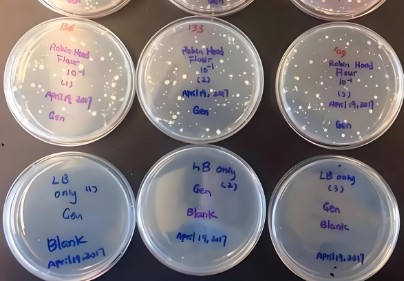
- Microbial growth and biofilm formation potential per VDI 6022 and ASTM D5952 — the humidifier water circuit is inoculated with a bacterial culture and operated under stagnation and flowing conditions, and the water and surfaces are sampled to verify that the spray humidifier design minimizes microbial proliferation and complies with hygiene guidelines for ventilation systems.
- Total viable count and Legionella detection in the mist output per ISO 11731 and customer protocols — the aerosolized water is collected and analyzed for aerobic bacteria and Legionella pneumophila to confirm the spray humidifier does not generate a health risk when operated with the specified water quality and maintenance regime.
- Material resistance to cleaning and disinfection chemicals per ISO 175 and ASTM D543 — the humidifier components are exposed to chlorine, hydrogen peroxide, and peracetic acid solutions to verify no degradation, stress cracking, or loss of function occurs during recommended disinfection procedures.
- Automatic flush and drain cycle effectiveness — the spray humidifier is tested through repeated fill, operate, and drain cycles to verify the system fully drains and does not retain stagnant water that could support microbial growth during idle periods.
Chemical Safety and Restricted Substance Compliance for Spray Humidifiers
- RoHS compliance per IEC 62321 and EU Directive 2011/65/EU — quantitative screening for lead, mercury, cadmium, hexavalent chromium, PBBs, and PBDEs in the electronic controls, wiring, plastic housing, and water contact materials to ensure the spray humidifier meets global substance restrictions.
- REACH Annex XVII and SVHC screening — targeted analysis of Substances of Very High Concern including specific phthalate plasticizers, organotin stabilizers, and bisphenol A in the water tank, seals, and plastic components of the humidifier.
- Migration of harmful substances into the water and mist per EU Regulation 10/2011 and BS 6920 — the water contact materials are extracted with test water and the leachate is analyzed for total organic carbon, heavy metals, and specific organic compounds to verify no harmful substances are transferred to the humidified air and breathed by occupants.
- Ozone emission from ultrasonic and electrostatic spray humidifiers per UL 867 and internal methods — the humidifier is operated in a sealed chamber and the ozone concentration is measured to verify it remains below the regulatory limit for occupied indoor spaces.
- Polycyclic aromatic hydrocarbons in rubber and plastic seals per AfPS GS 2019:01 PAK — for dark-colored gaskets, seals, and hoses, the 15 restricted PAHs are extracted and quantified to confirm compliance with European consumer product safety limits.
Report Recognition and ISO/IEC 17025 Compliance
All test methods described in this spray humidifier inspection service are covered by our ISO/IEC 17025 scope of accreditation. Our test reports are accepted by European notified bodies for CE marking under the Low Voltage and EMC Directives, by North American certification organizations for UL listing, and by building control and customs authorities across the Middle East, Australia, and Asia. Whether you require a complete type approval for a new spray humidifier design, a batch release inspection for an export shipment, or a root cause failure analysis of a field performance issue, our laboratory provides the measurement accuracy and regulatory expertise that the global humidification industry demands.