Slow Strain Rate Tensile Testing Service – Accredited Environmental Assisted Cracking and Hydrogen Embrittlement Evaluation for Global Markets
Our internationally accredited laboratory delivers a specialist slow strain rate tensile testing service that provides metal producers, pressure‑vessel manufacturers, pipeline operators, welding engineers and materials researchers worldwide with the independent, traceable data they need to assess the susceptibility of alloys to stress corrosion cracking and hydrogen embrittlement. Every test is conducted under the rigorous framework of ISO/IEC 17025, and each report carrying the ILAC mark is unconditionally accepted by regulatory authorities, notified bodies and supply‑chain partners in all major economies. The slow strain rate tensile test is the definitive accelerated method for evaluating the resistance of metallic materials to environmentally assisted cracking. By straining a specimen to failure at a very low, constant extension rate while it is fully exposed to a corrosive or hydrogen‑bearing environment, we obtain a direct, quantitative measure of the material's loss of ductility relative to its inert‑atmosphere performance. For an oil‑country tubular‑goods mill certifying a sour‑service grade, a nuclear‑reactor designer screening an alloy for primary‑water stress corrosion cracking, or a hydrogen‑refuelling‑station builder qualifying a pipeline steel, this service delivers the legally robust, defensible data that underpin material selection, safety‑case validation and compliance with the relevant ASTM, ISO, NACE and customer‑specified standards.
Product Samples We Regularly Subject to Slow Strain Rate Tensile Tests
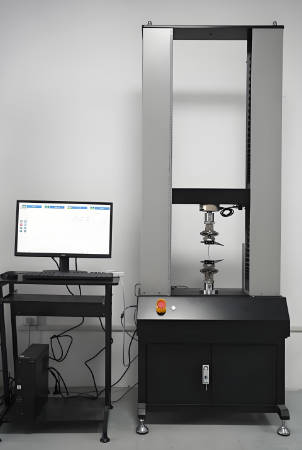
Our environmental chambers, autoclaves and servo‑hydraulic test frames accommodate standard tensile specimens, welded coupons and pre‑cracked fracture‑mechanics specimens. The following categories represent the materials most frequently evaluated through our slow strain rate tensile testing service:
- Carbon and low‑alloy steels – line‑pipe grades, pressure‑vessel plates, storage‑tank materials, drill‑pipe and casing steels destined for sour‑service, alkaline or CO₂‑containing environments
- Stainless steels and nickel‑based alloys – austenitic, duplex and super‑duplex stainless steels, Inconel and Hastelloy grades for chemical plants, nuclear steam generators, desalination equipment and marine structures
- Aluminium and titanium alloys – aerospace structural alloys, marine‑grade aluminium and lightweight automotive components evaluated for stress corrosion cracking in chloride‑containing environments
- Welded joints and heat‑affected zones – transverse all‑weld‑metal and cross‑weld specimens of butt‑welds, fillet‑welds and repair‑welds, tested to qualify welding procedures and to verify that the weldment matches the parent‑metal resistance
- Additively manufactured and powder‑metallurgy materials – laser‑powder‑bed‑fused and electron‑beam‑melted alloys, evaluated in the as‑built, stress‑relieved and hot‑isostatically‑pressed conditions for resistance to hydrogen‑induced and environmentally assisted cracking
- High‑strength and ultra‑high‑strength steels – quenched and tempered engineering steels, automotive advanced‑high‑strength grades and fastening steels, tested for delayed‑fracture risk in acidified or hydrogen‑charged conditions
Metallic Materials – Stress Corrosion Cracking Susceptibility Evaluated by Slow Strain Rate Tensile Test According to ASTM G129 and ISO 7539‑7
- Determination of the environmentally assisted cracking susceptibility according to ASTM G129 (Standard Practice for Slow Strain Rate Testing to Evaluate the Susceptibility of Metallic Materials to Environmentally Assisted Cracking) and ISO 7539‑7 (Corrosion of metals and alloys – Stress corrosion testing – Part 7: Slow strain rate testing): a standard tensile specimen is immersed in a specific corrosive environment – such as an acidified chloride solution, a high‑temperature pure‑water autoclave or a NACE TM0177 sour‑brine mixture – and strained at a constant, very low rate, typically in the range of 10⁻⁶ s⁻¹ to 10⁻⁷ s⁻¹. The percentage reduction of area, the elongation after fracture and the maximum load are recorded and compared with the values obtained in an inert reference environment such as glycerol or dry air. The ratio of the ductility parameters – the environmental embrittlement index – is reported, and a material is judged to be resistant if the ratio exceeds the acceptance criterion, commonly 0.90 for the reduction of area. This slow strain rate tensile testing service is the primary screening method for the selection of corrosion‑resistant alloys in the oil‑and‑gas, petrochemical, nuclear and chemical‑process industries.
- Post‑test fractography and secondary‑crack analysis: the fracture surfaces and the gauge‑length of the tested specimen are examined by scanning electron microscopy to identify the fracture mode – transgranular, intergranular or quasi‑cleavage – and to detect secondary cracks. The elemental composition of any corrosion product is determined by energy‑dispersive X‑ray spectroscopy, providing the mechanistic understanding that guides the alloy‑chemistry modification or the heat‑treatment optimisation.
- Influence of temperature, pH and electrochemical potential on the cracking susceptibility: the test is performed at temperatures up to 300 °C and under controlled electrochemical conditions, such as a potentiostatically applied anodic or cathodic potential. The dependence of the embrittlement index on the temperature, the chloride concentration and the potential is mapped, and the results are used to define the safe operating envelope of the material in the specific process environment.
- Slow strain rate tensile testing of welded specimens: the notch or the minimum cross‑section of the tensile specimen is precisely located in the weld metal, the coarse‑grained heat‑affected zone or the sub‑critical heat‑affected zone, and the susceptibility of each microstructural region to the stress corrosion cracking is determined individually. The data are used to qualify the welding consumable and the post‑weld heat‑treatment for the service environment.
Hydrogen Embrittlement Assessment – Slow Strain Rate Tensile Test in High‑Pressure Hydrogen or Under In‑Situ Hydrogen Charging According to ASTM G142 and NACE TM0284
- Evaluation of the hydrogen embrittlement susceptibility in high‑pressure gaseous hydrogen according to ASTM G142 (Standard Test Method for Determination of Susceptibility of Metals to Hydrogen Embrittlement in Hydrogen‑Containing Environments at High Pressure and High Temperature) and the relevant sections of ISO 11114‑4: the specimen is placed in an autoclave that is pressurised with ultra‑high‑purity hydrogen at pressures up to 100 MPa and temperatures up to 200 °C, and it is strained at a controlled, very low rate until fracture. The ductility metrics – reduction of area and elongation at break – are compared with those obtained in an inert reference environment, and the embrittlement index is reported. A material is deemed resistant if the relative reduction of area exceeds 90 %. This slow strain rate tensile testing service is the fundamental qualification test for all metallic alloys proposed for hydrogen‑transport, hydrogen‑storage and fuel‑cell‑vehicle applications.
- In‑situ electrochemical hydrogen‑charging during the slow strain rate test: the specimen is cathodically charged with hydrogen in an electrolyte while being strained, simulating the hydrogen uptake that occurs under a cathodic‑protection or a plating condition. The test identifies the alloys that are susceptible to internal hydrogen embrittlement and supports the specification of the maximum permissible hardness and the post‑plating baking procedure for fasteners and springs.
- Slow strain rate testing of pipeline and pressure‑vessel steels in hydrogen‑natural‑gas blends: the specimen is exposed to a mixture of hydrogen and natural gas at the pressures and the temperatures representative of a transmission‑pipeline operation, and the ductility loss is measured as a function of the hydrogen partial pressure. The data are used to assess the compatibility of the existing pipeline infrastructure with the injection of hydrogen into the gas grid.
- Fractographic analysis of the hydrogen‑induced fracture features: the fracture surface is examined for the characteristic hydrogen‑damage features – such as dimples, quasi‑cleavage facets and intergranular separation – and the correlation with the microstructure, the inclusion population and the strength level is established. The slow strain rate tensile test results are combined with the quantitative fractography to provide a complete picture of the hydrogen–material interaction.
Report Acceptance and Global Regulatory Compliance
All measurements performed within our slow strain rate tensile testing service are executed under the fully accredited scope of our ISO/IEC 17025 quality management system. Each test report that carries the ILAC mark is therefore automatically recognised by regulatory authorities, notified bodies, customs offices and supply‑chain partners in all major economies. For steel mills, alloy developers, pressure‑vessel and pipeline operators, welding workshops and hydrogen‑infrastructure builders anywhere in the world, the report constitutes legally robust, internationally accepted evidence that the stress corrosion cracking and the hydrogen‑embrittlement susceptibility of the material have been determined in accordance with the applicable ASTM, ISO, NACE and customer‑specified methods. The documentation can be directly used to support the material certification, the fitness‑for‑service assessment, the issue of inspection certificates according to EN 10204 or equivalent national standards, and the resolution of commercial and technical disputes concerning the environmental cracking resistance of any metallic product.