Size Exclusion Chromatograph (SEC) Testing Services – Accredited Molecular Size and Aggregation Analysis for Global Markets
Our internationally accredited laboratory delivers a specialist Size Exclusion Chromatograph (SEC) testing service that provides polymer scientists, biopharmaceutical developers, vaccine manufacturers, food ingredient suppliers, chemical producers and research institutions worldwide with the definitive, high‑resolution data they need to characterise molecular size distributions, detect aggregates, quantify fragments and verify the purity of macromolecules. Every analysis is performed within the rigorous framework of ISO/IEC 17025, and each report bearing the ILAC mark is unconditionally accepted by regulatory authorities, customs offices and notified bodies in all major economies. Size Exclusion Chromatograph testing services separate molecules solely on the basis of their hydrodynamic volume in solution, using columns packed with porous particles that exclude large molecules while retaining smaller ones. This gentle, non‑destructive separation mode is uniquely suited to the analysis of sensitive biological macromolecules, water‑soluble polymers, synthetic resins and complex natural products. By employing aqueous and organic mobile phases, multi‑angle light‑scattering, viscometry, refractive‑index and ultraviolet detectors, our platform provides the complete molecular‑weight distribution, the absolute molar mass, the radius of gyration, the degree of branching and the aggregate‑to‑monomer ratio – all critical parameters that govern product performance, stability and safety.
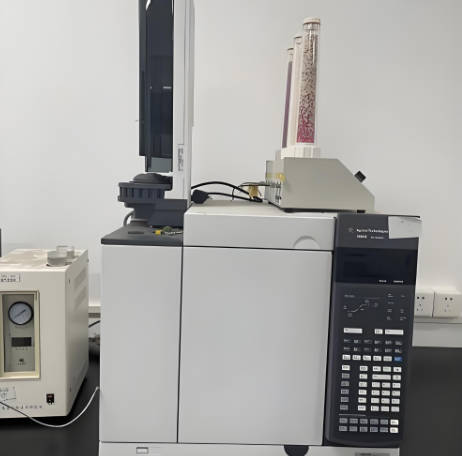
Product Samples We Regularly Subject to Size Exclusion Chromatograph (SEC) Testing
The non‑denaturing separation mechanism and the wide choice of column chemistries make SEC applicable to an extraordinarily diverse range of macromolecular and colloidal samples. The following categories represent the materials most frequently analysed through our Size Exclusion Chromatograph testing services:
- Synthetic polymers and plastics – polyethylene glycol, polyvinyl alcohol, polyacrylamides, polyacrylic acid, polystyrene sulfonate, polyvinylpyrrolidone and water‑soluble copolymers
- Biopharmaceutical and protein products – monoclonal antibodies, fusion proteins, antibody‑drug conjugates, insulin, growth factors, vaccines, virus‑like particles and gene‑therapy vectors
- Polysaccharides and carbohydrate polymers – heparin, low‑molecular‑weight heparin, chondroitin sulfate, hyaluronic acid, dextran, pullulan, starch and cellulose derivatives
- Coatings, adhesives and resin systems – water‑based acrylic latexes, polyurethane dispersions, epoxy and polyester resins, alkyd resins and hot‑melt adhesives
- Food hydrocolloids and ingredients – pectin, carrageenan, alginate, gelatin, guar gum, xanthan gum and hydrolysed collagen
- Natural organic matter and environmental samples – humic substances, fulvic acids, lignosulfonates, tannins and dissolved organic carbon isolates
- Petroleum and petrochemical products – asphaltenes, heavy oils, bitumens and high‑molecular‑weight additives
- Nucleic acids and gene‑delivery systems – plasmid DNA, mRNA, lipid nanoparticles and viral vectors
Size Exclusion Chromatograph (SEC) Testing Services for Biopharmaceuticals, Proteins and Vaccines – Aggregation, Fragmentation and Purity
- Determination of the size‑variant profile of therapeutic proteins and monoclonal antibodies according to USP ⟨129⟩, Ph. Eur. 2.2.46 and the ICH Q6B guideline: the sample is injected onto a silica‑ or polymer‑based SEC column with an aqueous phosphate‑buffer mobile phase, and the elution is monitored by UV absorbance at 214 nm or 280 nm. The percentages of high‑molecular‑weight aggregates, the monomeric active species and low‑molecular‑weight fragments are reported with baseline resolution. This Size Exclusion Chromatograph testing service provides the stability‑indicating data that are mandatory for the batch release, shelf‑life monitoring and comparability assessment of biotechnology products, and the report is accepted by the FDA, EMA and other global health authorities.
- Absolute molar mass and aggregate quantitation by SEC‑MALS (multi‑angle light scattering): the SEC system is coupled to a multi‑angle laser‑light‑scattering detector and a differential refractive‑index detector, enabling the direct determination of the molar mass of each eluting fraction without reliance on column calibration standards. Trace aggregates that are poorly resolved from the monomer peak are detected and quantified at levels below 0.05 %, providing the sensitivity required for the characterisation of biosimilars and the investigation of immunogenicity risks.
- Analysis of antibody‑drug conjugates and PEGylated proteins by SEC with UV and refractive‑index dual detection: the drug‑to‑antibody ratio and the extent of PEGylation are estimated from the shift in retention time and the response of the UV and RI detectors. The method quantifies free drug, free protein and the desired conjugate, directly supporting process development and the quality control of these complex therapeutic modalities.
- Characterisation of virus‑like particles, viral vectors and gene‑therapy products by SEC with UV and fluorescence detection: the intact viral particle is separated from aggregates, empty capsids and DNA/RNA fragments. The percentage of full capsids and the purity of the viral preparation are reported, providing the essential data required for the regulatory submission of vaccines and cell‑and‑gene‑therapy products.
- Size‑based analysis of polysaccharide vaccines and polysaccharide‑protein conjugates: the molecular size distribution of the polysaccharide antigen, the conjugate and any free polysaccharide or protein is determined by SEC with refractive‑index or UV detection, supporting the WHO pre‑qualification and the pharmacopoeial compliance of pneumococcal, meningococcal and Haemophilus influenzae type b vaccines.
Size Exclusion Chromatograph (SEC) Testing Services for Synthetic and Water‑Soluble Polymers – Molecular Weight, Branching and Conformation
- Determination of the molecular‑weight distribution of water‑soluble polymers according to ISO 13885, ASTM D7504 and DIN 55672: the polymer – such as polyacrylamide, polyvinyl alcohol, polyethylene glycol, polyacrylic acid or polyvinylpyrrolidone – is dissolved in a suitable aqueous buffer and injected onto a hydroxylated polymethacrylate or silica SEC column. The elution profile is recorded by a refractive‑index detector, and the number‑average, weight‑average and Z‑average molecular weights, together with the polydispersity index, are reported against a calibration curve constructed with narrow‑dispersion standards of the same polymer class. This Size Exclusion Chromatograph testing service provides the molecular‑weight data that water‑treatment, paper‑making and personal‑care formulators use to predict viscosity, flocculation efficiency and film‑formation behaviour.
- Absolute molecular weight and radius of gyration by SEC‑MALS for branched and hyperbranched polymers: the polymer is separated on an aqueous SEC column and analysed by multi‑angle light scattering and viscometry. The absolute molecular weight at each elution slice is measured, and the Mark‑Houwink coefficients, the radius of gyration and the branching ratio are calculated. This approach is essential for characterising starch derivatives, hyperbranched polyesters and dendrimers, where traditional column calibration with linear standards would yield incorrect molecular‑weight values.
- Analysis of low‑molecular‑weight heparin and other depolymerised polysaccharides according to the Ph. Eur. and USP monographs: the sample is separated on a high‑resolution SEC column, and the molecular‑weight distribution and the percentage of chains within specified molecular‑weight ranges are reported. The data demonstrate compliance with the pharmacopoeial specifications that distinguish different grades of low‑molecular‑weight heparin, which are critical for the safety and efficacy of these anticoagulant drugs.
- Monitoring of polymer degradation and stability under thermal, oxidative and hydrolytic stress: the change in the molecular‑weight distribution is measured after exposure to elevated temperature, UV radiation, hydrogen peroxide or enzymatic digestion. The kinetic data support the prediction of product shelf‑life, the assessment of environmental biodegradability and the validation of sterilisation processes for polymer‑based medical devices.
- Characterisation of polyelectrolytes and charged polymers by SEC with ionic‑strength control: the mobile phase is adjusted to suppress ionic interactions, and the polymer is separated purely by size. Polyacrylic acid, polystyrene sulfonate and carboxymethylcellulose are characterised, and the intrinsic viscosity and the effective charge density are correlated with the molecular weight.
Size Exclusion Chromatograph (SEC) Testing Services for Natural Products, Foods and Environmental Samples
- Molecular‑weight profiling of food hydrocolloids – pectin, carrageenan, alginate, agar and gelatin: the polysaccharide or protein is dissolved in a suitable buffer and analysed by aqueous SEC with a refractive‑index or light‑scattering detector. The molecular‑weight distribution is correlated with the gelling temperature, the texture and the stabilising capacity, enabling food manufacturers to select the correct grade for yoghurts, confectionery, desserts and meat products.
- Determination of the molecular size of humic substances, fulvic acids and natural organic matter in water: the sample is filtered and injected onto an SEC column with a phosphate‑buffer or borate mobile phase, and the UV absorbance at 254 nm is recorded. The apparent molecular‑weight distribution is used by water‑treatment engineers to predict the formation of disinfection by‑products and to select the optimum coagulation and membrane‑filtration conditions.
- Characterisation of tannins, lignosulfonates and biobased dispersants: these natural polyphenolic and lignin‑derived polymers are analysed by aqueous SEC, and the molecular‑weight profile is linked to their performance as dispersants, binders and chelating agents in agricultural formulations, drilling fluids and leather processing.
- Analysis of hydrolysed collagen, peptides and gelatin for nutraceutical and cosmetic applications: the average molecular weight and the degree of hydrolysis are determined by SEC, providing the data that supplement manufacturers and cosmetic formulators use to substantiate claims of bioavailability and skin‑penetration enhancement.
Size Exclusion Chromatograph (SEC) Testing Services for Coatings, Resins and Industrial Polymers – Organic‑Phase SEC
- Molecular‑weight characterisation of alkyd, epoxy and polyester resins for paints and composites according to ASTM D5296 and ISO 13885: the resin is dissolved in tetrahydrofuran or dimethylformamide and analysed by organic‑phase SEC with a refractive‑index detector. The molecular‑weight distribution, the oligomer content and the high‑molecular‑weight fraction are reported, and the data are used by coatings formulators to adjust the application viscosity, the drying speed and the final film hardness.
- Determination of the molecular‑weight distribution of hot‑melt and pressure‑sensitive adhesives: the base polymer – ethylene‑vinyl acetate, styrene‑isoprene‑styrene or polyolefin – is dissolved and characterised by SEC. The molecular‑weight profile is directly correlated with the open time, the tack, the peel adhesion and the cohesive strength of the adhesive.
- Analysis of polyurethane dispersions and water‑based coatings: the dispersion is dissolved in a compatible organic solvent or analysed directly by aqueous SEC, and the molecular weight of the polyurethane or acrylic polymer is measured. The data support the formulation of low‑VOC coatings and the optimisation of the film‑formation and mechanical properties.
- Monitoring of the cure and ageing of epoxy and phenolic resins: the increase in molecular weight during curing and the formation of insoluble gel fractions are tracked by SEC as a function of time and temperature, providing the kinetic data that process engineers need to optimise the cure cycle of composites, electronic encapsulants and industrial adhesives.
Report Acceptance and Global Regulatory Compliance
All measurements performed within our Size Exclusion Chromatograph (SEC) testing services are executed under the fully accredited scope of our ISO/IEC 17025 quality management system. Each test report that carries the ILAC mark is therefore automatically recognised by regulatory authorities, notified bodies, customs offices and supply‑chain partners in all major economies. For biopharmaceutical manufacturers, polymer producers, food‑ingredient suppliers, vaccine developers and chemical processors anywhere in the world, the report constitutes legally robust, internationally accepted evidence that the molecular size distribution, the aggregate profile, the absolute molar mass and the conformational properties of the sample have been determined in accordance with the applicable USP, Ph. Eur., ISO, ASTM, AOAC and customer‑specified methods. The documentation can be directly used for drug‑registration submissions, pharmacopoeial compliance, food‑safety clearance, the issue of inspection certificates according to EN 10204 or equivalent national standards, and the resolution of commercial and technical disputes concerning the macromolecular composition, stability and quality of any substance.