
Sintering Net Detection Testing Service – Accredited Pore Size, Permeability and Mechanical Integrity Evaluation for Global Markets
Our internationally accredited laboratory provides a specialist sintering net detection service that empowers manufacturers of sintered metal fiber felts, multilayer sintered mesh laminates, porous filter plates, gas‑distribution spargers and fluidisation pads worldwide to independently verify the pore‑size distribution, permeability, mechanical strength and corrosion resistance of their products. Every measurement is conducted under the rigorous framework of ISO/IEC 17025, and each report bearing the ILAC mark is unconditionally accepted by regulatory authorities, notified bodies and supply‑chain partners in all major economies. The sintering net detection programme subjects the porous sintered material to a complete suite of physical, hydraulic, mechanical and chemical evaluations, quantifying the bubble‑point pore size, the air and the liquid permeability, the tensile and the burst strength, the thickness and the basis weight, and the resistance to aggressive chemicals and high‑temperature oxidation. For a manufacturer certifying a sintered mesh filter element for the pharmaceutical or the food‑and‑beverage industry, an exporter of silencer and pneumatic‑muffler components to the European market, or a process‑engineer qualifying a sparger plate for a fermentation vessel, this service delivers the legally robust, defensible data that underpin product certification, process validation and compliance with the relevant ASTM, ISO, EN and customer‑specified standards.
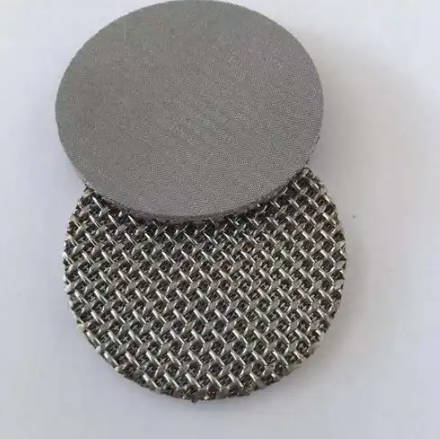
Product Samples We Regularly Subject to Sintering Net Detection
Our bubble‑point porometers, capillary‑flow porometers, air‑permeability testers, universal tensile machines, salt‑spray chambers and optical‑microscope image‑analysis systems accommodate a broad variety of sintered porous metal and alloy products. The following categories represent the most frequently tested items:
- Multilayer sintered stainless‑steel wire‑mesh laminates – two‑, three‑ and five‑layer constructions of plain‑weave and Dutch‑weave wire cloth, diffusion‑bonded in a vacuum furnace, used for high‑pressure hydraulic and fuel‑system filtration
- Sintered metal‑fiber nonwoven felts – randomly laid and sintered fine‑diameter stainless‑steel, nickel‑alloy or titanium fibers, providing the high porosity and the tortuous‑path depth‑filtration for the polymer‑melt and the gas‑cleaning applications
- Sintered porous metal sheets and plates – flat, rigid panels produced from the sintering of metal powders, such as the bronze, the stainless‑steel and the titanium powders, used for the fluidisation, the aeration and the vacuum‑chuck hold‑down functions
- Sintered mesh filter cartridges and discs – finished, edge‑welded or seam‑welded cylindrical cartridges and circular discs that are cut from the sintered net and assembled into the filter housings, tested for the integrity of the weld and the conformance of the pore‑size rating
- Sintered net spargers, silencers and pneumatic‑exhaust elements – the porous components that are threaded or clamped into the compressed‑air and the steam‑injection lines, evaluated for the sound‑attenuation, the flow‑capacity and the particle‑shedding behaviour
- Aged, cleaned and chemically exposed sintered net specimens – samples that have undergone the multiple cleaning‑and‑sterilisation cycles, or that have been exposed to the process‑stream chemicals, submitted for the residual permeability and the pore‑size stability assessment
Pore Size, Bubble Point and Permeability – Sintering Net Detection According to ISO 4003, ASTM E128 and ISO 4022
- Determination of the maximum pore size and the first‑bubble‑point by the bubble‑point method according to ISO 4003 (Permeable sintered metal materials – Determination of bubble test pore size) and ASTM E128 (Standard Test Method for Maximum Pore Diameter and Permeability of Rigid Porous Filters for Laboratory Use): a fully wetted specimen of the sintered net is mounted in a test cell, and a controlled gas pressure is applied from one side. The pressure at which the first continuous stream of bubbles emerges from the liquid‑covered surface is recorded, and the maximum pore diameter is calculated from the bubble‑point pressure and the surface tension of the test liquid. This sintering net detection provides the fundamental rating parameter that is stamped on the filter element and that the user relies upon to select the correct micron grade for the particle‑removal task.
- Pore‑size distribution by the capillary‑flow porometry according to ASTM F316 (Standard Test Methods for Pore Size Characteristics of Membrane Filters by Bubble Point and Mean Flow Pore Test) and ISO 2942 (Hydraulic fluid power – Filter elements – Verification of fabrication integrity and determination of the first bubble point): the gas flow through the wetted and the dry specimen is measured as a function of the applied pressure, and the mean‑flow pore size, the smallest pore size and the pore‑size distribution curve are calculated and reported, providing the complete characterisation of the filtration‑accuracy and the permeability of the sintered net.
- Determination of the air and the water permeability according to ISO 4022 (Permeable sintered metal materials – Determination of fluid permeability) and the internal procedures: the volumetric flow rate of the air or the water through the sintered net is measured at several differential pressures, and the permeability coefficient in square metres or in litres per minute per square centimetre at a defined pressure is reported. This sintering net detection quantifies the flow‑capacity of the porous material and is used by the process‑designer to calculate the pressure drop across the filter, the sparger or the fluidisation pad.
- In‑situ integrity and the forward‑flow test of the installed sintered mesh cartridge according to the principles of ASTM F838 (Standard Test Method for Determining Bacterial Retention of Membrane Filters Utilized for Liquid Filtration, adapted for the metal‑mesh cartridges) and the internal procedures: the wetted cartridge is subjected to a controlled gas pressure, and the diffusive‑flow or the bubble‑point measurement is performed to detect any oversized pores, the mechanical defects or the seal‑leaks that would compromise the sterilising‑grade performance.
- Measurement of the porosity and the solid‑volume fraction by the gravimetric and the Archimedes method according to ISO 2738 (Sintered metal materials, excluding hardmetals – Permeable sintered metal materials – Determination of density, oil content, and open porosity): the bulk density and the open porosity of the sintered net are determined, providing the data that the manufacturer uses to control the sintering cycle and the raw‑material quality.
Mechanical Strength, Weld Integrity and Dimensional Stability – Sintering Net Detection According to ASTM D638, ISO 2738 and the Internal Procedures
- Determination of the tensile strength, the elongation and the Young's modulus of the sintered mesh laminate according to ASTM D638 (Standard Test Method for Tensile Properties of Plastics, adapted for the thin metallic sheets) and ISO 6892‑1: a strip specimen is cut from the sintered net and pulled at a constant crosshead speed, and the ultimate tensile strength, the yield strength and the elongation at break are reported for both the machine and the transverse directions. This sintering net detection verifies that the diffusion‑bonding process has produced a sound, ductile joint at every wire‑intersection and that the laminate can withstand the mechanical loads imposed by the differential pressure and the flow‑induced vibration.
- Burst‑pressure and the collapse‑pressure testing of the sintered mesh disc and the cylindrical cartridge according to ISO 2941 (Hydraulic fluid power – Filter elements – Verification of collapse/burst pressure rating) and the internal procedures: the disc or the cartridge is sealed and pressurised hydraulically or pneumatically, and the pressure at which the first rupture or the permanent deformation occurs is reported, providing the safety‑margin data for the filter‑housing design.
- Weld‑integrity and the seam‑strength evaluation of the edge‑welded and the seam‑welded sintered net assemblies: a section containing the weld is tested in the tension or the peel, and the strength and the failure mode – the weld‑metal fracture or the base‑metal pull‑out – are documented, ensuring the hermeticity and the structural integrity of the finished filter element.
- Measurement of the thickness, the basis weight and the flatness of the sintered net sheet according to ISO 9073‑2 (Textiles – Test methods for nonwovens – Part 2: Determination of thickness, adapted for the porous metal sheets) and the internal procedures: the thickness is measured by a calibrated micrometre under a defined contact pressure, and the areal density is determined gravimetrically, providing the basic process‑control data for the sintering‑press and the calender.
- Resistance to the thermal cycling and the high‑temperature oxidation stability: the sintered net specimen is heated in an air‑circulating oven at the maximum rated service temperature for a defined period, and the change in the mass, the permeability and the tensile strength is reported, defining the safe operating‑temperature limit for the stainless‑steel, the nickel‑alloy and the titanium porous components in the oxidative environments.
Corrosion Resistance, Cleanliness and Chemical Compatibility – Sintering Net Detection According to ASTM B117, ISO 9227 and ISO 175
- Resistance to the neutral salt‑spray and the copper‑accelerated acetic‑acid salt‑spray according to ASTM B117 (Standard Practice for Operating Salt Spray – Fog Apparatus) and ISO 9227: the sintered net panel is exposed to a continuous salt‑fog environment for a specified period, and the time to the first appearance of the red rust, the pit‑depth and the loss of the mechanical strength are evaluated, providing the corrosion‑resistance data for the material‑selection in the marine, the offshore and the chemical‑plant applications. This sintering net detection is mandatory for the qualification of the stainless‑steel grades and the surface‑passivation treatments.
- Chemical‑compatibility immersion test according to ISO 175 (Plastics – Methods of test for the determination of the effects of immersion in liquid chemicals, adapted for the sintered metals) and the internal procedures: the specimen is immersed in the process‑specific chemical – the concentrated sulfuric acid, the sodium hydroxide, the hydrocarbon solvent or the cleaning‑in‑place detergent – at the elevated temperature, and the change in the mass, the permeability and the tensile strength is reported, certifying the long‑term stability of the sintered net in the target service environment.
- Determination of the cleanability and the particle‑shedding behaviour according to the internal procedures and the guidelines of the FDA and the European Hygienic Engineering and Design Group: the sintered net is contaminated with a standardised test dust or a bacterial suspension, and the efficiency of the cleaning by the back‑flushing, the ultrasonic agitation or the chemical dissolution is quantified, ensuring that the porous component can be restored to the near‑original permeability without the release of the trapped debris into the product stream.
- Measurement of the surface‑roughness and the fibre‑shedding by the tape‑lift and the optical‑microscopy methods: the surface of the sintered net is pressed against an adhesive tape or a clean cloth, and any detached metal particles are counted and sized, certifying the material for the ultra‑clean and the semiconductor‑grade gas‑distribution applications.
Report Acceptance and Global Regulatory Compliance
All measurements performed within our sintering net detection programme are executed under the fully accredited scope of our ISO/IEC 17025 quality management system. Each test report that carries the ILAC mark is therefore automatically recognised by regulatory authorities, notified bodies, customs offices and supply‑chain partners in all major economies. For sintered metal‑mesh and metal‑fiber manufacturers, filter‑cartridge assemblers, pharmaceutical and food‑processing equipment designers, and industrial‑filtration and fluidisation‑system integrators anywhere in the world, the report constitutes legally robust, internationally accepted evidence that the pore size, the permeability, the mechanical integrity, the corrosion resistance and the cleanability of the sintered net have been determined in accordance with the applicable ASTM, ISO, EN and customer‑specified methods. The documentation can be directly used to support CE marking, the issue of inspection certificates according to EN 10204 or equivalent national standards, the compilation of the technical file for the type‑examination, and the resolution of commercial and technical disputes concerning the performance and the long‑term reliability of any sintered porous metal component.




