Silicon Carbide Absorbing Cone Testing Service for Global Electromagnetic Compliance
As an ISO/IEC 17025 accredited laboratory, we deliver a specialized silicon carbide absorbing cone testing service that verifies the electromagnetic absorption performance, mechanical integrity, thermal stability, chemical purity, and long-term reliability of SiC-based microwave absorbing cones used in anechoic chambers, EMC test facilities, and radar cross-section measurement systems. Our silicon carbide absorbing cone testing service supports manufacturers and exporters who must demonstrate conformity to IEEE 1128, IEC 62431, MIL-STD-461, and regional electromagnetic compatibility standards across the European Union, North America, East Asia, and the Middle East. Every test is performed under our CNAS-accredited quality system, producing reports accepted by notified bodies, EMC laboratory operators, and procurement teams worldwide.

Product Samples We Regularly Test in Our Silicon Carbide Absorbing Cone Testing Service
- Silicon carbide loaded polyurethane foam absorbing cones — for broadband microwave absorption in anechoic chambers and shielded enclosures
- SiC-filled rubber and elastomer absorbing pyramids — for flexible, high-power, and outdoor EMC test environments
- Ceramic and sintered silicon carbide absorbing cones — for high-temperature and high-power radar absorbing applications
- Composite SiC-ferrite hybrid absorbing cones — for enhanced low-frequency and broadband absorption performance
- Fire-retardant and self-extinguishing SiC absorbing cones — for building fire safety compliance in EMC chambers and antenna test facilities
- Custom-shaped and frequency-tuned silicon carbide absorbing cone arrays — for OEM integration into compact ranges and near-field measurement systems
- Replacement and refurbished SiC absorbing cone sets — for chamber re-certification and performance restoration
Electromagnetic Absorption and RF Performance Testing for Silicon Carbide Absorbing Cones
- Reflectivity and absorption coefficient per IEEE 1128 and IEC 62431 — the silicon carbide absorbing cone is illuminated with a swept-frequency microwave signal in an NRL arch or free-space test setup, and the reflected power is measured to calculate the return loss and absorption coefficient in decibels across the specified frequency range, verifying the cone meets the required absorption class for the anechoic chamber.
- Normal incidence and oblique incidence reflection measurement — the absorbing cone is tested at multiple angles of incidence to characterize its angular absorption performance, ensuring the chamber achieves the specified quiet zone performance for radiated emission and immunity testing.
- Broadband frequency response and resonance evaluation — the reflectivity is measured from 30 MHz to 40 GHz or higher to identify any frequency bands where the silicon carbide absorbing cone fails to meet the minimum absorption requirement, supporting chamber design and hybrid absorber selection.
- Power handling and high-field strength performance per IEC 62431 — the SiC absorbing cone is subjected to defined RF power densities to verify it does not overheat, arc, or degrade under the high field strengths encountered in radar and high-power EMC testing.
- Absorption stability after temperature and humidity cycling — the absorbing cone is conditioned in a climatic chamber and the reflectivity is remeasured to ensure the electromagnetic performance remains stable under environmental stress typical of test laboratory conditions.
- Inter-comparison with calibrated reference absorbers per internal protocols — the silicon carbide absorbing cone is tested side-by-side with NIST-traceable reference absorbers to verify measurement accuracy and to provide traceability for chamber certification.
Mechanical and Physical Property Testing for Silicon Carbide Absorbing Cones
- Density and mass per unit volume per ASTM D1622 and ISO 845 — the density of the SiC-loaded foam or rubber absorbing cone is measured to verify the specified material composition and to predict the mechanical robustness and mounting requirements.
- Compressive strength and deformation resistance per ASTM D1621 and ISO 844 — the cone is compressed to a defined strain to measure its load-bearing capacity and resistance to crushing, ensuring the absorber maintains its shape and absorption performance under installation and maintenance loads.
- Tensile strength and elongation of the base material per ISO 527-2 and ASTM D638 — specimens cut from the absorbing cone are pulled to failure to verify the material withstands handling, cutting, and the mechanical stress of chamber installation without tearing.
- Tear strength and puncture resistance per ISO 34-1 and ASTM D2582 — the force required to tear or puncture the SiC absorbing cone is measured to ensure durability against accidental impacts, tool drops, and maintenance activities in the EMC chamber.
- Flexibility and bending resistance per ISO 4604 — for flexible and conformable silicon carbide absorbing cones, the bending stiffness and the resistance to cracking under flexure are evaluated to ensure the material can be shaped and installed on curved surfaces.
- Dimensional accuracy and cone geometry verification per ISO 2768 — laser scanners and coordinate measuring machines verify the cone height, base dimensions, and tip angle, ensuring the absorber array achieves the specified packing density and reflection performance.
Thermal Stability and Fire Resistance Testing for Silicon Carbide Absorbing Cones
- Thermogravimetric analysis and differential scanning calorimetry per ASTM E1131 and ISO 11357-3 — the thermal decomposition profile of the SiC-loaded material is measured to determine the maximum continuous service temperature and to verify the fire-retardant properties of the absorbing cone.
- Flammability and limited flame spread per ISO 15025 and ASTM D6413 — the absorbing cone is exposed to a defined flame and the afterflame time, afterglow, and char length are recorded to classify the fire safety of the material for use in EMC chambers and public buildings.
- Limiting oxygen index per ISO 4589-2 — the minimum oxygen concentration supporting combustion is measured to rank the intrinsic fire resistance of the silicon carbide absorbing cone and to verify the effectiveness of flame-retardant additives.
- Smoke density and toxic gas emission per ISO 5659-2 — for chambers located in occupied buildings, the specific optical density of smoke and the concentration of toxic combustion gases are measured to meet life safety regulations.
- Thermal cycling and thermal shock per IEC 60068-2-14 — the absorbing cone is rapidly cycled between cold and hot extremes to verify the material withstands thermal expansion and contraction without cracking, delamination, or loss of absorption performance.
- Long-term thermal aging per ASTM D573 — the SiC absorbing cone is aged at elevated temperatures and the retained mechanical and electromagnetic properties are measured to predict the service life in continuous high-temperature environments.
Chemical Composition and Purity Analysis for Silicon Carbide Absorbing Cones
- Silicon carbide content and particle size distribution per ASTM E1621 and ISO 13320 — the mass fraction of SiC particles in the absorbing material and the particle size distribution are quantified to verify the specified formulation and to correlate with the electromagnetic absorption performance.
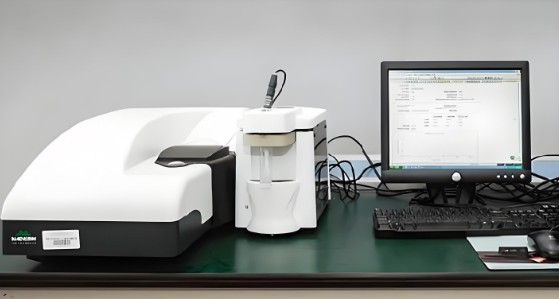
- Fourier transform infrared spectroscopy for polymer and filler identification per ASTM E1252 — the base polymer and any functional fillers are identified to confirm the material composition and to detect any contamination or substitution.
- Elemental analysis and trace metal screening by ICP-OES per ASTM E3061 — the levels of iron, copper, nickel, and other catalytic impurities are measured to ensure the silicon carbide absorbing cone does not contain substances that could degrade its performance or create chemical hazards.
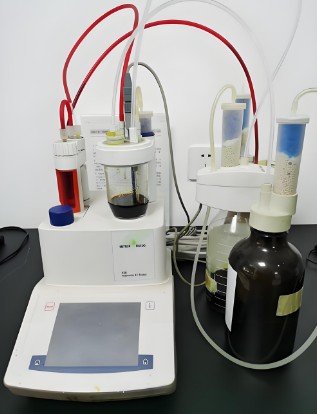
- Halogen and sulfur content by combustion ion chromatography per EN 14582 — the total fluorine, chlorine, bromine, and sulfur content is measured to support halogen-free declarations and to verify compliance with environmental regulations.
- Volatile organic compound and formaldehyde emission per ISO 16000-3 — chamber testing verifies that the silicon carbide absorbing cone does not release harmful VOCs or formaldehyde into the indoor air of the EMC chamber during operation.
Report Recognition and ISO/IEC 17025 Compliance
Every test method described in this silicon carbide absorbing cone testing service is covered by our ISO/IEC 17025 scope of accreditation. Our technical reports and certificates of analysis are accepted by European notified bodies for EMC and construction products, by North American chamber certification authorities referencing IEEE and MIL-STD standards, and by customs and procurement agencies across the Middle East, Australia, and Asia. Whether you require a complete qualification dossier for a new SiC absorber design, a batch release inspection for an export shipment, or a root cause failure analysis of a chamber performance issue, our laboratory provides the measurement accuracy and electromagnetic materials expertise that the global EMC testing industry demands.