Silica Gel Desiccant Testing Service for Global Moisture Control Compliance
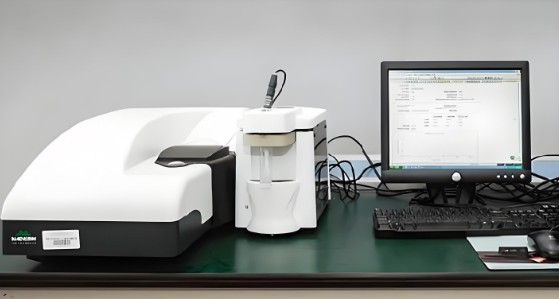
As an ISO/IEC 17025 accredited laboratory, we deliver a comprehensive silica gel desiccant testing service that verifies adsorption capacity, moisture absorption rate, physical integrity, chemical purity, and long-term stability of silica gel desiccants used in packaging, electronics, pharmaceuticals, and industrial air drying. Our silica gel desiccant testing service supports manufacturers and exporters of indicating and non-indicating silica gel, packets, sachets, and bulk granular desiccants who must demonstrate conformity to MIL-D-3464, DIN 55473, JIS Z 0701, ASTM E11, and regional packaging and safety regulations across the European Union, North America, the Middle East, and Asia. Every test is performed under our CNAS-accredited quality system, producing reports accepted by notified bodies, brand owners, and procurement teams worldwide.

Product Samples We Regularly Test in Our Silica Gel Desiccant Testing Service
- Bulk granular and bead silica gel desiccants — white, blue indicating, orange indicating, and mixed-bed types for industrial air and gas drying
- Silica gel packets and sachets — in cotton, paper, Tyvek, and nonwoven pouches for pharmaceutical, electronic, and food packaging
- Indicating silica gel with moisture-sensitive color change — cobalt chloride, methyl violet, and iron salt indicators for visual humidity monitoring
- High-capacity and low-dust silica gel desiccant grades — for transformer breathers, optical instruments, and precision equipment protection
- Silica gel desiccant canisters and cartridges — for compressed air dryers, breather vents, and storage tank moisture control
- Recycled and regenerated silica gel desiccant — for sustainability verification and secondary use qualification
- Custom-specified and packaged silica gel desiccant products — with specific adsorption capacity, particle size, and dust content requirements
Adsorption Capacity and Moisture Uptake Performance Testing for Silica Gel Desiccant
- Equilibrium moisture adsorption capacity at controlled humidity per DIN 55473 and JIS Z 0701 — the silica gel desiccant is conditioned at defined relative humidity levels (typically 20%, 40%, 60%, 80%, and 100% RH) and the mass gain per unit mass of desiccant is measured to generate the adsorption isotherm, the primary performance parameter for selecting desiccant for a specific moisture control application.
- Dynamic moisture adsorption rate and uptake curve per internal validated protocol — the desiccant is exposed to a controlled humid air stream and the increase in mass is recorded over time to quantify how quickly the silica gel reaches its working capacity, essential for protecting moisture-sensitive products during transport and storage.
- Water vapor adsorption capacity in sealed package simulation per MIL-D-3464 — a defined quantity of silica gel desiccant is placed in a sealed test chamber with a known initial humidity, and the reduction in relative humidity over time is measured to verify the desiccant's ability to maintain the required dry environment inside packaging.
- Adsorption capacity at elevated temperature and low humidity per internal protocols — for industrial air drying and transformer breather applications, the silica gel is tested under hot, low-humidity conditions to verify it continues to adsorb moisture effectively at operating temperature.
- Desorption and regeneration efficiency per MIL-D-3464 — the saturated silica gel desiccant is heated to the specified regeneration temperature and the mass loss is measured to determine the recoverable adsorption capacity and the number of useful regeneration cycles.
- Color indication accuracy and reversibility for indicating silica gel per DIN 55473 — the color change from dry to humid condition and the reversibility after regeneration are evaluated to ensure the visual indicator provides reliable humidity monitoring.
Physical and Mechanical Property Testing of Silica Gel Desiccant
- Particle size distribution and grading per ASTM E11 and ISO 565 — the D10, D50, D90 values and the percentage retained on each sieve are measured to verify the specified particle size range for uniform packing, low dust, and consistent adsorption performance.
- Bulk density and tapped density per ASTM D2854 and ISO 3953 — the poured and tapped densities are measured for packaging fill calculations, desiccant dosage determination, and transport logistics.
- Crush strength and attrition resistance per ASTM D4179 and internal protocols — the force required to crush individual silica gel beads and the percentage of fines generated under mechanical stress are measured to ensure the desiccant withstands handling, filling, and vibration without excessive breakage and dust formation.
- Dust content and fines generation per DIN 55473 and internal methods — the mass of particles below a defined size is measured after vibration and abrasion testing, ensuring the silica gel desiccant meets the low-dust requirements for electronics and pharmaceutical packaging.
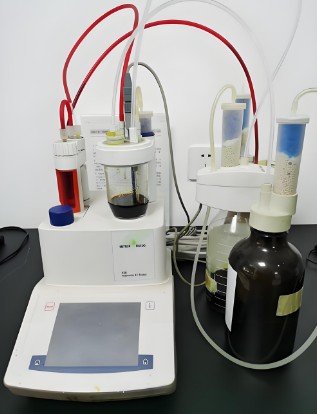
- Water absorption and moisture content of as-received desiccant per ASTM D2216 — the initial moisture content and the amount of water absorbed under high-humidity exposure are quantified to verify storage stability and to calculate the remaining useful adsorption capacity.
- Surface area and pore volume by BET nitrogen adsorption per ISO 9277 — the specific surface area and porosity of the silica gel are measured to confirm the material provides the high internal surface area required for efficient moisture adsorption.
Chemical Purity and Safety Compliance Testing for Silica Gel Desiccant
- Heavy metals and toxic elements per EU RoHS and REACH Annex XVII — ICP-OES and ICP-MS analysis quantifies lead, cadmium, mercury, arsenic, and other regulated metals in the silica gel matrix and any color indicators, ensuring the desiccant meets global substance restrictions for food, pharmaceutical, and consumer product use.
- Cobalt chloride content in indicating silica gel per EU REACH and regional regulations — the concentration of cobalt dichloride is measured to verify compliance with the restricted use of cobalt compounds in consumer desiccant products and to support alternative indicator formulations.
- Extractable organic and inorganic content per USP <661> and ISO 10993 — the silica gel desiccant is extracted with water and organic solvents, and the total organic carbon, specific ions, and identified compounds are quantified to ensure the material does not contaminate packaged pharmaceuticals, electronics, or food.
- Halogen content by combustion ion chromatography per EN 14582 — the total fluorine, chlorine, bromine, and iodine content is measured to support halogen-free declarations and to prevent corrosion of enclosed metal components.
- pH and conductivity of aqueous extract per ISO 787-9 — the pH and specific conductivity of water after contact with the silica gel desiccant are measured to verify no acidic or alkaline residues that could damage packaging or products.
- Volatile organic compound and formaldehyde emission per ISO 16000-3 — chamber testing verifies that the silica gel desiccant does not release harmful VOCs or formaldehyde into the packaged environment during storage or use.
Packaging Integrity and Desiccant Pouch Performance Testing
- Pouch material tensile strength and seal strength per ASTM F88 and ISO 527-3 — the desiccant pouch film and the heat-sealed or stitched seams are tested to ensure the packet does not rupture or leak silica gel particles during handling, shipping, and use.
- Dust penetration and particle leakage from the pouch per MIL-D-3464 — the filled desiccant packet is vibrated and flexed, and the mass of silica gel particles that escape through the pouch material is measured to confirm the packet is dust-tight and safe for direct contact with sensitive products.
- Moisture vapor transmission rate of the pouch material per ASTM F1249 — the water vapor permeability of the packet film is measured to ensure the desiccant can adsorb moisture through the pouch at the required rate while retaining the silica gel granules inside.
- Print permanence and label legibility per ASTM D5264 — the printed desiccant packet markings are tested for rub resistance and legibility to ensure the product identification, warnings, and usage instructions remain readable throughout the product life.
- Packaging material heavy metal conformity per EU Directive 94/62/EC — verification that the sum concentration of lead, cadmium, mercury, and hexavalent chromium in the desiccant pouch, carton, and labels is below the 100 ppm regulatory limit.
Environmental Durability and Long-Term Stability Testing for Silica Gel Desiccant
- Thermal stability and adsorption capacity after heat aging per ASTM D573 and ISO 188 — the silica gel desiccant is aged at elevated temperatures and the retained adsorption capacity, crush strength, and color indication are measured to predict long-term performance in hot storage and transport conditions.
- Humidity and condensation resistance per IEC 60068-2-78 — the desiccant is exposed to high humidity and condensing conditions, and the mass gain, structural integrity, and dust generation are evaluated to ensure reliable moisture protection in tropical and humid climates.
- UV and xenon-arc accelerated weathering of desiccant pouches per ASTM G155 — the packet material is exposed to simulated sunlight to verify the packaging and markings resist degradation during outdoor storage and display.
- Resistance to oils, solvents, and cleaning agents per ISO 175 — the silica gel desiccant and its packaging are exposed to common industrial fluids to verify no degradation or loss of adsorption performance occurs in contaminated environments.
- Bioburden and microbial cleanliness per USP <61> and ISO 11737-1 — for silica gel desiccant used in pharmaceutical and medical packaging, the total viable count and the absence of specified pathogens are verified to ensure the desiccant does not introduce microbial contamination.
- Endotoxin testing per USP <85> — for sterile applications, the bacterial endotoxin level of the silica gel desiccant is measured to confirm it is below the specified threshold.
Report Recognition and ISO/IEC 17025 Compliance
Every test method described in this silica gel desiccant testing service is covered by our ISO/IEC 17025 scope of accreditation. Our technical reports and certificates of analysis are accepted by European notified bodies for packaging and consumer products, by North American pharmaceutical and electronics OEMs referencing MIL and ASTM standards, and by customs and procurement authorities across the Middle East, Australia, and Asia. Whether you require a complete qualification dossier for a new silica gel desiccant product, a batch release inspection for an export shipment, or a root cause failure analysis of a moisture damage claim, our laboratory provides the measurement accuracy and desiccant technology expertise that the global moisture control industry demands.