Silane Impregnating Agent Detection Service – Accredited Penetration Depth, Barrier Performance and Durability Evaluation for Global Markets
Our internationally accredited laboratory provides a specialist silane impregnating agent detection service that empowers concrete protection manufacturers, bridge and tunnel maintenance contractors, marine infrastructure designers, construction chemical suppliers and global import‑export traders worldwide with the independent, traceable data they need to verify that their organosilane impregnation products truly penetrate into the capillary pores of concrete, form a reliable hydrophobic barrier and resist chloride ion ingress and freeze‑thaw attack over the long term. Every test is conducted under the rigorous framework of ISO/IEC 17025, and each report bearing the ILAC mark is unconditionally accepted by regulatory authorities, notified bodies and supply‑chain partners in all major economies. The silane impregnating agent detection programme quantifies the penetration depth, the water absorption reduction ratio, the resistance to chloride ion penetration, the alkali resistance and the volatile content in accordance with internationally recognised specifications such as EN 1504‑2, ASTM C642, NT Build 443 and the Chinese transportation industry standard JTJ 275. For an exporter shipping isobutyl‑triethoxysilane cream to the European Union, an engineering company specifying corrosion protection for a sea‑crossing bridge, or an importer verifying compliance with national building standards, this service delivers the legally robust, defensible data that underpin CE marking, product certification and global market access.
Product Samples We Regularly Subject to Silane Impregnating Agent Detection
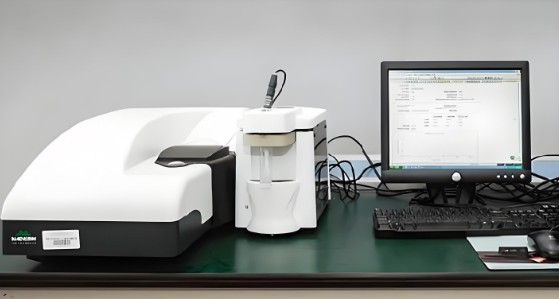
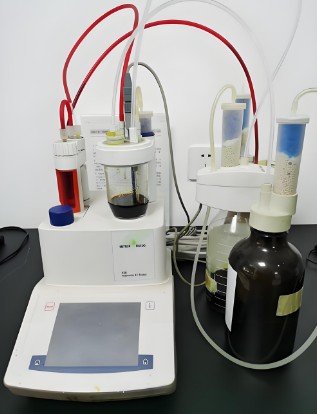
Our penetration‑depth measuring systems, contact‑angle goniometers, chloride diffusion coefficient testers, thermogravimetric analysers and Fourier‑transform infrared spectrometers accommodate a wide variety of organosilane impregnation materials. The following categories represent the most frequently tested items:
- Liquid silane monomers and oligomers – pure silane liquids such as isobutyl‑triethoxysilane and n‑octyl‑triethoxysilane and their oligomeric blends, used for new concrete structures and repair works
- Silane creams and gels – thickened silane impregnating agents designed for overhead and vertical surface application to prevent run‑off losses
- Composite silane‑siloxane impregnation coatings – products that combine silane and siloxane to provide both penetration and surface film‑forming properties
- Water‑based silane emulsions – environmentally friendly silane impregnating agents dispersed in water
- Surface‑treated concrete specimens – concrete cubes, cylinders or cores coated with the silane impregnating agent, used to evaluate the actual protective performance
- Field‑extracted core samples – concrete cores drilled from in‑service structures, submitted for the assessment of the long‑term effectiveness and the residual protective layer thickness of the silane treatment
Penetration Depth and Hydrophobic Properties – Silane Impregnating Agent Detection According to EN 1504‑2, ASTM C642 and Transportation Industry Standards
- Determination of the penetration depth (JTJ 275‑2000, EN 1504‑2 and ASTM E291): the silane impregnating agent is applied to the surface of standard concrete specimens and, after a specified curing regime, the specimens are split and the depth of the hydrophobic layer (the dry zone) is measured. The result is reported in millimetres and must meet the minimum penetration depth required by the specification – for example, not less than 2 mm in JTJ 275, and not less than 3 mm or 5 mm in EN 1504‑2 depending on the protection type. This silane impregnating agent detection directly evaluates the penetrative capability of the product and is the key parameter that determines whether it can be called an “impregnating agent” rather than a surface coating.
- Water absorption and capillary water absorption coefficient (ASTM C642, ASTM C1585 and ISO 15148): the water absorption of the concrete specimens before and after the silane treatment is measured. Through oven‑drying, immersion saturation and weighing, the water absorption reduction ratio is calculated and normally must be not less than 85 %. The capillary water absorption coefficient is also determined, and the slope of the absorption curve is used to assess the sealing effectiveness of the silane on the capillary pores.
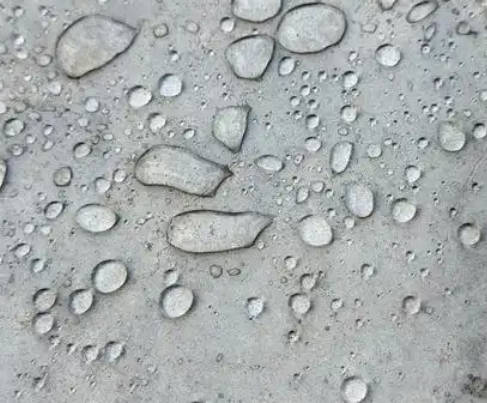
- Contact angle and surface free energy (ASTM D7334, ISO 19403): a water droplet is placed on the surface of the treated concrete or on a silane polymer film, and the static contact angle is measured. A high‑quality silane impregnating agent achieves a contact angle greater than 100°, indicating that the surface has been converted to a strongly hydrophobic state and can effectively prevent liquid water from carrying aggressive ions into the interior.
- Alkali resistance of the hydrophobic effect: the treated specimen is immersed in a saturated calcium hydroxide solution or in an alkaline solution at pH 13 to simulate the high‑alkali environment inside concrete, and the water absorption or the penetration depth is re‑measured to confirm that the silane remains stable and retains its hydrophobic effect under alkaline conditions.
Chloride Ion Penetration Resistance and Long‑Term Durability – Silane Impregnating Agent Detection According to NT Build 443, ASTM C1202 and Exposure Trials
- Chloride diffusion coefficient and migration coefficient (NT Build 443, NT Build 492 or ASTM C1556): the treated concrete specimens are immersed in a sodium chloride solution or subjected to an accelerated electro‑migration test, and the chloride concentration profile is determined by layer‑by‑layer powder grinding to calculate the apparent chloride diffusion coefficient. A good silane impregnating agent can reduce the diffusion coefficient by more than an order of magnitude, and this is the core parameter for evaluating its protective performance in marine and de‑icing salt environments. This silane impregnating agent detection provides the key input for the service‑life prediction of the structure.
- Electrical charge passed and rapid chloride penetration test (ASTM C1202 or AASHTO T277): a voltage is applied across the treated concrete, and the total charge passed in six hours is measured. The silane treatment significantly reduces the electrical charge, typically by 60 % to 90 %, thereby slowing down the migration of chloride ions.
- Freeze‑thaw and salt‑scaling resistance (ASTM C666 or CEN/TS 12390‑9): the silane‑treated concrete specimens are placed in a freeze‑thaw cycling chamber with the surface in contact with a 3 % sodium chloride solution, and the mass loss and the surface scaling are evaluated. The test simulates the winter service environment of bridges and roads, and verifies that the silane impregnating agent can still effectively protect the substrate under the combined action of freeze‑thaw and salt attack.
- Long‑term outdoor exposure and accelerated aging trials: the treated specimens are placed in a real marine tidal zone or in an indoor accelerated‑aging chamber (e.g., with UV/condensation cycling), and the penetration depth, water absorption and visual appearance are monitored at intervals to predict the protective life of the silane impregnating agent over a 10‑, 20‑ or longer‑year service period.
Physicochemical Properties and Stability – Silane Impregnating Agent Detection According to ISO 11890, ASTM D2369 and Enterprise Standards
- Volatile content and solid content (ISO 11890‑2, ASTM D2369): the organic solvent content and the effective active‑ingredient content of the silane impregnating agent are determined by gas chromatography or by the oven‑drying method. The actual concentration of the silane monomer or oligomer directly governs the penetration and the protective capability of the product, and this silane impregnating agent detection provides the basic data for the incoming raw‑material acceptance and the formulation verification.
- Density, viscosity and flash point (ISO 2811‑1, ISO 3104 and ISO 3679): the physical constants of the liquid silane are measured for product identification, quality control and transport‑safety classification.
- Infrared spectroscopic identification (FTIR, ASTM E1252): the infrared fingerprint of the silane impregnating agent is recorded and compared with the standard spectra to confirm the silane type (e.g., isobutyl, octyl) and to detect any adulteration.
- Storage stability and accelerated storage test: the sealed packaging of the silane impregnating agent is placed at an elevated temperature (e.g., 50 °C) or under alternating freeze‑thaw conditions, and the viscosity, the penetration depth and the hydrophobic effectiveness are measured at intervals to determine the effective shelf‑life and the recommended storage conditions of the product.
- Thermogravimetric analysis (TGA) and thermal stability: the mass loss of the silane impregnating agent under a programmed temperature increase is analysed to evaluate its thermal stability and the decomposition temperature of the active components, ensuring that the product will not prematurely volatilise or decompose during construction and in high‑temperature environments.
Report Acceptance and Global Regulatory Compliance
All measurements performed within our silane impregnating agent detection service are executed under the fully accredited scope of our ISO/IEC 17025 quality management system. Each test report that carries the ILAC mark is therefore automatically recognised by regulatory authorities, notified bodies, customs offices and supply‑chain partners in all major economies. For concrete‑protection manufacturers, bridge and tunnel maintenance contractors, marine‑structure designers, construction‑chemical trading companies and exporters anywhere in the world, the report constitutes legally robust, internationally accepted evidence that the penetration depth, the water absorption reduction ratio, the chloride ion penetration resistance, the alkali resistance and the storage stability of the silane impregnating agent have been determined in accordance with the applicable EN, ASTM, NT Build, JTJ and customer‑specified methods. The documentation can be directly used to support CE marking under EN 1504‑2, product registration, the issue of inspection certificates according to EN 10204 or equivalent national standards, and the resolution of commercial and technical disputes concerning the protective performance and the long‑term reliability of any silane impregnating agent.