Seat Armrest Detection Service for Global Automotive and Furniture Compliance
As an ISO/IEC 17025 accredited laboratory, we deliver a specialized seat armrest detection service that verifies the mechanical strength, pivot durability, material integrity, ergonomic performance, and long-term reliability of armrests used in automotive seats, railway seats, aircraft seats, office chairs, and theater seating. Our seat armrest detection service supports manufacturers and exporters who must demonstrate conformity to ISO 7170, EN 1335, ECE R21, FMVSS 201, and regional vehicle and furniture safety standards across the European Union, North America, the Middle East, and Asia. Every test is performed under our CNAS-accredited quality system, producing reports accepted by notified bodies, OEM engineering teams, and procurement authorities worldwide.

Product Samples We Regularly Test in Our Seat Armrest Detection Service
- Automotive seat armrests — center console armrests, door-integrated armrests, and rear-seat folding armrests for passenger vehicles
- Railway and aircraft seat armrests — fixed, pivoting, and aisle-side movable armrests for transport seating
- Office chair armrests — height-adjustable, width-adjustable, and 3D/4D ergonomic armrest systems
- Theater and auditorium seat armrests — with integrated cup holders, writing tablets, and aisle lighting
- Medical and dental chair armrests — for patient support, blood draw, and examination positioning
- Heavy machinery and forklift seat armrests — with integrated joystick and control lever mounts
- Custom and modular armrest assemblies — for OEM integration and specialized seating solutions
Mechanical and Structural Strength Testing for Seat Armrests
- Vertical static load test on armrest surface per ISO 7170 and EN 1335 — a defined vertical force is applied to the top surface of the armrest to measure the maximum deflection and permanent set, verifying the armrest withstands the weight of the user leaning on it without structural failure or excessive deformation.
- Lateral and side-load resistance per customer and internal protocols — horizontal forces are applied to the side of the armrest to simulate the loads from the user pushing against the armrest when entering, exiting, or shifting position, ensuring the pivot mechanism and mounting base remain secure.
- Armrest pivot and hinge strength per ISO 7170 — the pivot joint is loaded in multiple directions to verify it withstands the repeated torque and bending forces of raising, lowering, and lateral adjustment without loosening, cracking, or loss of function.
- Armrest mounting and attachment point pull-out strength per ASTM E488 — the force required to pull the armrest from the seat frame or mounting bracket is measured to ensure the armrest remains firmly attached during normal use and in the event of an accident or sudden stop.
- Fatigue and cyclic loading endurance per ISO 7170 and internal protocols — the armrest is subjected to tens of thousands of load cycles representing years of repeated use, and the structural integrity, pivot function, and surface condition are monitored to predict the service life.
- Impact and drop testing per ISO 6603-2 and ASTM D5420 — the armrest is dropped or impacted to simulate accidental knocks, tool drops, and rough handling, with post-impact inspection for cracking, deformation, and loss of adjustment function.
- Adjustment mechanism strength and lock security per customer protocols — the height, width, angle, and slide adjustment mechanisms are tested for their load-holding capacity and the security of the locking feature, ensuring the armrest maintains the selected position during use.
Durability and Wear Resistance Testing for Seat Armrests
- Surface abrasion and wear testing per ISO 12947-2 and ASTM D4060 — the armrest covering material is rubbed against a standard abrasive under controlled load to evaluate the resistance to scuffing, color transfer, and surface wear from repeated contact with hands, elbows, and clothing.
- Pilling and fuzzing resistance per ISO 12945-2 — the fabric or textile covering is tested for the formation of pills and fuzz, ensuring the armrest maintains a clean, professional appearance over the service life.
- Scratch and mar resistance of plastic and coated surfaces per ISO 15184 and ASTM D3363 — the hardness and scratch resistance of the armrest shell and any decorative or protective coatings are measured to verify resistance to fingernails, jewelry, and cleaning tools.
- Color fastness to rubbing, light, and perspiration per ISO 105-X12 and ISO 105-B02 — the armrest covering is tested for dye transfer and fading under mechanical rubbing, artificial light, and simulated perspiration, ensuring the color remains stable and does not stain the user's clothing.
- Chemical and stain resistance per ISO 175 and ASTM D543 — the armrest surface is exposed to common automotive and household chemicals, including cleaners, hand sanitizers, beverages, and skin oils, to verify no staining, softening, or degradation of the material.
- Cushion compression set and recovery per ISO 3385 and ASTM D3574 — for padded armrests, the foam cushion is compressed under sustained load and the permanent deformation and recovery are measured to ensure the armrest retains its shape and comfort over time.
Environmental and Thermal Durability Testing for Seat Armrests
- Thermal cycling and thermal shock per IEC 60068-2-14 — the armrest is rapidly cycled between hot and cold temperature extremes to verify the pivot joints, adjustment mechanisms, and materials withstand thermal expansion and contraction without cracking, binding, or loss of function.
- Damp heat and humidity exposure per IEC 60068-2-78 — the armrest is stored at high temperature and high relative humidity, followed by mechanical and visual retests to ensure no moisture-induced swelling, corrosion, or degradation of the padding and covering.
- UV and xenon-arc accelerated weathering per ISO 4892-2 and ASTM G155 — the armrest surface and any plastic components are exposed to simulated sunlight and moisture cycles to evaluate color fading, embrittlement, and loss of mechanical strength after prolonged exposure in vehicle interiors or outdoor seating.
- Low-temperature flexibility and cold impact resistance per ASTM D2137 — the armrest is conditioned at sub-zero temperatures and tested for cracking or brittleness, ensuring reliable performance in cold climates and winter vehicle operation.
- Neutral salt spray and corrosion testing of metal components per ISO 9227 — the steel pivot shafts, springs, and mounting hardware are tested for corrosion resistance in marine and coastal environments, and in the presence of road de-icing salts.
Material Verification and Chemical Safety Compliance for Seat Armrests
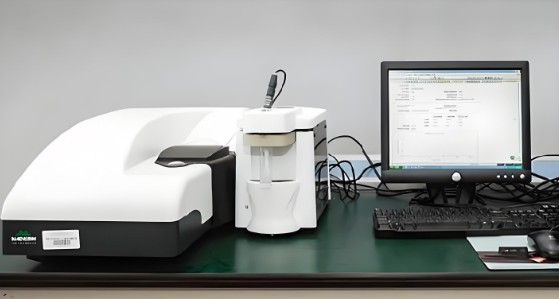
- Polymer and foam identification by FTIR and DSC per ASTM E1252 and ISO 11357-3 — the armrest shell, cushion foam, and covering materials are analyzed to confirm the specified polymer types and to detect any material substitution or contamination.
- RoHS compliance per IEC 62321 and EU Directive 2011/65/EU — quantitative screening for lead, mercury, cadmium, hexavalent chromium, PBBs, and PBDEs in the plastic components, coverings, and any electronic elements integrated into the seat armrest.
- REACH Annex XVII and SVHC screening — targeted analysis of Substances of Very High Concern including phthalate plasticizers, organotin stabilizers, and restricted flame retardants in the armrest materials.
- Formaldehyde and volatile organic compound emission per ISO 16000-3 and VDA 277 — chamber emission testing verifies that the seat armrest does not release harmful VOCs or formaldehyde into the vehicle cabin or indoor environment.
- Heavy metals in packaging per EU Directive 94/62/62 — verification that lead, cadmium, mercury, and hexavalent chromium sum concentration in the packaging is below the 100 ppm regulatory limit.
Report Recognition and ISO/IEC 17025 Compliance
Every test method described in this seat armrest detection service is covered by our ISO/IEC 17025 scope of accreditation. Our technical reports and certificates of analysis are accepted by European notified bodies for automotive and furniture products, by North American OEM engineering teams referencing ASTM and ISO standards, and by customs and procurement authorities across the Middle East, Australia, and Asia. Whether you require a complete qualification dossier for a new armrest design, a batch release inspection for an export shipment, or a root cause failure analysis of a field performance issue, our laboratory provides the measurement accuracy and seating system expertise that the global automotive, furniture, and transport industries demand.