Sand and Dust Test for Heat Exchanger – Accredited Air‑Side Fouling and Erosion Resistance Evaluation for Global Markets
Our internationally accredited laboratory delivers a specialist sand and dust test for heat exchanger service that enables automotive tier‑1 suppliers, HVAC manufacturers, power‑plant operators, off‑highway vehicle producers and importers of thermal‑management components worldwide to verify how airborne particulate matter affects the performance, structural integrity and service life of their products. Every test is conducted within the rigorous framework of ISO/IEC 17025, and each report bearing the ILAC mark is unconditionally accepted by regulatory authorities, customs offices and notified bodies in all major economies. The sand and dust test for heat exchanger subjects radiators, charge‑air coolers, condensers, evaporators and oil coolers to precisely controlled concentrations of standardised test dust in a recirculating wind tunnel or a blow‑through rig, measuring the resulting increase in air‑side pressure drop, the degradation of heat rejection or absorption capacity, the erosion of fins and tubes, and the potential for complete blockage. For a manufacturer exporting engine‑cooling modules to dusty construction sites in Africa, an importer of rooftop air‑conditioning units installed in the Middle East, or a supplier of charge‑air coolers for mining trucks operating in South America, this service generates the legally robust performance data needed for CE marking, warranty validation and the demonstration of fitness‑for‑purpose under the applicable international standards and customer specifications.
Product Samples We Regularly Subject to Sand and Dust Testing
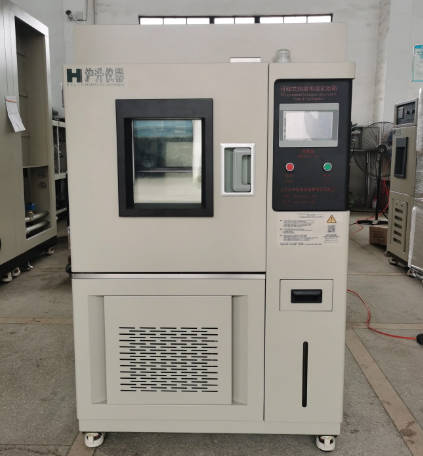
The dust tunnels and environmental chambers in our facility accommodate complete heat‑exchanger assemblies as well as core samples and prototype designs. The following categories represent the most frequently tested items:
- Automotive radiators and cooling modules – aluminium and copper‑brass radiator cores, integrated cooling packages with intercooler, condenser and fan shroud for passenger cars, trucks, buses and agricultural machinery
- Charge‑air coolers and intercoolers – bar‑and‑plate and tube‑and‑fin designs for turbocharged engines operating in dusty environments such as quarries, mines and unpaved roads
- Air‑conditioning condensers and evaporators – micro‑channel parallel‑flow condensers, serpentine evaporators and heat‑pump outdoor coils exposed to wind‑blown dust
- Oil coolers and transmission coolers – air‑cooled plate‑fin and tube‑fin oil coolers for hydraulic systems, compressors and heavy‑duty vehicles
- Industrial and power‑generation heat exchangers – finned‑tube air‑cooled condensers for steam turbines, dry coolers for data centres, compressor inter‑ and aftercoolers, and generator‑set radiators
- HVAC and ventilation coils – chilled‑water and hot‑water coils, direct‑expansion coils and heat‑recovery wheels installed in air‑handling units exposed to outdoor air in urban, industrial and desert locations
Automotive and Off‑Highway Heat Exchangers – Sand and Dust Test According to ISO 12103‑1 and OEM Specifications
- Dust exposure of radiators and charge‑air coolers using standardised Arizona test dust according to ISO 12103‑1: the complete heat‑exchanger assembly is mounted in a dust tunnel, and a controlled concentration of ultrafine or coarse Arizona test dust is injected into the air stream upstream of the core. The air flow rate and the dust feed rate are set to match the vehicle speed and the dust load encountered on unpaved rural roads, construction sites or mining haul roads. The test duration ranges from a few hours for accelerated fouling to hundreds of hours for life‑cycle simulation. The air‑side pressure drop is continuously recorded, and the test is terminated when the pressure drop reaches a critical limit or when the thermal performance falls below the minimum acceptable level. This sand and dust test for heat exchanger provides the fouling‑rate data that vehicle manufacturers and fleet operators use to establish the cleaning interval and to size the cooling package.
- Thermal performance degradation measurement before, during and after dust loading: the heat exchanger is installed on a hot‑air or water‑glycol test bench that precisely controls the inlet temperatures and flow rates on both the air and the fluid side. The heat rejection capacity in kilowatts is measured with the clean core, then periodically during the dust test, and finally after a standardised cleaning procedure. The percentage loss of cooling capacity and the recovery after cleaning are reported. For global truck and construction‑equipment manufacturers, this data determines the maximum interval between radiator cleaning operations in the field and supports the selection of the appropriate core design for dusty markets.
- Sand and dust test with simultaneous vibration and thermal cycling: to replicate the combined loads on a heat exchanger mounted in an off‑highway vehicle, the dust exposure is combined with mechanical vibration at the frequencies and amplitudes measured on the chassis of a vibrating compactor, a forestry tractor or a mining dump truck. The heat exchanger is also thermally cycled between ambient temperature and the maximum operating coolant temperature. The test reveals whether dust‑induced erosion and vibration‑induced fretting act synergistically to cause fin detachment, tube wear or gasket failure.
- Erosion measurement of fin and tube material by weight loss and microscopy: the mass of the heat‑exchanger core is measured before and after the dust test to determine the total material loss. Critical areas, such as the leading edge of the fins and the tube crowns, are examined by optical microscopy or scanning electron microscopy to quantify the erosion depth and the surface‑morphology change. The results are used to select fin materials, coatings and louvre geometries that resist abrasive wear from sand‑laden air in the mining, agricultural and construction sectors.
HVAC, Industrial and Power‑Generation Heat Exchangers – Dust Loading and Fouling Simulation According to EN 60068‑2‑68 and ASHRAE Standards
- Dust loading and fouling simulation according to ČSN EN 60068‑2‑68 Test Lc (dust and sand, recirculating): the finned‑tube coil or plate‑fin heat exchanger is placed in a closed‑loop dust chamber, and a specified mass of silica flour or Arizona dust is circulated by a fan. The air velocity, dust concentration and test duration are adjusted to represent the exposure of a dry cooler on a factory roof in an industrial zone, a condenser coil on a commercial building in a coastal city, or an air‑cooled condenser in a desert power plant. The pressure drop increase and the approach temperature change are measured, and the fouling factor is calculated. This sand and dust test for heat exchanger provides the data that consulting engineers use to specify the cleaning frequency and to select the fin spacing for a given environment.
- Air‑side pressure drop and heat‑transfer coefficient reduction curves: the clean heat exchanger is first characterised for its Colburn j‑factor and friction factor as a function of the Reynolds number. These baseline curves are then compared with the curves measured after incremental dust loading. The report provides the critical dust load at which the fan power consumption exceeds the design margin or the cooling capacity drops below the safety limit. Data‑centre designers worldwide use these curves to specify the redundancy and the maintenance schedule of free‑cooling coils.
- Dust‑holding capacity and service‑life prediction: the test is continued until the pressure drop reaches a defined terminal value, typically twice or three times the initial clean pressure drop. The total mass of dust retained on the coil at that point is reported as the dust‑holding capacity. Combined with the local ambient dust‑concentration data from meteorological services or site surveys, this value allows the building‑services engineer to predict the interval between manual or automatic cleaning of the coil.
- Wet‑dust and muddy‑dust testing for evaporators and outdoor heat‑pump coils: to simulate the combination of dust and condensation or rain, the dust is applied in a damp state or the coil is periodically wetted during the test. The formation of mud‑cake on the fins and its effect on the air‑flow distribution and the corrosion potential are assessed. This sand and dust test is particularly relevant for heat‑pump outdoor units installed in gardens, on balconies and in agricultural areas, where grass clippings, pollen and soil dust combine with dew and rain.
Post‑Test Evaluation of Cleanability, Corrosion and Mechanical Integrity
- Cleaning efficiency and recovery of thermal performance: after the dust test, the heat exchanger is cleaned using a standardised procedure – compressed‑air blowing, water jetting or chemical cleaning, as recommended by the manufacturer. The thermal performance and pressure drop are remeasured, and the recovery factor is reported. For fleet operators and maintenance planners worldwide, this demonstrates whether the heat exchanger can be restored to near‑original performance by routine maintenance and supports the development of the cleaning protocol.
- Corrosion assessment after dust exposure combined with salt or humidity: if the heat exchanger is intended for use in winter conditions where road salt is present or in coastal environments, the dust is mixed with a defined percentage of sodium chloride or calcium chloride. After the dust test, the core is subjected to a humidity cycle or a salt‑spray test according to ISO 9227, and the corrosion of the fins, tubes and brazed joints is evaluated. The results are compared with the acceptance criteria of the customer or the relevant automotive corrosion standard, ensuring that the product will resist the combined effect of dust and salt in the field.
- Burst pressure and leak test after erosion and fouling: the dust‑exposed heat exchanger is pressurised with dry nitrogen or water to the specified proof pressure, and any leaks or permanent deformation are recorded. This verifies that the sand and dust exposure has not initiated fatigue cracks or perforation in the tube walls, which could lead to a loss of coolant or refrigerant.
- Microscopic inspection of fin‑to‑tube bond integrity: cross‑sections through the heat‑exchanger core are prepared and examined to check for loss of contact between the fins and the tubes due to erosion or vibration during the dust test. A high‑quality mechanical bond is essential for maintaining the thermal conductance over the service life, and any degradation is documented and reported to the manufacturer.
Report Acceptance and Global Regulatory Compliance
All measurements performed within our sand and dust test for heat exchanger programme are executed under the fully accredited scope of our ISO/IEC 17025 quality management system. Each test report that carries the ILAC mark is therefore automatically recognised by regulatory authorities, notified bodies, customs offices and supply‑chain partners in all major economies. For automotive cooling‑system suppliers, HVAC equipment importers, power‑plant component manufacturers and off‑highway vehicle producers anywhere in the world, the report constitutes legally robust evidence that the heat exchanger meets the dust‑resistance and cleanability requirements of the applicable product standards, customer specifications and the essential health and safety requirements of the relevant EU directives. The documentation can be directly used to support CE marking, to issue inspection certificates according to EN 10204 or equivalent national standards, to compile the technical file for machinery and pressure equipment, and to resolve commercial disputes concerning the fouling or erosion of heat‑transfer surfaces in dusty operating environments.