Rust Proof Film Detection Testing Service – Accredited Corrosion Protection and Performance Evaluation for Global Markets
Our internationally accredited laboratory provides a dedicated rust proof film detection service that enables manufacturers of volatile‑corrosion‑inhibitor packaging, anti‑corrosion wraps, laminated barrier films and protective coatings worldwide to independently verify the corrosion‑prevention efficacy, mechanical strength, barrier characteristics and long‑term stability of their products. Every test is conducted under the rigorous framework of ISO/IEC 17025, and each report bearing the ILAC mark is unconditionally accepted by regulatory authorities, customs offices and notified bodies in all major economies. The rust proof film detection programme subjects the film to a comprehensive suite of environmental‑exposure, physical, chemical and electrochemical evaluations, quantifying the ability of the volatile‑corrosion‑inhibitor chemistry to protect ferrous and non‑ferrous metals from oxidation, the tensile and tear properties of the carrier film, the water‑vapour and oxygen transmission rates that govern the shelf‑life of the packaged goods, and the identity and the concentration of the active inhibitor species. For an exporter shipping a VCI polyethylene film to the European Union, a metal‑part manufacturer qualifying a new rust‑preventive paper, or an automotive supplier certifying a multi‑layer barrier wrap for the intercontinental transport of precision components, this service delivers the legally robust, defensible data that underpin product certification, warranty validation and compliance with the relevant ASTM, ISO, EN, MIL and customer‑specified standards.
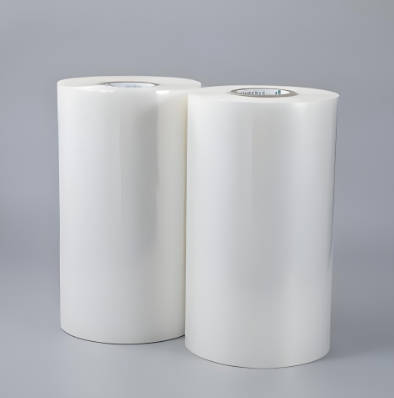
Product Samples We Regularly Subject to Rust Proof Film Detection
Our salt‑spray chambers, humidity cabinets, universal tensile testers, gas‑chromatography–mass‑spectrometry systems and oxygen‑permeation analysers accommodate a broad variety of anti‑corrosion films and their constituent materials. The following categories represent the most frequently tested items:
- Volatile‑corrosion‑inhibitor polyethylene films – low‑density and linear‑low‑density polyethylene extruded with the amine‑carboxylate, the nitrite‑based or the organic‑triazole inhibitor packages, used for the wrapping of the engine blocks, the bearings and the precision‑machined parts
- VCI paper and paper‑polyethylene laminates – kraft‑paper sheets and the paper‑polyethylene composites impregnated with the volatile‑corrosion‑inhibitor chemicals, employed for the interleaving and the wrapping of the ferrous and the non‑ferrous components
- Anti‑corrosion stretch and shrink films – the pallet‑wrap and the shrink‑hood films that combine the load‑containment function with the release of the volatile‑corrosion‑inhibitor into the enclosed environment
- Reinforced and barrier‑grade rust‑proof laminates – multi‑layer structures that incorporate an aluminium foil, a nylon or an ethylene‑vinyl‑alcohol barrier layer to provide the high moisture and the oxygen protection in addition to the VCI activity
- Emitting and the non‑emitting rust‑proof fabrics and nonwovens – the synthetic‑fibre needle‑punched felts that are saturated with the corrosion‑inhibiting oils or the VCI chemicals, used for the lining of the storage cases and the military‑equipment covers
- Aged and field‑retrieved rust‑proof film samples – the films that have been stored for a prolonged period or that have been recovered from the service, submitted for the verification of the retained inhibitor activity and the residual mechanical properties
Corrosion Inhibition Effectiveness and VCI Performance – Rust Proof Film Detection According to ASTM D1735, ISO 9227 and MIL‑PRF‑3420
- Determination of the anti‑corrosion performance by the salt‑spray exposure according to ISO 9227 (Corrosion tests in artificial atmospheres – Salt spray tests) and ASTM D1735 (Standard Practice for Testing the Water Resistance of Coatings Using Water Fog Apparatus, adapted for the VCI films): standardised steel, aluminium or copper coupons are wrapped in the rust‑proof film or placed in a sealed enclosure containing a specimen of the film, and the assembly is exposed to a continuous neutral‑salt fog for a defined period. The percentage of the coupon surface that remains free of the rust or the pitting is visually assessed and reported, providing the fundamental, application‑relevant measure of the film's protective capability. This rust proof film detection is the primary qualification test for the military‑specification and the industrial‑procurement contracts.
- Volatile‑corrosion‑inhibitor activity and the vapour‑phase inhibition test according to the internal procedures based on the MIL‑PRF‑3420 (Performance Specification – Volatile Corrosion Inhibitor Materials) and the TL 8135‑0002 (German Defence Standard): a polished steel coupon is suspended above a film specimen or a liquid extract of the film in a sealed glass jar, and the assembly is conditioned at a controlled temperature and humidity. The onset and the extent of the corrosion on the coupon are evaluated, and the film is certified as a valid VCI product if it prevents the rust formation for the required duration – typically 48 hours or 96 hours. The test directly measures the ability of the volatile inhibitor to migrate through the vapour phase and to protect the metal surface that is not in the direct physical contact with the film.
- Cyclic corrosion and the humidity‑chamber exposure according to ASTM G85 (Standard Practice for Modified Salt Spray – Fog Testing) and the internal protocols: the wrapped coupons are subjected to a programmed sequence of the salt‑spray, the high‑humidity and the drying, reproducing the aggressive diurnal‑cyclic conditions of the maritime and the tropical transport, and the post‑test corrosion rating and the degree of the pitting are reported.
- Contact‑phase and the interleaving corrosion test: the rust‑proof film is placed in the direct, intimate contact with the metal coupon under a defined load and at an elevated temperature and humidity, and the corrosion under the film and at the edges is evaluated, simulating the pressure and the contact conditions that occur inside a tightly packed pallet or a coil.
- Multi‑metal compatibility and the galvanic‑corrosion assessment: coupons of the different metals – the steel, the galvanised steel, the aluminium, the copper and the brass – are wrapped together in the same film enclosure, and any preferential corrosion or the galvanic‑attack caused by the inhibitor chemistry is documented, ensuring that the VCI formulation is safe for the mixed‑metal assemblies.
Mechanical Strength, Tear Resistance and Physical Integrity – Rust Proof Film Detection According to ASTM D882 and ISO 527‑3
- Determination of the tensile strength, the elongation at break and the modulus of elasticity according to ASTM D882 (Standard Test Method for Tensile Properties of Thin Plastic Sheeting) and ISO 527‑3: the film is cut into the standardised strips and stretched at a constant crosshead speed, and the stress‑strain curve is recorded for both the machine and the transverse directions. This rust proof film detection verifies that the VCI additive has not embrittled the polyethylene or the paper substrate and that the film retains the mechanical integrity required for the automated wrapping, the heat‑sealing and the handling.
- Dart‑drop impact resistance according to ASTM D1709 (Standard Test Methods for Impact Resistance of Plastic Film by the Free‑Falling Dart Method): the energy required to fracture the film under the high‑speed puncture is measured, and the result is expressed as the mass of the dart that causes 50 % of the specimens to fail, providing the data that the user employs to select the correct film thickness for the protection against the sharp edges and the corner‑punctures.
- Elmendorf tear resistance according to ASTM D1922 (Standard Test Method for Propagation Tear Resistance of Plastic Film and Thin Sheeting by Pendulum Method) and the internal trouser‑tear procedures: the force required to propagate a pre‑cut slit through the film is recorded, and the tear resistance in newtons or millinewtons is reported, ensuring that any small puncture or the notch that occurs during the handling will not propagate into a catastrophic rupture.
- Heat‑seal strength and the seal‑integrity evaluation according to ASTM F88 (Standard Test Method for Seal Strength of Flexible Barrier Materials): a strip containing a laboratory‑produced or an in‑line heat seal is peeled apart, and the peak seal‑force per unit width and the failure mode are reported, guaranteeing the hermeticity of the sealed enclosure and the retention of the VCI‑saturated atmosphere inside the package.
- Measurement of the film thickness, the basis weight and the dimensional stability according to ASTM D2732 and the internal procedures: the thickness is measured by a calibrated micrometre, and the grammage is determined gravimetrically, while the unrestrained thermal shrinkage at the specified heat‑seal temperature is reported, providing the fundamental process‑control data for the film producer and the converter.
Barrier Properties, Chemical Compatibility and Inhibitor Analysis – Rust Proof Film Detection According to ASTM F1249, ASTM D3985 and ISO 11890
- Determination of the water‑vapour transmission rate by the modulated‑infrared‑sensor method according to ASTM F1249 (Standard Test Method for Water Vapor Transmission Rate Through Plastic Film and Sheeting Using a Modulated Infrared Sensor) and ASTM E96: the film is clamped in a diffusion cell, and the steady‑state WVTR in grams per square metre per day is reported, quantifying the film's ability to prevent the moisture ingress into the package, which is the first line of defence against the corrosion.
- Oxygen transmission rate by the coulometric sensor method according to ASTM D3985 (Standard Test Method for Oxygen Gas Transmission Rate Through Plastic Film and Sheeting Using a Coulometric Sensor) and ISO 15105‑2: the oxygen permeability is measured, and the data are used to specify the film for the packaging of the oxygen‑sensitive high‑value alloys or the long‑term preservation of the military equipment.
- Identification and the quantification of the active corrosion‑inhibitor species by the gas‑chromatography–mass‑spectrometry and the ion chromatography: the film is extracted with a suitable solvent or thermally desorbed, and the concentration of the amine‑carboxylates, the benzotriazole, the dicyclohexyl‑ammonium nitrite or the other specific inhibitor compounds is determined, supporting the reverse‑engineering, the quality assurance of the incoming raw material and the compliance with the regulatory lists of the permitted food‑contact or the military‑specification additives.
- Determination of the pH and the aqueous‑extract conductivity according to ISO 3071 (Textiles – Determination of pH of the aqueous extract) and the internal procedures: the film is extracted with the deionised water, and the pH and the conductivity are measured, providing the rapid, indirect indicators of the inhibitor loading and the film cleanliness.
- Assessment of the chemical compatibility with the metal surfaces and the engineering fluids: the film is placed in the contact with the common engineering metals and the fluids – the hydraulic oils, the cutting fluids and the greases – and any staining, the corrosion‑inhibitor deactivation or the degradation of the film is evaluated, ensuring that the rust‑proof film is compatible with the pre‑existing protective coatings and the process residues.
Environmental Durability, Storage Stability and Ageing – Rust Proof Film Detection According to ASTM D4332, ASTM G154 and ISO 4892‑2
- Accelerated weathering and the UV‑resistance testing according to ASTM G154 (Standard Practice for Operating Fluorescent Ultraviolet Lamp Apparatus for Exposure of Non‑Metallic Materials) and ISO 4892‑2: the film is exposed to a cycle of the UV‑A or the UV‑B radiation and the condensation at an elevated temperature, and the retained tensile properties, the colour change and the surface cracking are measured, predicting the outdoor‑storage life and the UV‑stability of the film.
- Conditioning in the standard and the tropical atmospheres according to ASTM D4332 (Standard Practice for Conditioning Containers, Packages, or Packaging Components for Testing): the film is conditioned at 23 °C and 50 % relative humidity, and at 38 °C and 85 % relative humidity, and the mechanical and the barrier properties are compared, quantifying the effect of the moisture absorption and the plasticiser migration on the film's performance.
- Oxidative‑induction time and the thermo‑oxidative stability by the differential scanning calorimetry according to ASTM D3895 (Standard Test Method for Oxidative‑Induction Time of Polyolefins by Differential Scanning Calorimetry): the film is heated in an oxygen atmosphere, and the time to the onset of the exothermic oxidation reaction is measured, providing the data that the compounder uses to guarantee the adequate antioxidant protection for the intended service life.
- Storage‑stability and the inhibitor‑depletion test under the accelerated‑ageing conditions: the rust‑proof film is stored at the elevated temperature for a defined period, and the residual VCI activity, the mechanical properties and the appearance are remeasured, enabling the manufacturer to specify the expiry date and the recommended storage conditions for the product.
- Compatibility with the adjacent materials and the non‑corrosivity to the packaging equipment: the film is tested for its corrosive effect on the steel, the aluminium and the copper that are used in the construction of the packaging machinery and the storage‑racks, ensuring that the volatile inhibitor itself does not cause an unintended corrosion of the facility.
Report Acceptance and Global Regulatory Compliance
All measurements performed within our rust proof film detection programme are executed under the fully accredited scope of our ISO/IEC 17025 quality management system. Each test report that carries the ILAC mark is therefore automatically recognised by regulatory authorities, notified bodies, customs offices and supply‑chain partners in all major economies. For VCI‑film manufacturers, metal‑part exporters, military‑packaging specifiers and automotive‑component suppliers anywhere in the world, the report constitutes legally robust, internationally accepted evidence that the corrosion‑protection efficacy, the mechanical strength, the barrier properties, the inhibitor composition and the long‑term durability of the rust‑proof film have been determined in accordance with the applicable ASTM, ISO, EN, MIL and customer‑specified methods. The documentation can be directly used to support the CE marking, the issue of inspection certificates according to EN 10204 or equivalent national standards, the compilation of the technical file for the product‑approval, and the resolution of commercial and technical disputes concerning the performance and the protective life of any anti‑corrosion film or paper.