Rubber Gasket Inspection Service for Global Sealing Applications
As an ISO/IEC 17025 accredited laboratory, we deliver a comprehensive rubber gasket inspection service covering material verification, mechanical properties, compression set, chemical compatibility, and dimensional accuracy. Our rubber gasket inspection service supports manufacturers and exporters of elastomeric seals, O-rings, flange gaskets, and custom molded rubber components who must demonstrate compliance with ASTM, ISO, EN, and regional regulations across the European Union, North America, the Middle East, and Asia. Every test is performed under our CNAS-accredited quality system, producing reports accepted by notified bodies, customs authorities, and procurement teams worldwide.

Product Samples We Regularly Test in Our Rubber Gasket Inspection Service
- O-rings and circular cross-section seals — for hydraulic, pneumatic, and vacuum systems
- Flange and pipe gaskets — full-face and ring-type gaskets for water, chemical, and gas pipelines
- Sheet and die-cut gaskets — made from neoprene, EPDM, nitrile, silicone, and fluoroelastomer sheets
- Automotive and engine gaskets — valve cover, oil pan, and intake manifold gaskets
- Food-grade and pharmaceutical rubber gaskets — for sanitary fittings, pipe couplings, and vessel closures
- High-temperature and steam-resistant gaskets — silicone and fluoroelastomer seals for autoclaves and process equipment
- Custom-molded and extruded rubber profiles — for enclosures, windows, and specialty industrial equipment
Material Verification and Chemical Analysis in Our Rubber Gasket Inspection Service
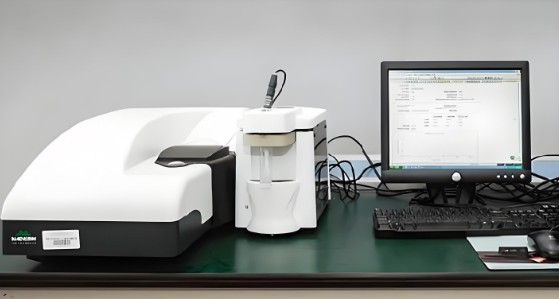
- Fourier transform infrared spectroscopy for polymer identification per ASTM E1252 and ISO 4650 — the infrared spectrum of the gasket material is acquired and compared against reference libraries to confirm the base elastomer type and detect any polymer blends or contaminants.
- Thermogravimetric analysis for carbon black and filler content per ASTM E1131 and ISO 9924-1 — the gasket sample is heated under nitrogen and air to quantify the rubber hydrocarbon content, carbon black, inorganic fillers, and ash, verifying the compound formulation matches the specification.
- Hardness testing by Shore A and IRHD methods per ISO 48-4 and ASTM D2240 — the durometer reading is taken at multiple points on the gasket surface to ensure the hardness falls within the specified range for the intended sealing application.
- Density and specific gravity per ISO 2781 and ASTM D297 — determination of the mass per unit volume to verify compound consistency and detect formulation deviations or porosity.
Mechanical and Physical Property Testing of Rubber Gaskets
- Tensile strength and elongation at break per ISO 37 and ASTM D412 — dumbbell specimens cut from the gasket are pulled to failure to measure the ultimate tensile strength and the percentage elongation, confirming the material can withstand installation stress and pressure-induced stretching.
- Tear strength per ISO 34-1 and ASTM D624 — the force required to propagate a cut in the rubber is measured using trouser or crescent tear specimens, ensuring the gasket resists damage during handling and from sharp flange edges.
- Compression set under constant deflection per ISO 815-1 and ASTM D395 Method B — the gasket is compressed to a defined percentage and held at elevated temperature for a specified period, then the residual deformation is measured to predict the long-term sealing force retention.
- Stress relaxation in compression per ISO 3384 and ASTM D6147 — the decay of the counter-force exerted by the compressed gasket is recorded over time, quantifying the loss of sealing pressure at the flange interface.
Sealing Performance and Fluid Compatibility Testing
- Fluid immersion and chemical resistance per ASTM D471 and ISO 1817 — the gasket material is immersed in the intended service fluid at elevated temperature for a defined duration, then the change in mass, volume, hardness, and tensile properties is measured to verify compatibility.
- Leak tightness and gas permeability per ISO 20485 and customer protocols — the gasket is installed in a test flange and pressurized with helium, then the leak rate is measured using a mass spectrometer to confirm the seal meets the specified tightness class.
- Gasket relaxation and flange creep simulation per EN 13555 and ASTM F38 — the combined behavior of the gasket and bolted flange is simulated by measuring the creep relaxation under controlled temperature and time, providing design data for flange joint integrity.
- Low-temperature sealing and brittleness per ASTM D2137 and ISO 2921 — the gasket is conditioned at sub-zero temperatures and tested for flexibility and sealing function to ensure reliable performance in cold climates and cryogenic applications.
Thermal, Aging, and Environmental Resistance Testing of Rubber Gaskets
- Accelerated thermal aging in air per ISO 188 and ASTM D573 — the gasket material is aged in a ventilated oven at elevated temperature, then the retained tensile strength, elongation, and hardness are measured to predict the service life at the operating temperature.
- Ozone resistance under static and dynamic strain per ISO 1431-1 and ASTM D1149 — the gasket is exposed to ozone at a defined concentration and strain, and the surface is inspected for cracking to ensure durability in atmospheric and industrial environments.
- UV and xenon-arc weathering resistance per ISO 4892-2 and ASTM G155 — the rubber gasket is exposed to simulated sunlight and rain cycles to evaluate color change, surface cracking, and loss of mechanical properties in outdoor sealing applications.
- Water absorption and hydrolytic stability per ISO 1817 and ASTM D471 — the gasket is immersed in water or steam at high temperature and the change in volume and physical properties is recorded to confirm suitability for water and steam service.
Dimensional and Visual Quality Inspection of Rubber Gaskets
- Inner diameter, outer diameter, and cross-section measurement per ISO 3601-1 and ASTM D1414 — laser micrometers, optical comparators, and digital callipers verify that the gasket dimensions conform to the drawing tolerances and are compatible with the mating flange or groove.
- Visual defect inspection under controlled illumination — systematic examination for surface imperfections such as flow marks, blisters, non-fills, mold flash, and contamination against agreed acceptance criteria and limit samples.
- Cross-section and splice inspection for large-diameter gaskets — the vulcanized splice joint is examined by microscopy and tensile tested to verify that the bond strength meets the minimum requirement for the parent material.
Chemical Safety and Regulatory Compliance for Rubber Gaskets
- RoHS compliance verification per IEC 62321 and EU Directive 2011/65/EU — screening for lead, cadmium, mercury, hexavalent chromium, PBBs, PBDEs, and the four priority phthalates in the rubber compound and any surface coating.
- REACH Annex XVII and SVHC screening — analysis of Substances of Very High Concern including specific plasticizers, flame retardants, and polycyclic aromatic hydrocarbons per AfPS GS 2019:01 PAK.
- Extractables and leachables for food contact and pharmaceutical applications per EU Regulation 10/2011 and USP <381> — the rubber gasket is extracted with food simulants or process fluids, and the total organic carbon, specific ions, and identified organic compounds are quantified to ensure compliance with migration limits.
- Nitrosamine and nitrosatable substance content per EN 12868 and FDA 21 CFR — for rubber gaskets used in baby bottle teats, pacifiers, and potable water seals, the nitrosamine content is measured by GC-MS to verify it is below the regulated limit.
Report Recognition and ISO/IEC 17025 Compliance
All methods described in this rubber gasket inspection service are covered by our ISO/IEC 17025 scope of accreditation. Our test reports are accepted by European notified bodies, by North American automotive and aerospace OEMs, and by regulatory and customs authorities across the Gulf, Australia, and Asia. Whether you require a complete qualification of a new gasket compound, a batch release inspection for an export shipment, or a failure analysis of a leaking seal, our laboratory provides the measurement precision and technical expertise that the global sealing industry demands.