
Reverse Umbrella Testing Service – Accredited Performance, Durability and Safety Evaluation for Global Markets
Our internationally accredited laboratory provides a specialist reverse umbrella detection service that enables manufacturers, importers and retail‑chain quality‑assurance teams worldwide to independently verify the mechanical durability, water‑repellency, wind resistance, material safety and overall user‑safety of their reverse‑folding umbrella products. Every test is conducted under the rigorous framework of ISO/IEC 17025, and each report bearing the ILAC mark is unconditionally accepted by regulatory authorities, notified bodies and supply‑chain partners in all major economies. The reverse umbrella detection programme subjects the complete umbrella – the double‑layer canopy, the inward‑folding frame, the central shaft, the handle and the automatic opening mechanism – to a comprehensive suite of mechanical, environmental and chemical evaluations, quantifying the opening‑and‑closing cycle life, the resistance of the coated fabric to water penetration and colour fading, the strength of the ribs and the shaft under simulated wind gusts, and the absence of sharp points, hazardous chemicals and small‑part hazards. For an exporter shipping innovative reverse umbrellas to the European Union, a manufacturer certifying the product to the relevant EN, ASTM or ISO standards, or a brand‑owner substantiating a lifetime warranty claim, this service delivers the legally robust, defensible data that underpin product certification, customs clearance and consumer confidence on every continent.
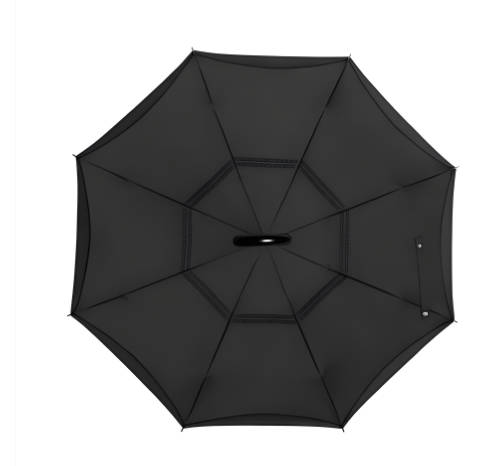
Product Samples We Regularly Subject to Reverse Umbrella Detection
The cyclic‑opening test rigs, hydrostatic‑pressure testers, wind‑tunnel fans, universal tensile machines, xenon‑arc weatherometers and chemical‑analysis instruments in our facility accommodate a vast variety of reverse‑umbrella designs. The following categories represent the most frequently tested items:
- Automatic open‑and‑close reverse umbrellas – the most common consumer design, featuring a spring‑loaded mechanism that opens the umbrella outward and closes it inward, evaluated for the cycle life, the spring force and the locking reliability
- Manual reverse umbrellas – the push‑up‑and‑pull‑down models without a spring assist, tested for the ease of operation, the slide‑sleeve wear and the frame‑lock integrity
- Double‑layer and multi‑layer canopy reverse umbrellas – the umbrellas with a separate outer and inner fabric that create the dry‑side‑in closure, tested for the colour fastness, the water‑repellency and the seam‑strength of each layer
- Compact and travel‑size reverse umbrellas – the miniaturised versions that must meet the same durability and safety requirements as the full‑sized products
- Wind‑resistant and vented reverse umbrellas – the designs that incorporate a vented canopy or a flexible frame to withstand the high‑wind conditions, evaluated in a calibrated wind tunnel for the frame‑inversion resistance and the rib‑fracture behaviour
- Smart and UV‑protective reverse umbrellas – the products that integrate a UV‑protection coating, a radio‑frequency‑identification tag or a rechargeable LED light, tested for the ultraviolet‑protection‑factor rating, the electronic durability and the battery safety
- Children's reverse umbrellas – the smaller, often themed products that must pass the stringent safety requirements for the toys and the childcare articles, including the sharp‑point, the small‑part and the heavy‑metal migration tests
Mechanical Durability and Opening‑Cycle Life – Reverse Umbrella Detection According to EN 12485, ASTM D5034 and the Internal Protocols
- Determination of the opening‑and‑closing cycle endurance according to the principles of EN 12485 (Umbrellas and sunshades – Safety requirements and test methods) and the internal validated procedures: the umbrella is mounted in a robotic test rig that simulates the human‑hand opening and the closing motion, and it is cycled through a complete open‑and‑close sequence for a specified number of repetitions – typically 500, 1 000 or 2 000 cycles. The force required to open and to close the umbrella, the locking‑mechanism engagement and any failure of the frame, the ribs, the runner or the handle are recorded. This reverse umbrella detection provides the fundamental durability data that the manufacturer uses to guarantee the product's service life and to set the warranty period.
- Rib‑and‑stretcher strength test and the resistance to the frame distortion: each rib and stretcher assembly is loaded in a three‑point bending configuration, and the force required to produce a permanent deformation or a fracture is measured, ensuring that the frame can withstand the repeated flexing and the moderate wind loads without collapsing.
- Shaft‑straightness, the column‑compression and the pull‑out resistance: the central shaft is subjected to an axial compressive and a tensile load, and the buckling strength and the joint‑pull‑out resistance are reported, verifying the integrity of the telescopic or the folding shaft under the daily use and the accidental misuse.
- Handle‑attachment and the wrist‑loop strength test: the force required to pull the handle from the shaft, or to break the wrist‑loop attachment, is measured by a tensile tester, providing the safety‑critical data that prevent the detachment and the potential injury during the umbrella's operation.
Water Repellency, Wind Resistance and Canopy Fabric Performance – Reverse Umbrella Detection According to ISO 811, ISO 105 and the Wind‑Tunnel Methods
- Determination of the hydrostatic‑pressure resistance of the canopy fabric according to ISO 811 (Textiles – Determination of resistance to water penetration – Hydrostatic pressure test): a specimen of the coated polyester or the nylon fabric is subjected to an increasing water pressure until the first droplet penetrates, and the hydrostatic‑head value in millimetres or pascals is reported, certifying the water‑repellency of the canopy and its ability to keep the user dry during a heavy downpour.
- Spray‑rating and the dynamic water‑absorption test according to AATCC TM22 (Water Repellency: Spray Test) and the internal procedures: the fabric is sprayed with a controlled volume of water, and the surface‑wetting pattern is compared with the standard rating photographs, providing the rapid, comparative measure of the durable‑water‑repellent finish.
- Wind‑tunnel testing for the frame‑inversion and the structural‑integrity evaluation: the open umbrella is mounted in a calibrated wind tunnel, and the air velocity is gradually increased until the canopy inverts, a rib fractures or the shaft buckles. The critical wind speed and the failure mode are reported, providing the design‑validation data for the wind‑resistant models and the marketing claims.
- Colour fastness to water, to the perspiration and to the artificial light according to ISO 105‑E01 (Textiles – Tests for colour fastness – Part E01: Colour fastness to water), ISO 105‑E04 (Colour fastness to perspiration) and ISO 105‑B02 (Colour fastness to artificial light: Xenon arc fading lamp test): the canopy fabric is exposed to the specified conditions, and the change in the colour and the staining of the adjacent multifibre fabric are assessed against the grey scale, guaranteeing that the umbrella will not bleed or fade during the use and the storage.
- Seam‑slippage and the tensile strength of the canopy fabric according to ISO 13934‑1 (Textiles – Tensile properties of fabrics – Determination of maximum force and elongation at maximum force using the strip method) and ISO 13936‑2 (Textiles – Determination of the slippage resistance of yarns in a fabric seam – Fixed load method): the breaking force and the resistance of the seam to the opening under the load are measured, ensuring that the canopy can withstand the tension that is applied by the ribs when the umbrella is opened and the wind catches the fabric.
Sharp‑Point, Small‑Part and Child‑Safety Testing – Reverse Umbrella Detection According to EN 71‑1, REACH and the 16 CFR
- Assessment of the sharp points and the sharp edges according to EN 71‑1 (Safety of toys – Mechanical and physical properties) and the 16 CFR Part 1500 (Federal Hazardous Substances Act Regulations): every accessible tip of the ribs, the shaft‑end, the handle and the locking‑button is probed with a sharp‑point tester and a sharp‑edge tester, and any accessible hazardous point or edge is flagged for the redesign, ensuring that the umbrella meets the safety requirements for the consumer products in the global market.
- Small‑part and the choking‑hazard evaluation for the children's and the compact umbrellas: the removable components – the wrist‑strap, the decorative toppers, the snap‑fasteners and the plastic end‑caps – are subjected to the small‑parts cylinder test, and any component that fits entirely into the cylinder and can be detached with a defined force is reported, supporting the age‑grading and the warning‑label requirements.
- Determination of the heavy‑metal content and the migration of the toxic elements according to EN 71‑3 (Safety of toys – Migration of certain elements) and the REACH Annex XVII: the accessible metal, the plastic and the coated‑fabric components are extracted with a simulated gastric fluid, and the leachable concentrations of the antimony, arsenic, barium, cadmium, chromium, lead, mercury and selenium are measured by the ICP‑MS, ensuring that the umbrella complies with the strictest chemical‑safety regulations for the articles that are placed on the European and the North American markets.
- Phthalate‑plasticiser and the formaldehyde content of the plastic and the fabric components according to the REACH Annex XVII and ISO 14184‑1: the concentration of the restricted phthalate esters and the free formaldehyde is quantified, and any article exceeding the limit – 0.1 % for each phthalate and 20 mg/kg for the formaldehyde in the baby‑article class – is rejected, protecting the brand from the product‑recall and the reputational damage.
- Flammability and the resistance to the ignition by the small flame according to the 16 CFR Part 1610 (Standard for the Flammability of Clothing Textiles) and the ISO 6941 (Textile fabrics – Burning behaviour – Measurement of flame spread properties of vertically oriented specimens): the canopy fabric is tested for the flame‑spread rate, and the product is classified into the appropriate flammability class, ensuring the compliance with the mandatory textile‑flammability regulations.
Report Acceptance and Global Regulatory Compliance
All measurements performed within our reverse umbrella detection programme are executed under the fully accredited scope of our ISO/IEC 17025 quality management system. Each test report that carries the ILAC mark is therefore automatically recognised by regulatory authorities, notified bodies, customs offices and supply‑chain partners in all major economies. For umbrella manufacturers, consumer‑goods importers and retail‑brand quality‑assurance teams anywhere in the world, the report constitutes legally robust, internationally accepted evidence that the mechanical durability, the water‑repellency, the wind resistance, the material safety and the child‑protection characteristics of the reverse umbrella have been determined in accordance with the applicable EN, ISO, ASTM and customer‑specified methods. The documentation can be directly used to support CE marking under the General Product Safety Directive, the issue of inspection certificates according to EN 10204 or equivalent national standards, the compilation of the technical file for the product‑approval, and the resolution of commercial and technical disputes concerning the quality, the safety and the long‑term performance of any reverse‑folding umbrella.




