Research on Compressive Performance of Chassis – Accredited Structural Crush, Buckling and Load‑Bearing Evaluation for Global Vehicle Programs
Our internationally accredited laboratory provides a dedicated research on compressive performance of chassis service that enables automotive original equipment manufacturers, tier‑one structural suppliers, commercial‑vehicle body builders, electric‑vehicle platform developers and military‑vehicle designers worldwide to characterise the crush resistance, buckling stability, energy‑absorption capacity and static‑to‑collapse behaviour of complete chassis frames, subframes, cross‑members and integrated body‑on‑frame assemblies. Every investigation is conducted within the rigorous framework of ISO/IEC 17025, and each report bearing the ILAC mark is unconditionally accepted by regulatory authorities, notified bodies and supply‑chain partners in all major economies. The research on compressive performance of chassis experiment employs multi‑axis servo‑hydraulic actuators, digital image correlation, high‑speed data acquisition and finite‑element‑correlated strain‑gauge arrays to measure the axial crush force, the bending‑compression interaction, the post‑buckling residual strength and the progressive folding pattern of a chassis structure under the loading scenarios defined by the world’s most demanding safety standards. For a passenger‑car platform team seeking lightweight optimisation, a truck‑frame designer validating a high‑strength steel grade, or an electric‑vehicle manufacturer proving the battery‑enclosure crush resistance, our platform provides the legally robust, defensible structural data that underpin homologation, warranty validation and the global certification of the vehicle.
Product Samples We Regularly Subject to Chassis Compressive Performance Research
Our test frames, reaction walls and multi‑axis loading systems accommodate structures ranging from small sub‑assemblies to full‑scale body‑on‑frame chassis. The following categories represent the items most frequently evaluated through our research on compressive performance of chassis programme:
- Passenger‑car and sport‑utility‑vehicle body‑in‑white structures – complete welded‑steel and aluminium‑intensive monocoque bodies, front‑end modules, rear‑floor assemblies and door‑ring assemblies
- Light‑commercial‑vehicle and truck frame rails and cross‑members – stamped, roll‑formed and hydroformed steel and aluminium longitudinal members, bolt‑on and welded cross‑members, and tow‑hitch reinforcement brackets
- Electric‑vehicle skateboard platforms and battery‑enclosure frames – extruded‑aluminium and cast‑node space‑frame chassis, under‑floor battery‑protection beams and side‑sill assemblies
- Subframes, engine cradles and suspension‑link assemblies – front and rear subframes carrying the powertrain and the suspension, including the integrated mounting brackets
- Motorcycle, all‑terrain‑vehicle and recreational‑vehicle frames – tubular‑steel trellis frames, aluminium twin‑spar frames and side‑by‑side vehicle roll‑over protective structures
- Bus and coach chassis segments – ladder‑frame and integral‑frame sections, seat‑rail supports and luggage‑compartment floor structures
- Prototype, additively manufactured and composite chassis components – 3D‑printed aluminium and titanium nodes, carbon‑fibre‑reinforced‑polymer floor‑pans, and hybrid metal‑composite energy‑absorbing crush‑boxes
Static and Dynamic Compressive Loading of Chassis Structures – Research on Compressive Performance According to OEM and Federal Standards
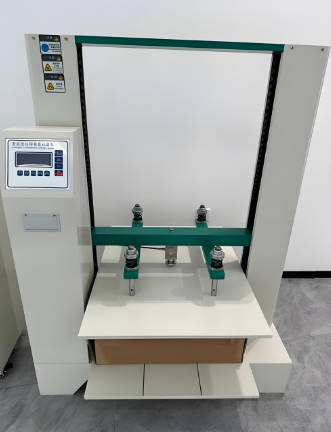
- Quasi‑static axial crush testing of chassis rails and crash‑boxes according to the principles of the automotive frontal‑impact safety standards and the relevant OEM specifications: a chassis‑rail segment or a complete crush‑box assembly is compressed between two rigid platens at a constant cross‑head speed – typically 10 mm/min to 500 mm/min – while the compressive force and the cross‑head displacement are continuously recorded. The peak crush force, the mean crush force, the specific energy absorption in kJ/kg, the crush‑force efficiency and the folding wavelength are reported. This research on compressive performance of chassis experiment provides the fundamental crush‑tube data that the impact‑safety engineer uses to design the energy‑absorbing front‑end structure and to calibrate the finite‑element material‑failure model.
- Bending‑compression interaction testing of chassis‑rail sections: a three‑point or four‑point bending load is superimposed on the axial compressive force to replicate the combined loading that a chassis‑rail experiences during an offset frontal crash or a roll‑over event. The buckling‑initiation load, the post‑buckling collapse behaviour and the residual bending strength after axial crushing are measured, and the interaction diagram in the axial‑load–bending‑moment space is reported, providing the data that the structural designer uses to select the correct cross‑section and the wall thickness for the target performance envelope.
- Global compressive stiffness and torsional rigidity evaluation of a complete chassis structure: the fully assembled body‑in‑white or the chassis frame is mounted on a multi‑axis test rig, and a controlled compressive or torsional load is applied. The load‑deflection curve, the global stiffness in kN/mm and the torsional rigidity in kN·m/deg are reported. This research on compressive performance of chassis benchmark quantifies the platform’s structural efficiency and identifies the weak‑stiffness paths that can be reinforced with minimum mass penalty.
- Dynamic drop‑tower and high‑speed compressive impact testing: the chassis assembly or the energy‑absorbing module is impacted by a guided drop‑weight at velocities up to 15 m/s, and the deceleration‑time history, the dynamic crush distance and the instantaneous energy absorption are recorded. The test simulates a pole‑side‑impact, a front‑end collision with a narrow object, or a mine‑blast‑induced floor‑panel compression, and the data are used to validate the explicit finite‑element crash‑simulation model.
Research on Compressive Performance of Chassis Under Environmental and Long‑Term Durability Conditions
- Compressive performance after corrosion and accelerated‑weathering exposure: the chassis component is subjected to a cyclic corrosion test according to ISO 11997‑1 or the vehicle‑manufacturer’s corrosion‑durability protocol, and the residual axial‑crush strength and the deformation pattern are measured and compared with the uncorroded baseline. The test quantifies the loss of the structural integrity caused by the galvanic corrosion, the hydrogen‑embrittlement or the paint‑delamination that can occur during the vehicle’s service life.
- Thermal‑soak and low‑temperature compressive testing: the chassis structure is conditioned at -40 °C or +80 °C, and the compressive strength, the ductility and the failure mode are evaluated. This research on compressive performance of chassis experiment verifies that the chassis will remain crashworthy in the extreme climates encountered in the Canadian winter, the Saudi Arabian summer, or the high‑altitude cold of the Andes.
- Fatigue‑to‑crush residual‑strength assessment: the chassis rail or the subframe is first subjected to a block of multi‑axial fatigue cycles that represent the accumulated service loads over the vehicle’s design life, and the residual axial‑crush performance is then measured. The data reveal whether the fatigue‑induced micro‑cracking or the fretting‑wear at the bolted joints degrades the crash‑energy‑absorption capability of the aged chassis, directly supporting the vehicle’s second‑life and refurbishment programmes.
- Compressive behaviour of chassis structures after a repair or a section‑replacement procedure: a sectioned and welded or adhesively‑bonded repair is performed on the chassis rail, and the axial‑crush test is repeated. The restoration of the original crush‑strength and the folding pattern is documented, providing the evidence that the repair method meets the vehicle‑manufacturer’s guidelines and that the repaired vehicle can be safely returned to service.
Advanced Instrumentation and Model Validation in Chassis Compression Research
- Digital‑image‑correlation full‑field strain mapping during the compressive test: the chassis rail or the sub‑assembly is painted with a stochastic speckle pattern, and a pair of synchronised high‑speed cameras records the deformation. The three‑dimensional surface strain, the principal strain directions and the onset and the propagation of the local buckling are computed, providing the validation dataset that the finite‑element analyst uses to correlate the simulation with the physical test and to refine the constitutive model of the advanced high‑strength steel or the aluminium alloy.
- Simultaneous force, displacement, acoustic‑emission and thermal‑imaging monitoring: the axial‑crush experiment is instrumented with a piezoelectric force transducer, a linear‑variable‑differential transformer, acoustic‑emission sensors, and an infrared camera. The force‑displacement curve, the acoustic‑emission event count, and the surface‑temperature rise due to the plastic work are correlated in real time, providing the multi‑physics dataset that the materials‑research team needs to understand the adiabatic‑shear‑band formation, the ductile‑fracture initiation and the energy‑dissipation mechanisms in the chassis material.
- Finite‑element‑model updating and uncertainty quantification using the compressive performance experiment: the test data are used to calibrate the material‑failure parameters – such as the strain‑rate‑dependent hardening curve, the triaxiality‑dependent fracture strain, and the element‑size‑regularisation factor – of the crash‑simulation model. This research on compressive performance of chassis then performs a parametric uncertainty‑quantification study to predict the statistical distribution of the crash‑performance metrics for the production vehicle, directly informing the design‑margin decisions and the robustness assessment of the platform.
- Topology‑optimisation and generative‑design validation by the compressive experiment: a chassis bracket or a cross‑member designed by a generative‑optimisation algorithm is additively manufactured and tested in axial compression. The achieved strength‑to‑weight ratio, the failure location and the deformation pattern are compared with the optimisation prediction, closing the loop between the artificial‑intelligence‑driven design and the physical reality.
Report Acceptance and Global Regulatory Compliance
All measurements performed within our research on compressive performance of chassis experiment are executed under the fully accredited scope of our ISO/IEC 17025 quality management system. Each test report that carries the ILAC mark is therefore automatically recognised by regulatory authorities, notified bodies, customs offices and supply‑chain partners in all major economies. For vehicle manufacturers, chassis‑component suppliers, electric‑vehicle platform developers and military‑equipment producers anywhere in the world, the report constitutes legally robust, internationally accepted evidence that the compressive crush behaviour, the buckling stability, the energy‑absorption capacity and the structural integrity of the chassis have been determined in accordance with the applicable ISO, ASTM, SAE, EN, NHTSA, Euro NCAP and customer‑specified methods. The documentation can be directly used to support vehicle‑type approval, the issue of inspection certificates according to EN 10204 or equivalent national standards, the compilation of the technical file for the whole‑vehicle type‑examination, and the resolution of commercial and technical disputes concerning the structural performance and the crashworthiness of any chassis assembly.