
Rebound Rate Research Experiment – Accredited Elastic Recovery and Resilience Testing for Global Markets
Our internationally accredited laboratory provides a specialist rebound rate research experiment service that enables polymer scientists, elastomer manufacturers, sports‑equipment developers, footwear producers, impact‑protection designers, and materials researchers worldwide to independently quantify the elastic recovery, energy‑return capacity and viscoelastic behaviour of their materials and products under controlled impact conditions. Every measurement is performed within the rigorous framework of ISO/IEC 17025, and each report bearing the ILAC mark is unconditionally accepted by regulatory authorities, research sponsors, notified bodies, and supply‑chain partners in all major economies. The rebound rate research experiment precisely measures the ratio of the returned energy or the rebound height to the input energy or drop height, providing the fundamental resilience parameters that govern the dynamic performance of running‑shoe midsoles, tennis‑ball cores, vibration‑damping mounts, seal materials, and protective padding. By employing instrumented drop‑weight testers, high‑speed video motion analysis, laser‑Doppler velocimetry, and temperature‑controlled impact chambers, our platform delivers the legally robust, traceable data that underpin product development, competitive benchmarking, quality assurance, and compliance with the relevant ISO, ASTM, DIN, and customer‑specified standards.
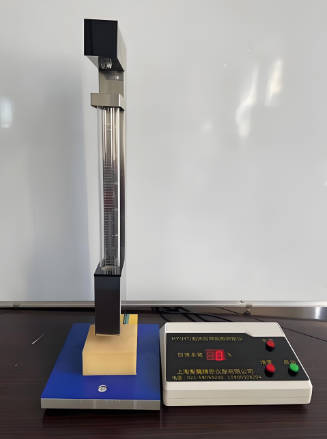
Product Samples We Regularly Subject to Rebound Rate Research Experiments
Our drop‑weight impact rigs, ball‑rebound testers, and pendulum resilience instruments accommodate specimens ranging from small material coupons to finished products. The following categories represent the items most frequently evaluated through our rebound rate research experiment programme:
- Sports and athletic equipment materials – ethylene‑vinyl acetate and polyurethane foam midsoles, thermoplastic polyurethane films, rubber outsoles, insole cushioning pads, and tennis‑ball, squash‑ball, and basketball cores
- Polymer foams and cellular materials – cross‑linked and non‑cross‑linked polyethylene and polypropylene foams, memory foams, latex foams, microcellular polyurethane elastomers, and syntactic foams
- Elastomers and rubber products – natural rubber, styrene‑butadiene rubber, nitrile rubber, silicone, fluoroelastomer sheets and moulded pads, conveyor‑belt covers, and marine fender elements
- Vibration‑damping and isolation materials – viscoelastic damping sheets, constrained‑layer damping composites, cork‑elastomer gaskets, and machine‑mounting pads
- Impact‑protection and personal‑protective equipment – helmet‑liner foams, knee‑ and elbow‑protector pads, body‑armour backing materials, and automotive interior crash‑pad foams
- Packaging cushioning materials – expanded polystyrene, expanded polypropylene, and moulded‑pulp cushion inserts for consumer‑electronics and fragile‑goods transport
- Metallic and composite spring elements – leaf springs, disc springs, Belleville washers, and composite leaf‑spring elements for which the rebound rate is a measure of the internal friction and the fatigue state
Ball‑Rebound and Vertical‑Drop Rebound Testing – Rebound Rate Research According to ASTM D3574, ISO 8307 and DIN 53512
- Determination of the rebound resilience of flexible cellular materials by the ball‑rebound method according to ASTM D3574 (Standard Test Methods for Flexible Cellular Materials – Slab, Bonded and Molded Urethane Foams) Test H and ISO 8307 (Flexible cellular polymeric materials – Determination of resilience by ball rebound): a steel ball of a specified mass and diameter is dropped from a fixed height onto the surface of the foam specimen, and the height of the first rebound is measured by a high‑speed camera, an optical sensor array, or a graduated transparent tube. The rebound resilience is expressed as the percentage of the return height relative to the drop height, and the mean of multiple drops is reported. This rebound rate research experiment provides the fundamental resilience metric that foam producers use to classify grades as high‑resilience, standard or viscoelastic, and it is the primary quality‑control test for the polyurethane‑foam slabstock used in furniture, mattresses and automotive seating.
- Vertical‑drop rebound testing of sports‑equipment components and finished products: a basketball, a running‑shoe midsole, or a protective‑pad assembly is impacted by a guided drop‑weight of a known mass and impact velocity, and the velocity of the impactor immediately before and after the impact is measured by a laser‑Doppler velocimeter or by double‑differentiation of the displacement signal from a high‑speed camera. The coefficient of restitution e – the ratio of the rebound velocity to the impact velocity – is reported, and the energy‑return efficiency, equal to e², is calculated. This rebound rate research experiment quantifies the dynamic energy‑return capability that directly correlates with the perceived running economy, the ball bounce‑height regulation, and the protective‑padding shock‑absorption performance.
- Resilience measurement by the Schob‑type pendulum rebound tester according to DIN 53512 (Testing of rubber – Determination of rebound resilience) and ISO 4662: a pendulum hammer strikes a vertically mounted rubber or elastomer specimen, and the angle of the return swing is read from a calibrated scale. The rebound resilience in percent is the ratio of the return energy to the impact energy. The test is rapid and highly reproducible, making it the preferred method for the batch‑release testing of rubber compounds, elastomeric mounts and shoe‑soling materials.
- Temperature‑ and strain‑rate‑dependent rebound‑rate mapping: the rebound resilience or the coefficient of restitution is measured over a range of temperatures from -40 °C to +80 °C and at several impact velocities, and the dependence of the rebound rate on the temperature and the strain rate is plotted. The data reveal the glass‑transition‑related stiffening and the viscoelastic‑loss peak, and they are used to select the correct material grade for cold‑climate sports equipment, Arctic‑service seals and tropical‑environment packaging.
- Cyclic‑rebound and fatigue‑dependent rebound‑rate degradation testing: the same specimen is subjected to hundreds or thousands of repeated impacts, and the rebound rate is measured at intervals. The decrease in the resilience as a function of the number of impacts quantifies the dynamic‑fatigue softening or the structural breakdown of the foam or the elastomer, and the data are used to predict the service life of running‑shoe cushioning, vibration‑isolation mounts and impact‑protection foams.
Instrumented Drop‑Weight and Energy‑Partitioning Experiments – Advanced Rebound Rate Research for Multi‑Phase and Viscoelastic Materials
- Instrumented drop‑weight impact with simultaneous force‑ and velocity‑time recording for the complete energy‑partitioning analysis: the impactor is equipped with a piezoelectric or strain‑gauge force transducer and an accelerometer, and the force‑deformation curve during the impact is recorded at a high sampling rate. The total impact energy, the elastic‑stored energy, the hysteretic‑dissipated energy and the viscoelastic‑relaxation energy are separated by integrating the loading and unloading curves. This rebound rate research experiment provides the detailed energy‑partitioning data that the materials‑development engineer needs to understand the mechanisms of the rebound‑resilience loss – whether it is due to cell‑wall buckling, matrix plasticisation, or filler‑debonding – and to formulate the next‑generation high‑resilience foam or elastomer.
- Finite‑element‑model validation by the experimentally measured rebound‑force history: the force‑time and displacement‑time data are exported to the customer's simulation software, and the hyper‑viscoelastic material model is calibrated against the experiment. The validated model is then used to predict the rebound performance of a full‑scale product, such as a shoe‑sole or a crash‑pad, under a range of impact conditions, thereby reducing the number of costly prototype iterations.
- High‑speed‑video motion‑analysis of the rebound kinematics for anisotropic and layered structures: the impact of a ball or a shaped impactor onto a multi‑layer foam–film laminate or a composite‑plate structure is recorded by two synchronised high‑speed cameras, and the three‑dimensional trajectory, the angular velocity and the deformation of the impactor and the target are reconstructed. The coefficient of restitution, the spin generation and the contact time are extracted, and the data are used to design the multi‑layer constructions that optimise the rebound, the energy‑absorption and the directional‑stiffness requirements of sports and automotive applications.
- Confined‑rebound and pre‑compression rebound testing: the specimen is pre‑compressed to a defined static strain – such as 10 % or 30 % – and the rebound is measured by the ball‑rebound or the drop‑weight method while the static compression is maintained. This rebound rate research experiment simulates the condition of a foam gasket under compression in a bolted flange, a shoe‑midsole under the runner's body weight, or an anti‑vibration mount under the weight of a machine, providing the application‑relevant resilience data that cannot be obtained from an unloaded specimen.
- Comparison of the rebound rate with the dynamic‑mechanical‑analysis loss factor tan δ and the hysteresis loop from the low‑speed compression test: the rebound resilience measured at the impact strain rate is correlated with the loss factor measured by DMA at a low frequency and with the hysteresis measured in a quasi‑static compression‑deflection test. The correlation graph enables the material formulator to predict the impact‑resilience performance from a simple, routine DMA or compression test, accelerating the development cycle of new elastomer and foam compounds.
- Multi‑axial rebound and angled‑impact experiments: the impactor strikes the specimen at an angle of 15°, 30°, or 45° from the normal, and the normal and tangential coefficients of restitution are measured. The data characterise the rebound behaviour of shoe‑soles on an angled surface, of ball‑impacts on a racket string‑bed, and of helmet‑liners under an oblique crash‑impact, providing the advanced, multi‑axial resilience parameters that are specified by the newest sports‑equipment and automotive‑safety testing standards.
Report Acceptance and Global Regulatory Compliance
All measurements performed within our rebound rate research experiment programme are executed under the fully accredited scope of our ISO/IEC 17025 quality management system. Each test report that carries the ILAC mark is therefore automatically recognised by regulatory authorities, research sponsors, customs offices, and supply‑chain partners in all major economies. For sports‑equipment manufacturers, elastomer and foam producers, vibration‑damping material developers, packaging engineers, and impact‑protection designers anywhere in the world, the report constitutes legally robust, internationally accepted evidence that the rebound resilience, the coefficient of restitution, and the energy‑return characteristics of the material or the product have been determined in accordance with the applicable ASTM, ISO, DIN, and customer‑specified methods. The documentation can be directly used to support CE marking under the Personal Protective Equipment Regulation or the General Product Safety Directive, to issue inspection certificates according to EN 10204 or equivalent national standards, to compile the technical file for type‑examination, and to resolve commercial and technical disputes concerning the elastic‑recovery and impact‑resilience performance of any material or product.




