
Rapid Dam Testing Service – Accredited Structural Integrity and Leakage Evaluation for Global Markets
Our internationally accredited laboratory provides a specialist rapid dam testing service that supplies hydropower operators, water‑resource authorities, civil engineering consultancies, dam‑safety regulators and construction contractors worldwide with the independent, traceable data they need to assess the structural condition, detect leakage paths and verify the performance of concrete, earth‑fill and rock‑fill dams. Every investigation is conducted under the rigorous framework of ISO/IEC 17025, and each report bearing the ILAC mark is unconditionally accepted by regulatory authorities, notified bodies and supply‑chain partners in all major economies. The rapid dam testing programme employs a combination of non‑destructive and minimally invasive techniques – ground‑penetrating radar, ultrasonic tomography, infrared thermography, electrical resistivity tomography, core drilling and laboratory strength testing – to rapidly identify zones of weakness, quantify the extent of cracking or internal erosion, measure the in‑situ concrete strength and evaluate the effectiveness of grout curtains and drainage systems. For a dam owner complying with a statutory safety review, an insurer assessing a flood‑damage claim, or a contractor verifying the quality of a new spillway lining, this service delivers the legally robust, defensible data that underpin risk‑informed decision‑making, remediation design and the demonstration of regulatory compliance.
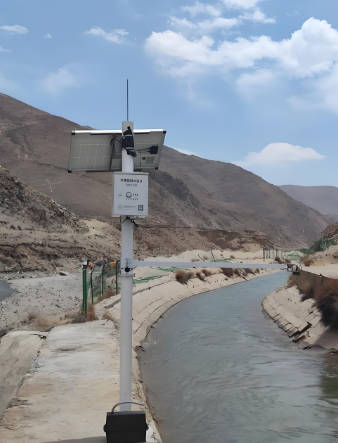
Product Samples We Regularly Subject to Rapid Dam Testing
The geophysical survey equipment, core‑drilling rigs, laboratory testing machines and underwater inspection tools in our facility accommodate a vast variety of dam types and their constituent materials. The following categories represent the most frequently investigated items:
- Concrete gravity and arch dams – mass‑concrete monoliths, buttress dams and spillway piers, evaluated for the alkali‑aggregate reaction, the freeze‑thaw damage, the crack‑depth profiling and the grout‑curtain effectiveness
- Embankment and earth‑fill dams – homogeneous and zoned earth‑fill, rock‑fill and tailings dams, assessed for the internal erosion, the piping susceptibility, the seepage‑path detection and the core‑filter compatibility
- Masonry and roller‑compacted concrete dams – older stone‑masonry structures and RCC dams where the bond between the lifts, the joint‑water infiltration and the surface‑erosion resistance are critical
- Spillways, outlet works and stilling basins – concrete‑lined and unlined spillway channels, gate slots, energy dissipators and plunge pools, investigated for the cavitation damage, the abrasion and the under‑slab voiding
- Dam foundations and abutments – the rock‑mass quality, the fracture‑zone delineation, the grout‑take assessment and the abutment‑leakage detection by the borehole‑logging and the cross‑hole seismic techniques
- Reservoir‑rim and dyke structures – secondary containment dykes, saddle dams and reservoir‑rim slopes, monitored for the seepage, the slope stability and the internal moisture movement
Non‑Destructive and Geophysical Rapid Dam Testing – Leakage Detection, Void Identification and Crack Mapping According to ASTM D6432, ASTM D5777 and EN 14579
- Ground‑penetrating radar survey for the detection of the subsurface voids, the delaminations and the reinforcing‑steel pattern according to ASTM D6432 (Standard Guide for Using the Surface Ground Penetrating Radar Method for Subsurface Investigation) and the internal procedures: a high‑frequency antenna is traversed across the dam face, the crest or the spillway slab, and the reflected‑wave profile is recorded. The depth and the lateral extent of the cavities, the honeycombing, the water‑filled cracks and the rebar‑corrosion‑induced delaminations are mapped, providing the rapid, centimetre‑scale imaging of the internal structure without any coring or demolition. This rapid dam testing technique is the first‑line screening tool for the condition assessment of the concrete dams and the spillway linings.
- Ultrasonic pulse‑velocity and the tomographic imaging for the evaluation of the concrete quality, the crack depth and the elastic modulus according to ASTM C597 (Standard Test Method for Pulse Velocity Through Concrete) and EN 12504‑4: an array of transducers is placed on the dam surface or in the boreholes, and the travel time of the compressional and the shear waves is recorded. The velocity map and the three‑dimensional tomographic reconstruction reveal the low‑velocity zones that correspond to the cracking, the poor‑quality concrete or the alkali‑silica‑reaction‑induced damage, and the dynamic elastic modulus is calculated from the wave speeds.
- Infrared thermography for the detection of the seepage paths and the moisture anomalies according to ASTM D4788 (Standard Test Method for Detecting Delaminations in Bridge Decks Using Infrared Thermography, adapted for the dam surfaces) and the guidelines of the International Commission on Large Dams: the dam face is scanned by a high‑resolution thermal camera during the favourable diurnal heating or cooling cycle, and the temperature anomalies that indicate the water‑seepage outlets, the internal erosion channels and the defective grout‑curtain sections are identified and documented.
- Electrical resistivity tomography and the self‑potential survey for the mapping of the seepage and the internal erosion in the embankment dams according to ASTM D6431 (Standard Guide for Using the Direct Current Resistivity Method for Subsurface Investigation) and the internal procedures: a multi‑electrode array is deployed on the crest and the downstream slope, and the resistivity cross‑sections are reconstructed, revealing the saturated zones, the preferential flow‑paths and the core‑filter incompatibility. The self‑potential signals generated by the electrokinetic coupling of the water flow are simultaneously recorded, pinpointing the active seepage locations.
- Borehole‑logging and the cross‑hole seismic tomography for the foundation and the grout‑curtain characterisation: the boreholes are logged with the optical and the acoustic televiewers, the caliper, the natural‑gamma and the resistivity probes, and the cross‑hole seismic velocity and the attenuation tomography is performed to define the rock‑mass modulus, the fracture frequency and the grout‑take effectiveness, providing the data that the dam‑safety engineer uses to design the targeted remedial grouting.
Destructive and Minimally Invasive Rapid Dam Testing – Core Drilling, Strength Testing and Material Characterisation According to ASTM C42, ASTM D7012 and EN 12390
- Diamond‑core drilling and the compressive strength testing of the concrete cores according to ASTM C42 (Standard Test Method for Obtaining and Testing Drilled Cores and Sawed Beams of Concrete) and EN 12504‑1: cores are extracted from the dam monolith, the spillway slab or the intake structure, and the uniaxial compressive strength, the density, the carbonation depth and the chloride‑ion penetration are measured. The estimated in‑situ concrete strength is correlated with the ultrasonic pulse‑velocity data, and the design‑strength conformance or the degradation is reported. This rapid dam testing provides the direct, legally recognised evidence of the concrete quality for the safety‑review submission.
- Rock‑core logging, the point‑load index and the uniaxial compressive strength of the foundation rock according to ASTM D7012 (Standard Test Methods for Compressive Strength and Elastic Moduli of Intact Rock Core Specimens under Varying States of Stress and Temperatures) and the ISRM Suggested Methods: the recovered rock core is logged for the fracture frequency, the rock‑quality designation RQD, the weathering grade and the infilling, and the point‑load and the uniaxial compression tests are performed to classify the rock mass for the bearing capacity and the sliding‑stability analysis.
- Petrographic examination and the alkali‑silica‑reaction assessment according to ASTM C856 (Standard Practice for Petrographic Examination of Hardened Concrete) and the RILEM recommendations: thin sections of the concrete are examined under the optical and the scanning electron microscope, and the presence of the alkali‑silica reaction gel, the delayed‑ettringite‑formation, the freeze‑thaw micro‑cracking and the sulfate attack is diagnosed, providing the root‑cause data that the remediation designer needs to specify the correct repair material and the protective coating.
- Water‑pressure and the packer‑permeability testing in the boreholes for the in‑situ hydraulic conductivity according to ASTM D4630 (Standard Test Method for Determining Transmissivity and Storativity of Low Permeability Rocks by In‑Situ Measurements Using the Constant Head Injection Test, adapted for the packer testing) and the Houlsby method: a double‑packer assembly isolates a section of the borehole, and the water is injected at a constant pressure while the flow rate is recorded, yielding the Lugeon value and the hydraulic conductivity of each fracture zone, and quantifying the effectiveness of the existing grout curtain or the need for the supplementary grouting.
Seepage Monitoring, Instrumentation and the Long‑Term Performance Assessment – Rapid Dam Testing for the Ongoing Surveillance
- Installation and the data‑interpretation of the piezometers, the weir‑flow monitors and the inclinometers: the pore‑water pressure in the embankment and the foundation, the seepage‑flow rate through the dam and the lateral deformation of the crest are continuously or periodically measured, and the trends are analysed against the reservoir‑level and the rainfall data, providing the early‑warning indicators of the internal erosion or the slope instability.
- Hydrophone and the acoustic‑emission monitoring for the detection of the active cracking and the internal erosion noise: an array of hydrophones or the accelerometers is deployed in the boreholes or on the downstream face, and the acoustic‑emission events generated by the crack propagation, the rock‑fracture or the piping erosion are recorded and located, enabling the real‑time alerting of the developing failure modes.
- Numerical‑model validation and the back‑analysis using the measured dam behaviour: the measured displacements, the pore pressures and the seepage flows are used to calibrate the finite‑element or the finite‑difference model of the dam and the foundation, and the calibrated model is then employed to predict the response under the extreme‑load scenarios – the probable maximum flood, the maximum credible earthquake and the rapid drawdown – providing the quantitative safety margins for the risk assessment.
- Rapid‑dam‑testing‑based condition rating and the portfolio‑risk assessment: the results of the non‑destructive and the destructive tests are combined into a condition‑rating index for each dam element, and the risk‑based prioritisation of the remediation projects is performed, directly supporting the asset‑management and the investment‑planning decisions of the dam‑owning organisations.
Report Acceptance and Global Regulatory Compliance
All investigations performed within our rapid dam testing programme are executed under the fully accredited scope of our ISO/IEC 17025 quality management system. Each test report that carries the ILAC mark is therefore automatically recognised by regulatory authorities, notified bodies, customs offices and supply‑chain partners in all major economies. For hydropower and water‑resource agencies, dam‑safety authorities, civil engineering consultancies and construction contractors anywhere in the world, the report constitutes legally robust, internationally accepted evidence that the structural integrity, the leakage detection, the material condition and the foundation performance of the dam have been determined in accordance with the applicable ASTM, ISO, EN, ISRM and customer‑specified methods. The documentation can be directly used to support the statutory safety review, the emergency‑action‑plan update, the insurance‑risk assessment, the issue of inspection certificates according to EN 10204 or equivalent national standards, and the resolution of commercial and technical disputes concerning the safety and the long‑term performance of any dam structure.




