Railway Spherical Bearing Inspection Service for Global Rail Infrastructure Compliance
As an ISO/IEC 17025 accredited laboratory, we deliver a specialized railway spherical bearing inspection service that verifies the material integrity, dimensional accuracy, spherical contact performance, corrosion protection, and long-term durability of spherical bearings used in railway bogies, bridge supports, and structural articulation points. Our railway spherical bearing inspection service supports manufacturers and exporters who must demonstrate conformity to EN 1337-6, EN 1337-7, UIC 772, ASTM F2163, and regional railway authority standards across the European Union, North America, the Middle East, and Asia. Every test is performed under our CNAS-accredited quality system, producing reports accepted by notified bodies, rail operators, and procurement teams worldwide.

Product Samples We Regularly Test in Our Railway Spherical Bearing Inspection Service
- Spherical plain bearings for railway bogie linkages and articulation joints — with steel-on-steel, steel-on-PTFE, and maintenance-free sliding surfaces
- Bridge and structural spherical bearings — for load transfer, rotation accommodation, and longitudinal movement in railway viaducts and bridges
- Sealed and greased spherical bearings — with integrated seals and lubrication grooves for extended maintenance intervals
- High-capacity spherical bearings with reinforced backing plates — for heavy axle loads and high-speed rail applications
- Corrosion-resistant spherical bearings — with stainless steel, zinc-nickel, or phosphate coatings for aggressive railway environments
- Custom-shaped and OEM-specific spherical bearing assemblies — with special mounting interfaces, sensors, or wear indicators
Material Verification and Chemical Analysis for Railway Spherical Bearings
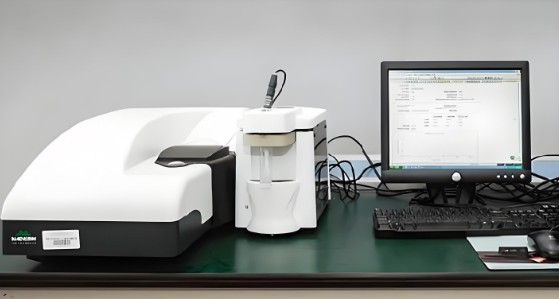
- Optical emission spectrometry for alloy grade confirmation per ASTM E415 and ISO 14284 — the chemical composition of the inner ring, outer ring, and spherical sliding surface is quantified to verify conformance to specified grades such as 100Cr6, 42CrMo4, X46Cr13, or bearing-grade stainless steel.
- Carbon and sulfur determination by combustion per ASTM E1019 — the carbon content is measured to verify hardenability and heat treatment response, and sulfur levels are checked to ensure the low-sulfur requirements for improved fatigue resistance.
- Positive material identification using handheld XRF — non-destructive verification directly on the bearing components confirms alloy type and prevents material mix-ups during production and shipping.
- Hydrogen embrittlement testing per ASTM F519 — for high-strength and electroplated spherical bearings, the susceptibility to hydrogen-induced delayed fracture is evaluated to ensure structural reliability in service.
- Residual stress measurement by X-ray diffraction per ASTM E915 — the surface compressive stress introduced by heat treatment or shot peening is measured to verify the fatigue-enhancing condition of the bearing rings.
Dimensional and Geometrical Inspection for Railway Spherical Bearings
- Bore diameter, outer diameter, and width measurement per ISO 2768 and customer drawings — precision micrometers and coordinate measuring machines verify all critical dimensions, ensuring the spherical bearing fits correctly into the housing and on the shaft.
- Spherical surface form and sphericity per ISO 1101 and EN 1337-6 — the convex spherical surface of the inner ring is scanned to verify the deviation from a perfect sphere is within the specified tolerance, ensuring smooth rotation and uniform load distribution.
- Surface roughness of the spherical sliding interface per ISO 4287 — stylus profilometry quantifies Ra and Rz values on the sliding surfaces to verify the specified finish for low friction, wear resistance, and PTFE transfer film formation.
- Clearance and preload measurement per customer specifications — the radial and axial internal clearance of the spherical bearing is measured to ensure the specified free-running or preloaded condition for the railway application.
- Mounting face flatness and perpendicularity per ISO 1101 — the backing plates and mounting surfaces are checked to ensure correct alignment and load transfer in the railway structure.
Non-Destructive Testing and Surface Integrity for Railway Spherical Bearings
- Magnetic particle inspection per ISO 17638 and ASTM E709 — the bearing rings, backing plates, and welds are examined for surface-breaking cracks, laps, and seams that could initiate fatigue failure under railway service loads.
- Liquid penetrant inspection per ISO 3452-1 and ASTM E165 — for stainless steel and non-magnetic components, penetrant testing identifies surface discontinuities on the spherical surface and mounting interfaces.
- Ultrasonic testing for internal discontinuities per ISO 17640 and ASTM A388 — the forged or cast bearing rings are scanned to detect internal inclusions, voids, and cracks that would compromise structural integrity.
- Eddy current testing for surface crack detection per ASTM E426 — automated eddy current systems scan the spherical surface and bore for fine cracks and heat treatment variations.
- Visual and boroscopic inspection of the spherical sliding interface — systematic examination for scoring, galling, corrosion, and PTFE liner damage against agreed acceptance criteria.
Mechanical and Functional Performance Testing for Railway Spherical Bearings
- Tensile and compressive strength of backing plates and attachment elements per ISO 6892-1 and ASTM E8 — specimens extracted from the bearing assembly are pulled or compressed to failure to verify the structural strength under the design loads.
- Hardness testing by Rockwell and Vickers methods per ISO 6508-1 and ISO 6507-1 — the hardness of the spherical surface, bearing rings, and backing plates is measured to verify the specified heat treatment condition and wear resistance.
- Static load and deformation test per EN 1337-6 — the complete railway spherical bearing is loaded to its rated capacity, and the deflection, permanent set, and any cracking are measured to verify structural adequacy under the maximum service load.
- Rotational and sliding friction measurement per customer and internal protocols — the torque required to rotate the spherical bearing under load is measured to verify the specified low-friction performance and to detect any binding or excessive wear of the sliding surfaces.
- Wear and durability testing under cyclic rotation and oscillation per EN 1337-6 — the spherical bearing is subjected to thousands of rotation cycles at defined amplitudes and loads to predict the service life of the sliding interface and to verify the maintenance-free performance claims.
- Fatigue testing of the bearing assembly per ASTM E466 — the spherical bearing is subjected to cyclic loading to generate S-N data and to predict the fatigue life under railway service conditions.
Corrosion Resistance and Environmental Durability Testing for Railway Spherical Bearings
- Neutral salt spray and cyclic corrosion testing per ISO 9227 and ASTM B117 — the complete spherical bearing with its protective coating is exposed to salt fog for defined durations to evaluate red rust, white corrosion, and coating degradation in railway environments where de-icing salts and moisture are present.
- Damp heat and condensation resistance per IEC 60068-2-78 — the bearing is exposed to high temperature and high relative humidity, followed by mechanical and corrosion retests to confirm no moisture-induced degradation of the sliding surfaces or seals.
- Thermal cycling and thermal shock per IEC 60068-2-14 — the spherical bearing is rapidly cycled between cold and hot extremes to verify the materials and seals withstand temperature fluctuations without loss of function.
- Resistance to cleaning agents and railway chemicals per ISO 175 and ASTM D543 — the bearing surfaces are exposed to common cleaning solutions, lubricants, and anti-icing chemicals to verify no staining, softening, or degradation of the spherical contact surfaces.
- Coating thickness and adhesion per ISO 2178, ISO 2409, and ASTM D3359 — the dry film thickness and adhesion of zinc-nickel, phosphate, or paint coatings are measured to ensure long-term corrosion protection.
Report Recognition and ISO/IEC 17025 Compliance
Every test method described in this railway spherical bearing inspection service is covered by our ISO/IEC 17025 scope of accreditation. Our technical reports and certificates of analysis are accepted by European notified bodies for railway components, by North American rail operators and engineering authorities referencing ASTM and AAR standards, and by customs and procurement agencies across the Middle East, Australia, and Asia. Whether you require a complete qualification dossier for a new spherical bearing design, a batch release inspection for an export shipment, or a root cause failure analysis of a bearing wear or seizure, our laboratory provides the measurement accuracy and railway engineering expertise that the global rail infrastructure industry demands.