Protein Synthesis and Purification Experiment – Accredited Recombinant Expression and Downstream Processing for Global Biopharmaceutical Markets
Our internationally accredited laboratory delivers a specialist protein synthesis and purification experiment service that provides pharmaceutical developers, biotechnology companies, academic research groups, diagnostic kit manufacturers and industrial enzyme producers worldwide with the independent, traceable data they need to obtain high‑purity recombinant proteins for functional assays, structural studies, immunogen preparation and therapeutic candidate characterisation. Every project is conducted under the rigorous framework of ISO/IEC 17025, and each report bearing the ILAC mark is unconditionally accepted by regulatory authorities, notified bodies and supply‑chain partners in all major economies. The protein synthesis and purification experiment encompasses the complete workflow from gene synthesis and codon optimisation through to the selection of the optimal expression host, the large‑scale fermentation, the multi‑step chromatographic purification and the final quality‑control analytics. For a start‑up producing a monoclonal antibody fragment for an oncology trial, a vaccine developer purifying a viral coat protein, or a food‑enzyme manufacturer validating a batch of recombinant lipase, this service delivers the legally robust, defensible bioprocess data that underpin product characterisation, regulatory submissions and the demonstration of batch‑to‑batch consistency.
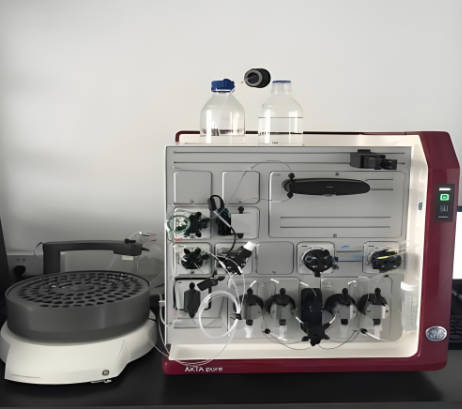
Product Samples We Regularly Subject to Protein Synthesis and Purification Experiments
Our molecular‑biology suite, bioreactor hall, fast‑protein‑liquid‑chromatography (FPLC) stations, analytical ultracentrifuges and mass‑spectrometry platforms accommodate a vast variety of target proteins and expression systems. The following categories represent the most frequently processed items:
- Soluble and membrane‑bound recombinant proteins – single‑domain antibodies, Fab fragments, growth factors, cytokines, hormones, viral antigens, bacterial toxins and industrially relevant enzymes such as cellulases, proteases and lipases
- Therapeutic monoclonal antibodies and Fc‑fusion proteins – IgG1, IgG2 and IgG4 isotypes produced in Chinese hamster ovary (CHO) or human embryonic kidney (HEK293) suspension cultures, requiring protein‑A affinity capture and polishing steps
- Multi‑subunit complexes and virus‑like particles – nucleosomes, ribonucleoprotein assemblies, retroviral‑envelope pseudotypes and empty adenoviral capsids that are assembled in insect‑cell or yeast expression systems
- Isotope‑labelled and chemically modified proteins – ¹⁵N, ¹³C and ²H‑labelled samples for nuclear‑magnetic‑resonance spectroscopy, and site‑specifically biotinylated or fluorescently labelled proteins for single‑molecule fluorescence studies
- Aggregation‑prone and intrinsically disordered proteins – amyloid‑β peptides, α‑synuclein, tau constructs and other neurodegeneration‑related targets that require specialised refolding or co‑expression with chaperones
- Biotherapeutic‑grade proteins for preclinical toxicology – endotoxin‑free, animal‑derived‑component‑free preparations that comply with the current Good Manufacturing Practice guidelines for the advanced preclinical development
Gene Synthesis, Codon Optimisation and Expression‑Strain Construction – The First Stage of Every Protein Synthesis and Purification Experiment
- Design and synthesis of the codon‑optimised gene according to the internal protocols and the customer’s target‑sequence requirements: the amino‑acid sequence of the target protein is back‑translated into a DNA sequence that is optimised for the codon usage of the selected expression host – typically Escherichia coli, Pichia pastoris, Spodoptera frugiperda (Sf9) insect cells, or CHO and HEK293 mammalian cells. The synthetic gene, flanked by the appropriate restriction sites and the purification‑tag sequences (e.g., poly‑histidine, glutathione‑S‑transferase or maltose‑binding protein), is cloned into a high‑copy or an inducible expression vector, and the construct is verified by the Sanger sequencing.
- Selection of the optimal expression host and the induction condition: the recombinant plasmid is transformed or transfected into several candidate host strains or cell lines, and the small‑scale expression screening is performed at the varying inducer concentrations, temperatures and induction durations. The total cell lysate and the soluble and the insoluble fractions are analysed by the SDS‑PAGE and the Western blot, and the clone that yields the highest titre of the soluble, correctly folded target protein is selected for the scale‑up. This protein synthesis and purification experiment stage minimises the risk of the inclusion‑body formation and the proteolytic degradation during the subsequent large‑scale production.
- Transient and stable transfection of the mammalian cells for the complex, glycosylated proteins: for the antibodies and the Fc‑fusion proteins that require the proper disulfide‑bond formation and the human‑like glycosylation, the HEK293 or the CHO cells are transiently transfected with the polyethyleneimine or the lipid‑nanoparticle reagents, or the stable, clonal cell lines are generated by the antibiotic selection and the single‑cell sorting, providing the high‑yield, scalable production platform for the preclinical material.
Upstream Processing – Fermentation and Cell Culture for the Protein Synthesis and Purification Experiment
- High‑cell‑density fed‑batch fermentation of the bacterial and the yeast expression strains: the selected E. coli or P. pastoris clone is grown in a stirred‑tank bioreactor under the controlled pH, the dissolved‑oxygen and the temperature conditions, and the protein expression is induced by the addition of the isopropyl‑β‑d‑thiogalactopyranoside or the methanol. The culture is harvested at the peak of the product accumulation, and the wet‑cell mass and the pre‑induction and the post‑induction metabolite profiles are documented, providing the process‑development data for the future technology transfer.
- Suspension‑adapted mammalian‑cell culture in the single‑use bioreactors: the CHO or the HEK293 cells are expanded in the chemically defined, animal‑component‑free media in the shake‑flasks and the wave‑mixed or the stirred‑tank single‑use bioreactors up to the 50‑litre scale. The viable‑cell density, the viability, the glucose and the lactate concentrations, and the antibody titre are monitored daily, and the culture supernatant is harvested by the depth filtration and the sterile filtration when the viability falls below a defined threshold, ensuring the maximum product recovery and the minimum host‑cell‑protein and DNA contamination.
Downstream Purification – Multi‑Step Chromatography in the Protein Synthesis and Purification Experiment
- Affinity‑capture chromatography according to the tag‑ or the protein‑specific ligands: for the poly‑histidine‑tagged proteins, the clarified lysate or the culture supernatant is loaded onto a nickel‑ or a cobalt‑immobilised metal‑affinity‑chromatography column, and the target protein is eluted with an imidazole gradient. For the antibodies and the Fc‑fusion proteins, a protein‑A or a protein‑G affinity column is used. The purity of the eluted fraction is assessed by the SDS‑PAGE, and the major contaminant bands are identified, guiding the choice of the subsequent polishing steps. This protein synthesis and purification experiment ensures that the capture step achieves a purity of greater than 90 % before the final polishing.
- Ion‑exchange and hydrophobic‑interaction chromatography for the removal of the host‑cell proteins, the nucleic acids and the endotoxins: the affinity‑eluted pool is buffer‑exchanged and loaded onto a strong anion‑exchange or a cation‑exchange column, and the target protein is eluted with a salt or a pH gradient, exploiting the differences in the isoelectric point and the surface‑charge distribution between the product and the impurities. The fractions that meet the purity specification are pooled and concentrated.
- Size‑exclusion chromatography as the final polishing and the formulation step: the concentrated protein solution is injected onto a preparative‑grade size‑exclusion column, and the monomeric, correctly folded protein is separated from the soluble aggregates, the fragments and the residual low‑molecular‑weight impurities. The protein is collected in the formulation buffer that is compatible with the intended downstream application – typically the phosphate‑buffered saline, the Tris‑buffered saline or a specific crystallisation‑screen buffer – and the final concentration is adjusted to the requested value.
- Endotoxin removal and the animal‑derived‑component‑free processing: for the proteins that are destined for the cell‑based assays or the preclinical animal studies, the endotoxin level is reduced to below 0.1 EU/µg by the Triton X‑114 phase‑separation, the polymyxin‑B affinity chromatography or the repetitive anion‑exchange polishing, and the final product is verified by the limulus‑amoebocyte‑lysate assay.
Quality Control and Analytics – Confirming the Integrity of the Synthesised and Purified Protein
- Purity and homogeneity assessment by the SDS‑PAGE, the capillary electrophoresis and the analytical size‑exclusion chromatography: the purified protein is analysed under the reducing and the non‑reducing conditions, and the percentage purity, the monomer content and the high‑molecular‑weight aggregate content are reported, providing the release criteria for the product. This protein synthesis and purification experiment includes the determination of the exact molecular weight by the electrospray‑ionisation or the matrix‑assisted‑laser‑desorption/ionisation time‑of‑flight mass spectrometry, confirming the identity and the absence of the truncation products or the post‑translational modifications that are not expected.
- Verification of the native conformation and the biological activity: the far‑ultraviolet circular‑dichroism spectrum is recorded to confirm that the protein has adopted the correct secondary‑structure fold, and the intrinsic‑tryptophan‑fluorescence emission spectrum is measured to assess the tertiary‑structure integrity. Where the customer requires, the functional activity is measured by a validated bioassay – for example, the enzyme‑activity assay, the surface‑plasmon‑resonance binding assay or the cell‑proliferation assay – and the specific activity in the units per milligram is reported.
- Determination of the residual host‑cell protein and the DNA content: the host‑cell protein is quantified by a commercial enzyme‑linked immunosorbent assay kit that is specific to the expression host, and the residual DNA is measured by a quantitative polymerase‑chain‑reaction assay, ensuring that the levels are below the regulatory thresholds for the intended use.
- Endotoxin and the bioburden testing: the final product is tested for the bacterial endotoxins by the kinetic‑chromogenic limulus‑amoebocyte‑lysate method and for the total viable aerobic count, and the results are reported on the certificate of analysis, providing the essential safety data for the in‑vivo applications.
Report Acceptance and Global Regulatory Compliance
All protein synthesis and purification experiments are executed under the fully accredited scope of our ISO/IEC 17025 quality management system. Each test report that carries the ILAC mark is therefore automatically recognised by regulatory authorities, notified bodies, customs offices and supply‑chain partners in all major economies. For biotechnology companies, pharmaceutical developers, diagnostic manufacturers and academic research groups anywhere in the world, the report constitutes legally robust, internationally accepted evidence that the protein has been synthesised, purified, characterised and released in accordance with the applicable internal validated methods and the customer‑specified acceptance criteria. The documentation can be directly used to support the investigational‑new‑drug application, the patent filing, the publication in the peer‑reviewed journal, the issue of inspection certificates according to EN 10204 or equivalent national standards, and the resolution of commercial and technical disputes concerning the identity, the purity and the functional integrity of any recombinant protein.