Projectile Impact Experiment – Accredited Ballistic, Foreign Object Damage and Dynamic Impact Resistance Evaluation for Global Markets
Our internationally accredited laboratory delivers a specialist projectile impact experiment service that provides manufacturers of aerospace structures, automotive components, protective armour, wind‑turbine blades, consumer electronics and industrial equipment worldwide with the independent, traceable data they need to verify resistance to high‑velocity impacts, foreign object damage, stone chipping and ballistic threats. Every test is conducted within the rigorous framework of ISO/IEC 17025, and each report bearing the ILAC mark is unconditionally accepted by regulatory authorities, notified bodies and supply‑chain partners in all major economies. The projectile impact experiment precisely controls the projectile mass, shape, velocity, impact angle and environmental temperature, and it records the dynamic force, the penetration depth, the residual deformation, the energy absorbed and the post‑impact functionality of the target. For a defence contractor qualifying armour plate, a jet‑engine manufacturer evaluating bird‑strike resistance, or a mobile‑phone producer certifying screen‑impact toughness, this service delivers the legally robust, defensible data that underpin product certification, safety compliance and market access on every continent.
Product Samples We Regularly Subject to Projectile Impact Experiments
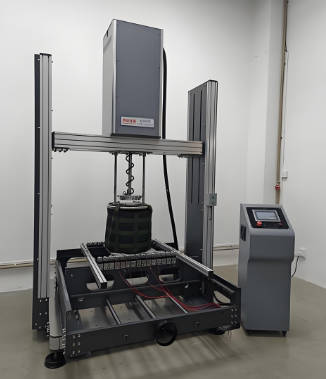
The ballistic ranges, gas guns, drop‑weight towers and high‑speed video systems in our facility accommodate specimens from small electronic casings to full‑scale structural panels. The following categories represent the most frequently tested items:
- Transparent armour, bullet‑resistant glass and security glazing – laminated glass, polycarbonate and glass‑ceramic panels for armoured vehicles, bank counters, embassy windows and aircraft windshields
- Aerospace and aviation components – wing leading edges, engine fan blades, nacelle inlets, helicopter rotor blades, drone airframes and radomes subjected to bird‑strike, runway‑debris and hailstone impacts
- Automotive body panels, glazing and sensors – painted steel and aluminium hoods, windscreens, headlamp lenses, bumpers, lidar and radar covers tested against gravel, road‑stone and minor‑collision impact events
- Wind‑turbine blades and towers – composite blade leading‑edge sections, nacelle covers and tower‑wall specimens evaluated for hail, rain‑erosion and ice‑throw damage tolerance
- Consumer electronics and portable devices – smartphone screens, tablet housings, wearable‑device lenses and power‑tool casings subjected to controlled drop‑weight, ball‑drop and sharp‑object impact
- Industrial and material test coupons – metal plates, ceramic tiles, fibre‑reinforced composite laminates and coated panels for which the impact‑resistance ranking and the material‑selection database are required
High‑Velocity Ballistic and Foreign Object Damage Testing – Projectile Impact Experiment According to ASTM F330, ASTM E3113 and MIL‑STD‑810
- Determination of the ballistic limit and the V50 velocity of armour and protective materials according to ASTM E3113 (Standard Test Method for Ballistic‑resistant Shields and Barriers) and the NATO STANAG 2920 principles: a series of projectiles of a defined mass and calibre – steel spheres, fragment‑simulating projectiles or actual bullet types – are fired from a pneumatic or a powder gun at a range of velocities. The V50 ballistic limit, at which the probability of the complete penetration is 50 %, is determined by the up‑and‑down method, and the depth of the penetration, the back‑face deformation and the delamination area are reported. This projectile impact experiment provides the mandatory certification data for the armour‑plate and the bullet‑resistant‑glass manufacturers.
- Bird‑strike and hailstone impact simulation for the aerospace structures according to ASTM F330 (Standard Test Method for Bird Impact Testing of Aerospace Transparent Enclosures) and the EASA/FAA airworthiness requirements: a gelatine‑based or a real‑ice projectile is fired at the critical speed – typically 250 knots to 400 knots – onto the leading‑edge component or the windshield. The post‑impact structural integrity, the through‑penetration and the residual visibility are evaluated, certifying the component for the continued safe flight and the landing after a bird encounter.
- Foreign object damage (FOD) impact testing of the engine‑fan‑blade and the compressor‑blade alloys: small steel or ceramic spheres are fired at the leading edge of a blade specimen at the take‑off‑power representative velocity, and the resulting notch, the crack‑initiation life and the fatigue‑strength reduction factor are measured. This projectile impact experiment supports the damage‑tolerant design of the jet‑engine rotating components and the setting of the inspection intervals.
- Multi‑impact and the cumulative‑damage projectile testing of the composite‑armour and the ceramic‑faced panels: a grid of equally spaced projectiles is fired at the panel, and the number of hits that can be sustained before the back‑face spallation or the loss of the multi‑hit capability is reported, providing the battlefield‑survivability data required by the defence procurement agencies.
Stone Chip, Gravel and Low‑Velocity Impact Testing – Projectile Impact Experiment According to SAE J400, ISO 20567‑1 and ASTM D3170
- Determination of the stone‑chip resistance of automotive paint systems and protective coatings according to ISO 20567‑1 (Paints and varnishes – Determination of stone‑chip resistance of coatings – Part 1: Multi‑impact testing) and SAE J400: a standardised batch of chilled‑iron grit or natural gravel is accelerated by compressed air and impacts the coated test panel at a defined angle, velocity and temperature. The chipped area, the number and the size of the chips and the extent of the delamination are quantified by the image analysis. This projectile impact experiment is the primary qualification test for the vehicle‑body corrosion‑protection warranty and the approval of the new paint formulations.
- Gravel‑impact and stone‑bounce testing of the under‑body shields, the wheel‑arch liners and the plastic‑exterior trims: the component is mounted in a gravel‑projection rig, and a stream of natural gravel is directed at it while it is being cooled to -30 °C. The test evaluates the low‑temperature embrittlement, the crack formation and the fastener‑pull‑through, ensuring that the plastic component will survive the winter‑road driving without the perforation or the detachment.
- Hail‑damage and ice‑ball impact testing of the photovoltaic modules and the solar‑thermal collectors according to IEC 61215‑2 and the Swiss VKF 1612 standard: a frozen ice sphere of 25 mm, 40 mm or 50 mm diameter is fired at a velocity of 23 m/s to 35 m/s onto the centre and the corner of the module. The glass‑breakage, the cell‑cracking and the loss of the electrical output are assessed, and the module is assigned a hail‑resistance class that is required for the insurance approval in the hail‑prone regions.
- Impact‑fatigue and the repeated‑low‑energy projectile testing of the wind‑turbine blade leading‑edge protection tapes: a stream of water droplets or a sequence of small ice pellets is directed at the coated‑blade section for millions of cycles, and the mass loss and the erosion depth are periodically measured, predicting the service interval of the leading‑edge protection system.
- Instrumented drop‑weight and guided‑projectile impact testing of the casings and the housings for the consumer electronics: the device or the casing is struck by a steel ball or a cylindrical impactor of a defined mass and velocity, and the force‑time and the displacement‑time histories are recorded by the piezoelectric sensors and the high‑speed cameras. The projectile impact experiment determines the drop‑survival height, the screen‑crack resistance and the impact‑energy absorption of the protective case.
Projectile Impact Experiment for the Structural and the Material Characterisation – Advanced Instrumentation and Model Validation
- Direct measurement of the impact force, the deflection and the energy partition by the high‑speed digital‑image‑correlation and the strain‑gauge array: the target is instrumented, and the full‑field deformation during the projectile impact is captured at a frame rate of up to 1 000 000 fps. The impact force, the dynamic stiffness, the energy absorbed in the elastic and the plastic deformation, and the crack‑propagation velocity are extracted from the images, providing the validation dataset for the explicit finite‑element crash and impact simulations.
- Split‑Hopkinson‑pressure‑bar and the direct‑impact Hopkinson‑bar experiments for the high‑strain‑rate material properties: a small cylindrical projectile is fired at the specimen, and the incident, the reflected and the transmitted stress waves are analysed to determine the flow‑stress versus the strain‑rate at rates up to 10⁴ s⁻¹. This projectile impact experiment supplies the material‑constitutive data that the crash‑safety and the armour‑design engineers use to model the dynamic behaviour of the metals, the polymers and the composites.
- Post‑impact residual‑strength and the damage‑tolerance evaluation: after the projectile impact, the specimen is subjected to a static tensile, a compression or a bending test, and the percentage of the retained strength and the failure mode are reported, supporting the design of the fail‑safe structures that must sustain a defined level of the in‑service damage.
- Environmental‑conditioned projectile impact testing: the specimen and the projectile are pre‑conditioned at the extreme temperatures from -55 °C to +200 °C, or the impact is performed while the target is submerged in water, jet‑fuel or hydraulic oil, reproducing the real‑world conditions that can drastically alter the impact resistance of the polymers and the fibre‑reinforced composites.
- Statistical projectile‑impact test programme and the Weibull‑analysis for the brittle materials: a statistically significant number of specimens are impacted, and the failure probability as a function of the impact energy or the velocity is reported, providing the design‑allowable impact‑resistance data for the ceramic armour, the glass‑substrate and the sintered‑metal components.
Report Acceptance and Global Regulatory Compliance
All measurements performed within our projectile impact experiment programme are executed under the fully accredited scope of our ISO/IEC 17025 quality management system. Each test report that carries the ILAC mark is therefore automatically recognised by regulatory authorities, notified bodies, customs offices and supply‑chain partners in all major economies. For aerospace component manufacturers, defence‑equipment suppliers, automotive paint‑system producers, wind‑turbine‑blade developers and consumer‑electronics brands anywhere in the world, the report constitutes legally robust, internationally accepted evidence that the impact resistance, the ballistic performance, the foreign‑object‑damage tolerance and the energy‑absorption characteristics of the product have been determined in accordance with the applicable ASTM, ISO, SAE, IEC, MIL and customer‑specified methods. The documentation can be directly used to support the airworthiness certification, the ballistic‑protection rating, the CE marking, the issue of inspection certificates according to EN 10204 or equivalent national standards, and the resolution of commercial and technical disputes concerning the dynamic impact behaviour of any material or structure.