Printing Material Inspection Service for Global Quality and Brand Integrity
As an ISO/IEC 17025 accredited laboratory, we provide a comprehensive printing material inspection service that verifies the chemical formulation, physical performance, safety compliance, and long-term durability of inks, toners, substrates, and printed products. Our printing material inspection service supports manufacturers, exporters, and brand owners who must demonstrate conformity to ASTM, ISO, EN, and regional regulations across the European Union, North America, the Middle East, and Asia. Every test is conducted under our CNAS-accredited quality system, producing reports accepted by notified bodies, consumer product safety authorities, and global procurement teams.

Product Samples We Regularly Test in Our Printing Material Inspection Service
- Offset and flexographic printing inks — solvent-based, water-based, and UV-curable inks for packaging, labels, and commercial print
- Digital and screen printing inks — for textiles, ceramics, glass, and large-format signage
- Gravure and publication inks — for magazines, catalogs, and decorative laminates
- Coating and varnish materials — aqueous, UV, and solvent-based overprint varnishes, primers, and barrier coatings
- Printing paper and board substrates — coated, uncoated, and specialty grades for sheet-fed and web-fed printing
- Plastic and metal printing films — BOPP, PET, PVC, and aluminum foils for flexible packaging and labels
- Toner and inkjet cartridge consumables — for office, production, and wide-format digital printing systems
- Printed finished products — folding cartons, flexible pouches, labels, and commercial printed matter for physical durability and safety assessment
Ink and Liquid Printing Material Testing in Our Printing Material Inspection Service
- Viscosity and flow behavior per ISO 2431 and ASTM D4212 — the resistance of the printing ink to flow is measured at controlled shear rates to ensure consistent transfer from the ink duct to the substrate, preventing misting and bridging in high-speed presses.
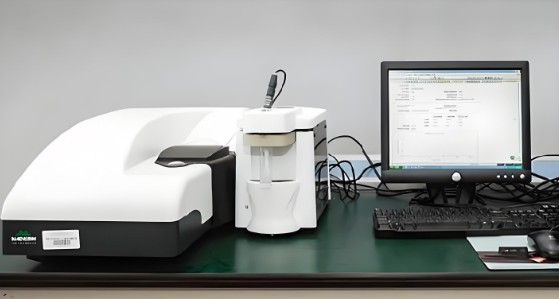
- Color measurement and spectral analysis per ISO 7724 and ISO 13655 — CIE L*a*b* coordinates and optical density are determined spectrophotometrically to verify the ink matches the brand color target and falls within the agreed delta E tolerance for multi-location print consistency.
- Adhesion and scratch resistance on diverse substrates per ASTM D3359 and ISO 2409 — the ink film is scribed and tape-tested to quantify the bond strength to paper, plastic, and metal surfaces, ensuring the print withstands downstream converting, filling, and consumer handling without delamination.
- Drying and curing speed per ASTM D5895 and internal protocols — the time for the ink to reach a tack-free surface or full cure under specified air flow, temperature, and UV dose is recorded to validate the printing material is compatible with the press speed and energy settings of the production line.
- Lightfastness and accelerated fading per ISO 105-B02 and ASTM D3424 — the ink print is exposed to a xenon-arc light source and the color change is measured against the Blue Wool Scale to predict the resistance to fading under shop display, outdoor, and archival lighting conditions.
- Chemical and solvent resistance per ASTM D5402 and ISO 2812-1 — the printed surface is rubbed with a solvent-saturated cloth or exposed to common liquids to verify the ink does not bleed, smear, or dissolve when in contact with water, alcohol, oils, or cleaning agents.
Paper and Substrate Testing for Printing Materials
- Grammage, thickness, and bulk density per ISO 536 and ISO 534 — the basis weight and caliper of the printing paper or board are measured to ensure the substrate meets the press runnability specification and the required stiffness for high-speed sheet and web transport.
- Surface smoothness and roughness by Bendtsen and Parker Print-Surf per ISO 8791-2 and ISO 8791-4 — the micro-profile of the paper surface is quantified to predict ink holdout, dot sharpness, and the uniformity of solid print areas, ensuring the substrate is suitable for the intended print process.
- Porosity and air permeance per ISO 5636-3 — the resistance of the paper to air flow is measured to predict ink absorption and drying characteristics, which directly influence set-off and blocking in the delivery pile.
- Brightness, whiteness, and opacity per ISO 2470 and ISO 2471 — the optical properties of the printing substrate are measured to ensure the printed color gamut and show-through resistance meet the design requirements for the publication or packaging application.
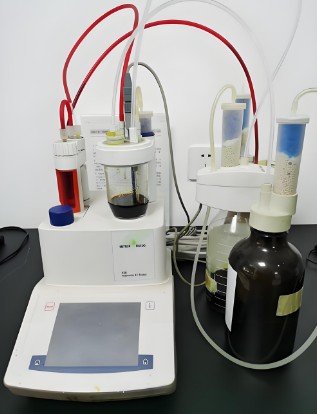
- Moisture content and dimensional stability per ISO 287 — the water content of the paper and the resulting expansion or contraction are quantified to prevent misregister and curl in multi-color printing and subsequent finishing processes.
- Surface strength and picking resistance by IGT and Dennison wax tests per ISO 3783 — the resistance of the paper surface to lifting and delamination under the high-tack ink splitting forces of offset printing is evaluated to prevent blanket contamination and press downtime.
Printed Product Quality and Performance Evaluation in Our Printing Material Inspection Service
- Rub resistance and scuffing of the printed surface per ASTM D5264 and ISO 2834 — the printed sample is subjected to a controlled rubbing cycle and the degree of ink transfer or surface marring is assessed to ensure the graphic integrity throughout the distribution chain.
- Blocking and set-off resistance per ASTM D4946 and internal methods — printed sheets or films are stacked under pressure and elevated temperature to simulate the conditions in a delivery pile or on a rewound roll, verifying the ink does not transfer to the reverse side of the adjacent sheet.
- Crease and fold cracking resistance per TAPPI T511 and customer protocols — the printed substrate is folded and the ink film at the crease is inspected for cracking, a critical requirement for folding cartons and book covers that must withstand the mechanical stress of the die-cutting and folding process.
- Tape adhesion and ink pick resistance per ASTM D3359 and internal methods — a pressure-sensitive tape is applied and removed from the printed surface to detect any ink removal that would cause unacceptable print defects during automated labeling or packaging.
- Retort, pasteurization, and sterilization resistance of printed packaging per customer and FDA protocols — the printed pouch or tray is subjected to the thermal processing conditions of the food or pharmaceutical filling operation, and the ink adhesion, color, and barrier properties are retested to confirm the printing material survives the preservation cycle.
Chemical Safety and Regulatory Compliance Testing for Printing Materials
- RoHS compliance per IEC 62321 and EU Directive 2011/65/EU — quantitative screening for lead, mercury, cadmium, hexavalent chromium, PBBs, and PBDEs in the ink, toner, and substrate to ensure the printing material meets the substance restrictions for the destination market.
- REACH Annex XVII and SVHC screening — targeted analysis of Substances of Very High Concern including phthalates, organotins, and restricted aromatic amines that may be present in colorants, plasticizers, and photoinitiators used in printing ink formulations.
- Primary aromatic amines from azo colorants per EN 14362-1 and EU Regulation 1907/2006 — the ink is reductively cleaved and the released amines are quantified by GC-MS to confirm no restricted aromatic amines above 30 mg/kg are present in the printed material.
- Heavy metals in packaging per EU Directive 94/62/EC and US CONEG — ICP-OES verifies that the sum of lead, cadmium, mercury, and hexavalent chromium in the ink, coating, and substrate is below the 100 ppm limit for packaging and packaging waste.
- Overall migration and specific migration for food contact printing per EU Regulation 10/2011 and FDA 21 CFR — the printed food packaging is extracted with food simulants and the total extractable mass plus specific migrants such as photoinitiators and mineral oil hydrocarbons are quantified to confirm the printing material is safe for direct and indirect food contact.
- Volatile organic compound emissions from printed matter per ISO 16000-3 and EN 16516 — chamber emission testing verifies that the dried printed material does not release harmful levels of residual solvents, monomers, or formaldehyde into indoor air, a requirement for publications, furniture surfaces, and interior decorative prints.
Report Recognition and ISO/IEC 17025 Compliance
All test methods described in this printing material inspection service are covered by our ISO/IEC 17025 scope of accreditation. Our test reports are accepted by European notified bodies, North American brand owners and regulatory agencies, and customs and food safety authorities across the Middle East, Australia, and Asia. Whether you require a full qualification dossier for a new ink formulation, a batch release inspection for an incoming substrate shipment, or a root cause failure analysis of a print defect, our laboratory provides the measurement accuracy and technical depth that the global printing and packaging industries demand.