Powder Metallurgy Friction Plate Testing Service for Wind Power Compliance
As an ISO/IEC 17025 accredited laboratory, we deliver a specialized powder metallurgy friction plate testing service for wind power that verifies the material composition, mechanical strength, friction performance, wear resistance, and thermal stability of sintered friction plates used in wind turbine braking and yaw systems. Our powder metallurgy friction plate testing service for wind power supports manufacturers and exporters who must demonstrate conformity to ASTM B331, ASTM E8, ASTM G99, ASTM G65, ISO 6507, and regional wind energy component standards across the European Union, North America, the Middle East, and Asia. Every test is performed under our CNAS-accredited quality system, producing reports accepted by notified bodies, wind turbine OEMs, and procurement teams worldwide.

Product Samples We Regularly Test in Our Powder Metallurgy Friction Plate Testing Service
- Sintered bronze and iron-based friction plates — for wind turbine main shaft brakes, yaw brakes, and rotor locking systems
- Copper-based and iron-copper composite friction plates — with graphite, molybdenum disulfide, or ceramic additives for controlled friction and wear
- Multi-layer and gradient-density friction plates — with a friction layer bonded to a steel backing plate for structural support
- Wet and dry running friction plates — for geared and direct-drive wind turbine configurations
- High-temperature and corrosion-resistant friction plates — for offshore and harsh environment wind installations
- Prototype and pre-production powder metallurgy friction plates — for material qualification, process validation, and performance benchmarking
- Custom-formulated and OEM-specific friction plate assemblies — with defined friction coefficients, wear rates, and dimensional requirements
Chemical Composition and Material Verification for Powder Metallurgy Friction Plates
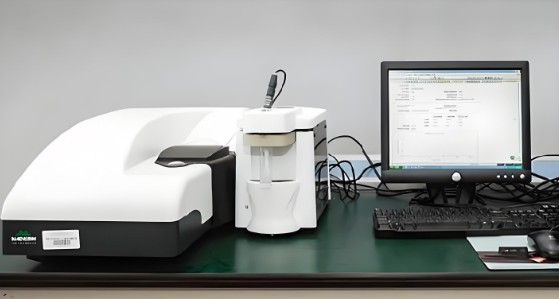
- Optical emission spectrometry for alloy grade confirmation per ASTM E415 and ISO 14284 — the elemental composition of the metallic matrix, including copper, iron, tin, zinc, and alloying elements, is quantified to verify the specified formulation and to detect any material substitution.
- Carbon and sulfur determination by combustion per ASTM E1019 — the carbon content from graphite and the sulfur content from molybdenum disulfide or other lubricants are measured to verify the friction modifier loading and to predict the friction and wear behavior.
- X-ray fluorescence for major and minor element composition per ASTM E1621 — the bulk chemical composition is quantified to confirm the specified additives and to detect any contamination or segregation in the powder metallurgy friction plate.
- X-ray diffraction phase analysis per ASTM D3720 — the crystalline phases present, including metallic phases, graphite, and any oxides or intermetallics, are identified to verify the sintering quality and to correlate with friction performance.
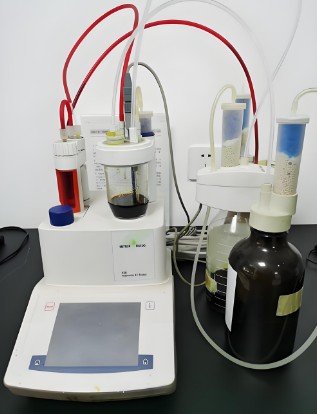
- Loss on ignition and lubricant content per ASTM E1131 — the organic and volatile content is measured to quantify the residual lubricant or binder that could affect friction stability and fade resistance.
- Trace metal and impurity screening by ICP-OES per ASTM E3061 — the levels of lead, cadmium, and other regulated metals are quantified to ensure compliance with environmental and safety requirements.
Physical and Microstructural Property Testing for Powder Metallurgy Friction Plates
- Density and porosity by Archimedes method per ASTM B328 — the bulk density, apparent density, and open porosity are measured to verify the specified density class, which controls friction stability, heat dissipation, and mechanical strength.
- Microstructural examination and image analysis per ASTM E3 and ASTM E112 — polished and etched cross-sections are examined to evaluate the distribution of graphite, lubricant phases, and porosity, and to detect any sintering defects or segregation.
- Hardness by Rockwell and Vickers methods per ISO 6508-1 and ISO 6507-1 — the hardness of the metallic matrix and the friction layer is measured to verify the specified heat treatment or sinter-hardening condition and to predict wear resistance.
- Bond strength between friction layer and steel backing plate per ASTM D4541 and ISO 4624 — the adhesion strength of the sintered friction layer to the backing plate is measured to ensure the plate withstands shear and thermal stresses without delamination.
- Thickness, flatness, and dimensional accuracy per ISO 2768 and customer drawings — laser micrometers, coordinate measuring machines, and calibrated straightedges verify the plate dimensions and flatness to ensure proper fit and uniform contact in the brake assembly.
- Surface roughness and finish per ISO 4287 — stylus profilometry quantifies the Ra and Rz values of the friction surface to verify the specified finish for proper bedding-in and friction performance.
Mechanical and Structural Strength Testing for Powder Metallurgy Friction Plates
- Compressive strength and compressive modulus per ASTM E9 and ISO 604 — the friction plate is compressed to failure to verify its load-bearing capacity and resistance to crushing under the high clamping forces of the wind turbine brake.
- Tensile strength and elongation per ASTM E8 and ISO 6892-1 — specimens extracted from the friction plate are pulled to failure to measure the ultimate tensile strength and ductility of the sintered material.
- Flexural strength and modulus of rupture per ASTM B528 and ISO 3325 — three-point bending tests measure the resistance of the friction plate to bending and cracking under mechanical loads.
- Shear strength of the friction layer and backing plate interface per ASTM D1002 — the shear strength of the bond between the friction material and the steel backing is measured to prevent separation under braking torque.
- Impact resistance and drop weight testing per ASTM D5420 — the friction plate is subjected to controlled impacts to simulate handling damage and dynamic loads, with post-impact inspection for cracking and loss of integrity.
- Fatigue and cyclic loading endurance per ASTM E466 — the friction plate is subjected to repeated load cycles representing the braking and yaw cycles of a wind turbine to predict the service life and to detect any fatigue crack initiation.
Friction and Wear Performance Testing for Powder Metallurgy Friction Plates
- Friction coefficient measurement by pin-on-disk or sub-scale dynamometer per ASTM G99 and SAE J661 — the friction coefficient of the powder metallurgy friction plate is measured under defined pressure, speed, and temperature conditions to verify the specified friction level and stability.
- Fade and recovery testing per SAE J661 — the friction plate is subjected to repeated braking cycles at increasing temperatures to evaluate the fade resistance and the recovery of friction after cooling, critical for wind turbine emergency braking.
- Wear rate and wear resistance per ASTM G65 and ASTM G99 — the volume loss of the friction plate under controlled abrasive and sliding wear conditions is measured to rank the wear resistance and to predict the replacement interval.
- Friction stability under varying humidity and temperature — the friction coefficient is measured under different environmental conditions to ensure consistent braking performance in all wind farm locations.
- Counterface compatibility and wear of the mating surface — the wear of the opposing brake disc or drum is evaluated to ensure the friction plate does not cause excessive wear of the mating component.
- High-energy and emergency braking simulation — the friction plate is subjected to high-energy braking events to verify it withstands the extreme thermal and mechanical loads of an emergency stop without failure or loss of friction.
Thermal and Environmental Durability Testing for Powder Metallurgy Friction Plates
- Thermal conductivity and specific heat per ASTM E1461 — the thermal properties of the friction plate are measured to verify its ability to dissipate heat during braking and to prevent hot spots and thermal cracking.
- Thermal cycling and thermal shock per IEC 60068-2-14 — the friction plate is rapidly cycled between hot and cold conditions to verify the friction layer and bond withstand thermal expansion and contraction without cracking or delamination.
- High-temperature oxidation and corrosion testing per ASTM G79 — the friction plate is exposed to elevated temperatures in air to evaluate the formation of oxide scale and the retention of friction performance.
- Neutral salt spray and cyclic corrosion testing per ISO 9227 and ASTM B117 — the friction plate and its backing are exposed to salt fog to evaluate corrosion resistance for offshore and coastal wind installations.
- Damp heat and humidity resistance per IEC 60068-2-78 — the friction plate is exposed to high temperature and high relative humidity, followed by friction and mechanical retests to ensure no moisture-induced degradation.
- Low-temperature friction and wear testing per ASTM D2137 — the friction plate is tested at sub-zero temperatures to verify reliable braking performance in cold climates.
Non-Destructive Testing and Quality Inspection for Powder Metallurgy Friction Plates
- Ultrasonic testing for internal defects and bond integrity per ASTM B594 and ISO 17640 — the friction plate is scanned to detect internal voids, cracks, and delamination at the friction layer-to-backing interface.
- Liquid penetrant inspection per ISO 3452-1 and ASTM E165 — surface-breaking cracks and porosity in the friction layer and backing plate are revealed using fluorescent or visible penetrant testing.
- Magnetic particle inspection for ferromagnetic backing plates per ISO 17638 — the steel backing plate is examined for surface and near-surface cracks that could lead to structural failure.
- Eddy current testing for surface crack detection per ASTM E426 — automated eddy current systems scan the friction surface for fine cracks and material variations.
- Visual defect inspection under D65 illumination — systematic examination for cracks, chips, porosity, and contamination against agreed acceptance criteria and master reference samples.
Report Recognition and ISO/IEC 17025 Compliance
Every test method described in this powder metallurgy friction plate testing service for wind power is covered by our ISO/IEC 17025 scope of accreditation. Our technical reports and certificates of analysis are accepted by European notified bodies for wind turbine components, by North American wind energy OEMs and certification bodies referencing ASTM and ISO standards, and by customs and procurement authorities across the Middle East, Australia, and Asia. Whether you require a complete qualification dossier for a new friction plate formulation, a batch release inspection for an export shipment, or a root cause failure analysis of a brake performance issue, our laboratory provides the measurement accuracy and powder metallurgy expertise that the global wind power industry demands.