Polyurethane Hard Foam Detection – Accredited Thermal, Mechanical and Fire Performance Evaluation for Global Markets
Our internationally accredited laboratory provides a specialist polyurethane hard foam detection service that empowers manufacturers of rigid PUR and PIR insulation boards, spray‑applied foam contractors, district‑heating pipe producers, cryogenic‑tank fabricators, composite‑sandwich panel builders and cold‑chain packaging suppliers worldwide to independently verify the density, compressive strength, closed‑cell content, thermal conductivity, dimensional stability, water absorption and fire performance of their cellular polyurethane materials. Every measurement is conducted within the rigorous framework of ISO/IEC 17025, and each report carrying the ILAC mark is unconditionally accepted by regulatory authorities, notified bodies and supply‑chain partners in all major economies. The polyurethane hard foam detection programme subjects the rigid foam specimen to a complete suite of physical, mechanical, thermal and environmental‑ageing evaluations, quantifying the apparent density, the compressive stress at 10 % strain, the closed‑cell percentage, the long‑term thermal resistance, the linear thermal expansion coefficient, the water absorption by total immersion, the reaction‑to‑fire classification and the content of the blowing agents that govern the insulation performance. For a foam producer exporting PIR sandwich panels to the European construction market, a spray‑foam contractor certifying the in‑situ density and the thermal performance for a cold‑storage facility, or an importer demonstrating compliance with the EN 13165, ASTM C591 or customer‑specified standards, this service delivers the legally robust, defensible data that underpin CE marking, product certification and the guarantee of long‑term energy‑saving performance.
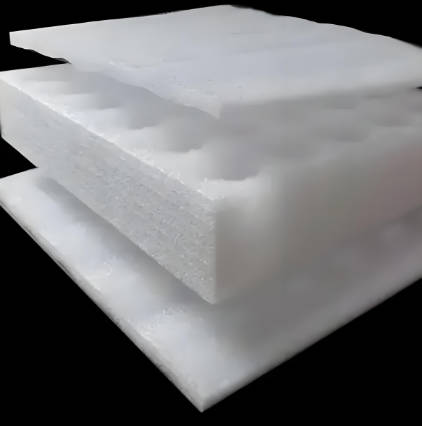
Product Samples We Regularly Subject to Polyurethane Hard Foam Detection
The compression platens, thermal‑conductivity meters, gas‑pycnometers, water‑absorption tanks, oxygen‑index testers, cone‑calorimeter systems and environmental‑ageing chambers in our facility accommodate a broad variety of rigid polyurethane and polyisocyanurate foam products. The following categories represent the most frequently tested items:
- Rigid PUR/PIR insulation boards and blocks – factory‑laminated or continuously produced polyurethane and polyisocyanurate rigid foam slabs for the flat‑roof, the wall‑cavity, the floor, the cold‑store and the industrial‑tank insulation
- Spray‑applied polyurethane foam – the two‑component, field‑sprayed rigid foam used for the roofing, the underground‑pipe insulation, the tank‑shell protection and the building‑envelope air‑sealing, tested as the core sample or the sprayed‑on‑substrate coupon
- Polyurethane foam cores for the sandwich panels – the closed‑cell PUR and PIR foam that is injected between the metal or the fibre‑reinforced‑polymer facings of the architectural, the refrigerated‑truck‑body and the clean‑room partition panels
- Pre‑insulated district‑heating pipe foam – the rigid PUR foam that fills the annulus between the steel service‑pipe and the polyethylene outer‑casing, evaluated for the long‑term thermal resistance and the compressive creep behaviour at the elevated service temperature
- Polyurethane foam for the cryogenic and the liquefied‑natural‑gas insulation – the low‑density, fine‑cell rigid foam that must maintain its mechanical and the thermal properties at the temperatures down to -196 °C, tested for the cryogenic‑compressive strength, the thermal contraction and the resistance to the thermal‑shock cracking
- Rigid polyurethane packaging and buoyancy foams – the foam‑in‑place and the pre‑moulded foam for the protective‑packaging of the sensitive equipment and the buoyancy‑module filling, characterised by the density, the shock‑absorption and the closed‑cell content
- Aged and service‑exposed polyurethane hard foam specimens – samples that have been subjected to the thermal‑cycling, the humid‑ageing or the long‑term service, submitted for the residual‑property assessment and the degradation‑mechanism analysis
Physical and Mechanical Properties – Polyurethane Hard Foam Detection According to ASTM D1622, ISO 845 and ASTM D1621
- Determination of the apparent density by the gravimetric and the volume‑measurement method according to ASTM D1622 (Standard Test Method for Apparent Density of Rigid Cellular Plastics) and ISO 845 (Cellular plastics and rubbers – Determination of apparent density): a specimen of a defined geometry is weighed in the air, and its volume is calculated from the measured dimensions or by the water‑displacement method, and the density in kilograms per cubic metre is reported. This polyurethane hard foam detection provides the fundamental quality‑control parameter that governs the thermal conductivity, the compressive strength and the material‑usage cost of the foam product.
- Compressive strength and the modulus of the rigid cellular plastic according to ASTM D1621 (Standard Test Method for Compressive Properties of Rigid Cellular Plastics) and ISO 844 (Rigid cellular plastics – Determination of compression properties): a square or a circular specimen is compressed between two parallel platens at a constant crosshead speed, and the compressive stress at 10 % relative deformation and the maximum compressive strength are reported. The test classifies the rigid PUR and PIR foam for the load‑bearing insulation applications such as the flat‑roof, the floor‑slab and the foundation‑protection systems, and it directly supports the declaration of the compressive‑strength class according to EN 13165.
- Flexural strength and the modulus by the three‑point bending method according to ASTM C203 (Standard Test Methods for Breaking Load and Flexural Properties of Block‑Type Thermal Insulation) and the internal procedures: a rectangular bar is supported on two rollers and loaded at mid‑span, and the flexural stress‑strain curve and the maximum bending stress at the failure are recorded, providing the design data for the foam‑cored sandwich panels and the self‑supporting insulation boards.
- Measurement of the tensile strength and the elongation at break according to ASTM D1623 (Standard Test Method for Tensile and Tensile Adhesion Properties of Rigid Cellular Plastics): a dumbbell specimen is pulled at a constant crosshead speed, and the maximum tensile stress and the strain at the failure are reported, providing the data that the sandwich‑panel designer uses to guarantee the bond‑integrity between the foam core and the facing sheets.
- Dimensional stability under the defined temperature and the humidity conditions according to EN 1604 (Thermal insulating products for building applications – Determination of dimensional stability under specified temperature and humidity conditions) and ASTM D2126 (Standard Test Method for Response of Rigid Cellular Plastics to Thermal and Humid Aging): a precisely measured specimen is exposed to the specified environment – typically 70 °C and 90 % relative humidity for 48 hours – and the percentage change in the length, the width and the thickness is reported, verifying that the foam will not warp, bow or shrink during the storage, the installation and the service.
Thermal Insulation Performance and Closed‑Cell Content – Polyurethane Hard Foam Detection According to ASTM C518, ISO 8301 and ISO 4590
- Determination of the thermal conductivity and the thermal resistance by the guarded‑hot‑plate or the heat‑flow‑meter method according to ASTM C518 (Standard Test Method for Steady‑State Thermal Transmission Properties by Means of the Heat Flow Meter Apparatus) and ISO 8301 (Thermal insulation – Determination of steady‑state thermal resistance and related properties – Heat flow meter apparatus): a flat, square specimen of the polyurethane hard foam is placed between a hot and a cold plate, and the steady‑state heat flux and the temperature difference are measured. The thermal conductivity λ in milliwatts per metre‑kelvin and the R‑value per unit thickness are reported at a mean temperature of 10 °C or 23 °C. This polyurethane hard foam detection provides the declared‑lambda value that is printed on the CE label and that the building‑energy‑modeller uses to calculate the U‑value of the building element.
- Long‑term thermal resistance and the accelerated‑ageing procedure according to EN 13165 Annex C and the internal protocols: the polyurethane hard foam is subjected to a defined thermal‑ageing cycle that simulates the diffusion of the blowing agent out of the cells and the ingress of the air over the 25‑year or the 50‑year design life, and the aged thermal conductivity is measured and reported as the design‑lambda, providing the conservative, regulatory‑compliant value for the energy‑performance certification.
- Determination of the closed‑cell content by the gas‑pycnometer method according to ISO 4590 (Rigid cellular plastics – Determination of the volume percentage of open cells and of closed cells) and ASTM D6226 (Standard Test Method for Open Cell Content of Rigid Cellular Plastics): the geometric volume and the impermeable volume of the foam specimen are measured, and the closed‑cell percentage is calculated, verifying that the foam has the correct cell‑structure for the low‑thermal‑conductivity, the low‑water‑absorption and the high‑compressive‑strength applications. A closed‑cell content above 90 % is typically required for the rigid PUR and PIR insulation.
- Measurement of the initial and the long‑term water absorption by the total immersion according to ISO 2896 (Rigid cellular plastics – Determination of water absorption) and ASTM D2842 (Standard Test Method for Water Absorption of Rigid Cellular Plastics): the foam specimen is immersed in the water for a specified period, and the mass gain and the change in the volume are reported, certifying the suitability of the foam for the inverted‑roof, the below‑grade and the marine‑buoyancy applications where the contact with the water is continuous.
- Coefficient of linear thermal expansion by the dilatometer method according to ASTM E228 and the internal procedures: the dimensional change of the polyurethane hard foam with the temperature is recorded, and the CTE in parts per million per kelvin is reported, providing the data that the engineer uses to calculate the thermal‑expansion joints and the stress in the bonded foam‑to‑metal assemblies.
Fire Performance and Reaction‑to‑Fire – Polyurethane Hard Foam Detection According to ISO 5660, ASTM E84 and EN 13501‑1
- Determination of the heat‑release rate, the total heat release and the smoke production by the cone‑calorimeter method according to ISO 5660‑1 (Reaction‑to‑fire tests – Heat release, smoke production and mass loss rate) and ASTM E1354: a specimen of the polyurethane hard foam is exposed to a defined radiant‑heat flux, and the ignition time, the peak heat‑release rate, the total heat released and the specific extinction area (the smoke parameter) are measured, providing the fundamental fire‑hazard data that the risk‑assessment engineer uses to evaluate the contribution of the foam to a room‑fire scenario. This polyurethane hard foam detection is mandatory for the fire‑safety approval of the foam‑cored panels in the building and the transportation sectors.
- Surface‑burning characteristics – the flame‑spread index and the smoke‑developed index according to ASTM E84 (Standard Test Method for Surface Burning Characteristics of Building Materials) and the equivalent ISO 9705: the rigid foam panel is mounted in the Steiner‑tunnel apparatus, and the flame‑spread and the smoke‑production are measured, providing the classification data that are required for the acceptance of the insulation in the North American and the Middle‑Eastern building codes.
- Reaction‑to‑fire classification according to EN 13501‑1 (Fire classification of construction products and building elements) using the data from the single‑burning‑item test (EN 13823) and the small‑flame ignition test (EN ISO 11925‑2): the polyurethane hard foam panel is evaluated for the fire‑growth rate, the lateral‑flame‑spread, the flaming‑droplet production and the smoke‑generation, and it is classified into the Euroclass B, C, D or E, as required for the CE marking of the construction product.
- Limited‑oxygen‑index measurement according to ISO 4589‑2 (Plastics – Determination of burning behaviour by oxygen index – Part 2: Ambient‑temperature test): the minimum oxygen concentration that supports the flaming combustion of the foam is determined, providing the comparative, intrinsic‑flammability data that the formulator uses to optimise the flame‑retardant package.
Blowing Agent Analysis, Chemical Resistance and Environmental Durability – Polyurethane Hard Foam Detection According to ASTM D7138 and ISO 175
- Identification and the quantification of the blowing agents by the gas‑chromatography–mass‑spectrometry according to ASTM D7138 (Standard Test Method for Determination of the Blowing Agent Content of Polyurethane Foam) and the internal procedures: the foam is thermally desorbed or solvent‑extracted, and the concentration of the pentane, the cyclopentane, the hydrofluorocarbons, the hydrofluoro‑olefins and the other blowing‑agent gases is reported, verifying the compliance with the Montreal Protocol, the Kigali Amendment and the F‑Gas Regulation, and providing the data for the calculation of the foam's global‑warming potential.
- Resistance to the chemical reagents – the acid, the alkali, the solvent and the oil immersion according to ISO 175 (Plastics – Methods of test for the determination of the effects of immersion in liquid chemicals, adapted for the cellular materials) and the internal procedures: the foam specimen is immersed in the test liquid at the elevated temperature, and the change in the mass, the dimensions, the compressive strength and the closed‑cell content is reported, certifying the compatibility of the PUR/PIR foam with the roofing‑asphalt, the adhesive, the cleaning‑solvent and the food‑oil environments.
- Resistance to the ultraviolet radiation and the accelerated weathering according to ASTM G154 (Standard Practice for Operating Fluorescent Ultraviolet Lamp Apparatus for Exposure of Non‑Metallic Materials) and ISO 4892‑2: the foam surface is exposed to a cycle of the UV‑A or the UV‑B radiation, the heat and the condensation, and the mass loss, the colour change, the surface‑chalking and the retained compressive strength are evaluated, predicting the outdoor‑storage and the exposed‑service life of the unprotected rigid foam.
- Resistance to the freeze‑thaw cycling and the thermal‑shock endurance: the polyurethane hard foam specimen is cycled between -30 °C and +80 °C for a defined number of cycles, and the change in the thermal conductivity, the compressive strength and the visual integrity is measured, ensuring the long‑term durability of the insulation in the cold‑climate and the district‑heating applications.
Report Acceptance and Global Regulatory Compliance
All measurements performed within our polyurethane hard foam detection programme are executed under the fully accredited scope of our ISO/IEC 17025 quality management system. Each test report that carries the ILAC mark is therefore automatically recognised by regulatory authorities, notified bodies, customs offices and supply‑chain partners in all major economies. For rigid‑polyurethane‑foam manufacturers, spray‑foam contractors, sandwich‑panel producers, district‑heating‑pipe suppliers and building‑insulation importers anywhere in the world, the report constitutes legally robust, internationally accepted evidence that the apparent density, the compressive strength, the closed‑cell content, the thermal conductivity, the dimensional stability, the water absorption, the fire performance and the blowing‑agent composition of the polyurethane hard foam have been determined in accordance with the applicable ASTM, ISO, EN and customer‑specified methods. The documentation can be directly used to support CE marking under the Construction Products Regulation, the issue of inspection certificates according to EN 10204 or equivalent national standards, the compilation of the technical file for the type‑examination, and the resolution of commercial and technical disputes concerning the quality, the thermal efficiency and the long‑term durability of any rigid polyurethane or polyisocyanurate foam product.