Polyimide Powder Testing Service for Global High-Performance Material Compliance
As an ISO/IEC 17025 accredited laboratory, we deliver a comprehensive polyimide powder testing service that verifies chemical purity, particle size distribution, thermal stability, mechanical performance of molded or sintered specimens, electrical insulation properties, and long-term environmental durability. Our polyimide powder testing service supports manufacturers and exporters of PI molding powders, coating resins, composite matrices, and sintered components who must demonstrate conformity to ASTM, ISO, EN, and regional advanced material standards across the European Union, North America, East Asia, and the Middle East. Every test is performed under our CNAS-accredited quality system, producing reports accepted by notified bodies, electronics and aerospace OEMs, and procurement teams worldwide.

Product Samples We Regularly Test in Our Polyimide Powder Testing Service
- Thermoplastic polyimide molding powders — for high-temperature bearings, seals, insulators, and structural parts
- Thermoset polyimide resin powders — for coatings, adhesives, and carbon-fiber prepreg matrices
- Nano and micro polyimide powders — for 3D printing, sintering, and specialty coating formulations
- Filled polyimide powders — with graphite, MoS2, PTFE, or carbon fiber for self-lubricating and wear-resistant applications
- Recycled and reprocessed polyimide powders — for sustainability verification and secondary use qualification
- Custom-synthesized and surface-modified polyimide powders — for electronic packaging and high-frequency dielectric applications
Chemical Composition and Purity Analysis in Our Polyimide Powder Testing Service
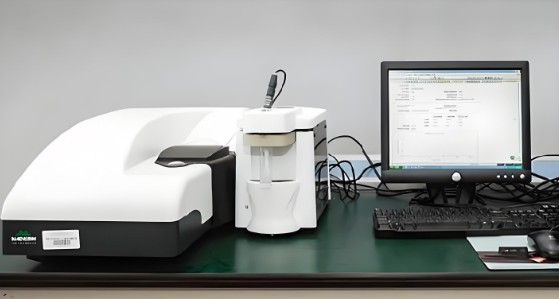
- Fourier transform infrared spectroscopy for polymer identification per ASTM E1252 — the infrared absorption spectrum of the polyimide powder is acquired and compared against reference libraries to confirm the imide structure, detect any polyamic acid precursor, and verify the degree of imidization.
- Elemental analysis for carbon, hydrogen, nitrogen, and oxygen content per ASTM D5291 — the elemental composition is quantified to confirm the correct stoichiometry and to detect any contamination or incomplete polymerization in the polyimide powder.
- Ash content and inorganic residue per ASTM D5630 and ISO 3451-1 — the powder is incinerated and the residual ash is weighed to quantify fillers, catalysts, and any inorganic contamination that would degrade electrical or mechanical performance.
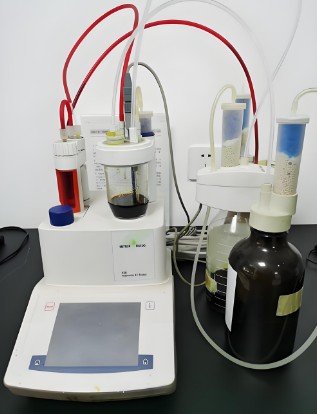
- Moisture and volatile content by Karl Fischer titration and loss on drying per ASTM D6980 — the water content and any residual high-boiling solvents are measured to ensure the polyimide powder meets the dryness specification for molding, coating, or sintering.
- Residual monomer and solvent screening by gas chromatography-mass spectrometry per internal validated protocol — headspace or extraction analysis identifies and quantifies residual dianhydride, diamine, and solvent monomers that could cause voids or degradation during processing.
- X-ray photoelectron spectroscopy for surface chemical state per ASTM E1078 — the surface composition of the powder particles is analyzed to verify the presence of imide groups and to detect any surface oxidation or contamination that would affect adhesion and flow.
Particle Characterization and Powder Flow Testing for Polyimide Powders
- Particle size distribution by laser diffraction per ISO 13320 and ASTM B822 — the D10, D50, and D90 values are measured to verify the polyimide powder meets the specified particle size range for the intended molding, coating, or sintering process.
- Specific surface area by BET nitrogen adsorption per ISO 9277 and ASTM C1274 — the total surface area is measured to predict the powder's reactivity, flow behavior, and the required processing temperature for coalescence or imidization completion.
- Apparent density, tap density, and Hausner ratio per ASTM D7481 and ISO 60 — the poured and tapped densities are measured to calculate the Hausner ratio and compressibility index, providing data for die filling, hopper design, and consistent part density control.
- Flowability and angle of repose per ASTM D6393 — the powder flow characteristics are measured to ensure reliable feeding, spreading, and mold filling in automatic molding and additive manufacturing systems.
- Scanning electron microscopy for particle shape and surface morphology per ASTM E1508 — high-magnification imaging reveals the particle geometry, surface roughness, and the presence of agglomerates or satellites, which directly influence flow and packing density.
- Particle size distribution after mechanical attrition per internal protocol — the powder is subjected to controlled milling or vibration and the change in particle size distribution is recorded to predict the generation of fines during pneumatic conveying and hopper discharge.
Thermal Stability and High-Temperature Performance Testing for Polyimide Powders
- Thermogravimetric analysis for decomposition temperature and char yield per ASTM E1131 and ISO 11358-1 — the mass loss profile is recorded from ambient to 1000 °C under nitrogen and air, determining the 5% and 10% weight loss temperatures and the residual char, which define the ultimate thermal stability limit of the polyimide powder.
- Differential scanning calorimetry for glass transition and curing behavior per ISO 11357-2 and ASTM E1356 — the Tg, melting point, and any residual cure exotherm are measured to verify the degree of imidization and to establish the maximum continuous service temperature for the polyimide material.
- Heat deflection temperature and Vicat softening point of molded specimens per ASTM D648 and ISO 306 — the temperature at which a molded polyimide specimen deflects or softens under a defined load is recorded to provide the practical upper use temperature for structural parts.
- Coefficient of thermal expansion by thermomechanical analysis per ASTM E831 and ISO 11359-2 — the linear thermal expansion is measured to verify dimensional stability and to predict thermal stress in components operating across wide temperature ranges.
- Oxidative induction time and long-term thermal oxidative stability per ASTM D3895 — the polyimide powder is exposed to oxygen at elevated temperatures and the time to oxidative degradation is measured to predict the resistance to thermal-oxidative breakdown during continuous high-temperature service.
- Thermal cycling and thermal shock resistance of molded parts per IEC 60068-2-14 — the sintered or molded polyimide specimens are rapidly cycled between hot and cold extremes, and the development of micro-cracks, warpage, or loss of mechanical strength is evaluated.
Mechanical Performance Testing of Molded or Sintered Polyimide Powder Specimens
- Tensile strength, elongation at break, and modulus per ISO 527-2 and ASTM D638 — molded or sintered polyimide specimens are pulled to failure to measure the ultimate tensile strength and stiffness, confirming the powder consolidates into a high-strength, load-bearing material.
- Flexural strength and flexural modulus per ISO 178 and ASTM D790 — three-point bending tests determine the bending resistance and stiffness of the polyimide material, essential for structural and bearing applications.
- Compressive strength per ISO 604 and ASTM D695 — the material is compressed to failure to verify its ability to support compressive loads in seals, gaskets, and clamping elements.
- Impact resistance by Izod and Charpy methods per ISO 180, ISO 179-1, and ASTM D256 — the energy absorbed during fracture is measured to ensure the polyimide powder can be processed into parts with adequate toughness for handling and service.
- Hardness by Rockwell, Shore D, and micro-Vickers methods per ASTM D785, ISO 48-4, and ISO 6507-1 — the hardness of molded and sintered polyimide components is measured to verify the powder meets the specified surface hardness for wear resistance and dimensional stability.
- Creep and stress relaxation under sustained load at high temperature per ISO 899 and ASTM D2990 — the time-dependent deformation of polyimide parts under constant load and temperature is measured to predict long-term dimensional stability in high-temperature applications.
- Fatigue and cyclic loading resistance per ASTM D7774 — the molded polyimide specimens are subjected to repeated mechanical stress and the cycles to failure are recorded to assess the combined effect of heat and dynamic loading on the material's service life.
Electrical Insulation and Dielectric Property Testing for Polyimide Powders
- Dielectric strength and breakdown voltage per ASTM D149 and IEC 60243-1 — the voltage at which electrical failure occurs through a molded or cast polyimide specimen is measured to verify the insulation capability of the material for high-voltage and electronic applications.
- Volume and surface resistivity per ASTM D257 and IEC 60093 — the electrical resistance through and across the polyimide material is measured under controlled humidity to confirm it meets the insulation requirements for the intended voltage class.
- Dielectric constant and dissipation factor per ASTM D150 and IEC 60250 — the relative permittivity and loss tangent are determined at specified frequencies to qualify the polyimide powder for high-frequency and signal integrity applications.
- Comparative tracking index per IEC 60112 — the resistance of the polyimide surface to tracking under voltage and contamination is evaluated to ensure safety in creepage-critical electronic and electrical applications.
- Insulation resistance after thermal and humidity conditioning per internal protocols — the polyimide specimen is exposed to damp heat and thermal cycling, and the insulation resistance is remeasured to ensure the dielectric properties are retained under environmental stress.
Chemical Resistance and Environmental Durability Testing for Polyimide Powders
- Immersion resistance to acids, alkalis, and organic solvents per ASTM D543 and ISO 175 — the molded or sintered polyimide material is immersed in a range of aggressive chemicals at elevated temperatures, and the change in mass, dimensions, and mechanical properties is measured to verify compatibility with the intended service environment.
- Hot water and steam resistance per ASTM D570 and ISO 1817 — the polyimide is exposed to hot water or saturated steam for extended periods, and the retained tensile strength, Tg, and appearance are evaluated to predict performance in humid and hydrolytic conditions.
- Neutral salt spray and cyclic corrosion resistance per ISO 9227 and ASTM B117 — for polyimide parts with metallic inserts or used in marine environments, the assembly is exposed to salt fog to evaluate pitting, crevice corrosion, and coating degradation.
- Accelerated weathering by xenon-arc exposure per ASTM G155 and ISO 4892-2 — the polyimide material is subjected to simulated sunlight and moisture cycles to evaluate color change, chalking, and retained mechanical properties after outdoor exposure.
- UV and ozone resistance per ASTM G154 and ISO 1431-1 — the polymer surface is tested for resistance to ultraviolet radiation and ozone cracking, ensuring long-term stability in atmospheric and industrial environments.
- Outgassing and volatile condensable material per ASTM E595 — for polyimide powders used in space and vacuum applications, the total mass loss and collected volatile condensable materials are measured to confirm low-outgassing performance.
- Flammability and fire resistance per UL 94 and ISO 4589-2 — the polyimide specimen is exposed to a defined flame and the afterflame time, burning rate, and limiting oxygen index are recorded to classify the material's fire safety for electrical and transportation applications.
Chemical Safety and Restricted Substance Compliance for Polyimide Powders
- RoHS compliance per IEC 62321 and EU Directive 2011/65/EU — quantitative screening for lead, mercury, cadmium, hexavalent chromium, PBBs, and PBDEs in the polyimide powder and any fillers or additives to ensure the product meets global substance restrictions.
- REACH Annex XVII and SVHC screening — targeted analysis of Substances of Very High Concern including specific phthalate plasticizers, brominated flame retardants, and restricted aromatic amines that may be present as residual monomers or processing aids.
- Halogen content by combustion ion chromatography per EN 14582 — the total fluorine, chlorine, bromine, and iodine content is measured to support halogen-free declarations for electronics and aerospace applications.
- Heavy metals in packaging per EU Directive 94/62/EC — verification that the sum concentration of lead, cadmium, mercury, and hexavalent chromium in the protective packaging and labels is below the 100 ppm regulatory limit.
- Volatile organic compound emission per ISO 16000-3 — chamber testing verifies that the polyimide powder does not release harmful VOCs or formaldehyde during storage, processing, or end use in occupied spaces.
Report Recognition and ISO/IEC 17025 Compliance
Every test method described in this polyimide powder testing service is covered by our ISO/IEC 17025 scope of accreditation. Our technical reports and certificates of analysis are accepted by European notified bodies, by North American aerospace and electronics OEMs referencing ASTM and IEC standards, and by customs and procurement authorities across Japan, Korea, and the Gulf region. Whether you require a complete qualification dossier for a new polyimide powder grade, a batch release inspection for an export shipment, or a root cause failure analysis of a molding or sintering defect, our laboratory provides the measurement accuracy and advanced polymer expertise that the global high-performance materials industry demands.