Polyethylene Pipe Testing Service – Accredited Mechanical, Thermal and Long‑Term Performance Evaluation for Global Markets
Our internationally accredited laboratory delivers a specialist polyethylene pipe testing service that provides pipe manufacturers, water and gas utility companies, construction contractors, mining operators and pipeline importers worldwide with the independent, traceable data they need to verify the short‑term and long‑term mechanical strength, thermal stability, chemical resistance and overall durability of their high‑density and medium‑density polyethylene piping products. Every test is performed under the rigorous framework of ISO/IEC 17025, and each report bearing the ILAC mark is unconditionally accepted by regulatory authorities, notified bodies and supply‑chain partners in all major economies. The polyethylene pipe testing service subjects the pipe and its constituent materials to a complete suite of physical, mechanical, thermal and chemical evaluations, quantifying the hydrostatic burst strength, the long‑term creep rupture resistance, the slow crack growth resistance, the resistance to rapid crack propagation, the thermal oxidative induction time, the melt flow rate and the compatibility with the conveyed fluids. For a pipe producer certifying a PE 100‑RC grade for a trenchless installation, a gas utility qualifying a new PE pipe for the distribution network, or an importer demonstrating compliance with the ISO 4427, EN 12201 or ASTM D3035 specifications, this service delivers the legally robust, defensible data that underpin product certification, design validation and regulatory compliance on every continent.
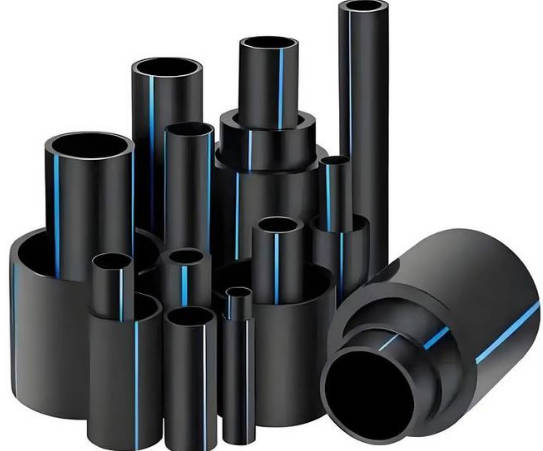
Product Samples We Regularly Subject to Polyethylene Pipe Testing
The hydrostatic pressure test rigs, creep‑rupture stands, notched pipe test baths, differential scanning calorimeters, melt‑index testers, tensile machines and chemical‑immersion tanks in our facility accommodate a broad variety of polyethylene pipe grades and joint types. The following categories represent the most frequently tested items:
- High‑density polyethylene pipes for water supply and distribution – PE 80, PE 100 and PE 100‑RC solid‑wall pipes in blue, black and black‑with‑blue‑stripes, intended for the buried potable‑water mains and the service‑connection lines
- High‑density polyethylene pipes for gas distribution – yellow and black‑with‑yellow‑stripes PE pipes for the transport of the natural gas and the liquefied petroleum gas at the pressures up to 10 bar, including the electrofusion and the butt‑fusion jointed assemblies
- Multilayer and co‑extruded polyethylene composite pipes – pipes with an inner and an outer HDPE layer and a middle barrier layer of the aluminium, the ethylene‑vinyl‑alcohol or the polyamide, used for the heating, the plumbing and the industrial‑fluid transport
- Polyethylene pipes for industrial and mining applications – thick‑walled, abrasion‑resistant PE pipes for the slurry transport, the tailings disposal, the dredging and the chemical‑plant effluents, often with a co‑extruded or a fused‑on sacrificial wear‑layer
- Polyethylene pipes for the trenchless installation and the relining – pipes designed for the horizontal directional drilling, the pipe‑bursting and the slip‑lining, evaluated for the resistance to the external scratching, the point‑loading and the rapid crack propagation
- Polyethylene electrofusion and butt‑fusion joints – the complete welded assemblies that include the pipe and the moulded or the fabricated fittings, tested for the short‑term and the long‑term integrity under the internal pressure, the tensile and the bending loads
- Raw polyethylene compounds and regrind materials – the granules, the powder or the regrind that are used to manufacture the pipe, tested for the melt flow rate, the density, the carbon‑black content and the dispersion, the thermal stability and the resistance to the oxidative degradation
Mechanical and Physical Properties – Polyethylene Pipe Testing According to ISO 1167, ASTM D1598 and ISO 6259
- Determination of the short‑term hydrostatic burst strength according to ISO 1167 (Thermoplastics pipes, fittings and assemblies for the conveyance of fluids – Determination of the resistance to internal pressure) and ASTM D1598 (Standard Test Method for Time‑to‑Failure of Plastic Pipe Under Constant Internal Pressure): the pipe specimen is sealed and filled with water at a specified temperature – typically 20 °C or 80 °C – and the internal pressure is increased at a controlled rate until the failure. The burst pressure, the hoop stress at the failure and the failure mode – the ductile ballooning or the brittle split – are recorded. This polyethylene pipe testing service provides the fundamental short‑term strength data that the design engineer uses to calculate the maximum allowable operating pressure and the safety factor of the pipeline.
- Long‑term hydrostatic strength and the creep‑rupture behaviour according to ISO 9080 (Plastics piping and ducting systems – Determination of the long‑term hydrostatic strength of thermoplastics materials in pipe form by extrapolation) and ASTM D2837 (Standard Test Method for Obtaining Hydrostatic Design Basis for Thermoplastic Pipe Materials): sets of the pipe specimens are pressurised with water at several constant internal‑pressure levels and at several temperatures – typically 20 °C, 40 °C, 60 °C and 80 °C – and the time to the failure is recorded. The stress‑rupture data are analysed by the least‑squares regression and the time‑temperature superposition, and the lower confidence limit of the predicted long‑term hydrostatic strength at the 50‑year or the 100‑year design life is calculated and reported as the minimum required strength (MRS) or the hydrostatic design basis. This polyethylene pipe testing service is the mandatory qualification procedure for every PE pipe grade and directly supports the classification of the material as PE 80, PE 100 or PE 112 according to ISO 12162.
- Slow crack growth resistance by the notched pipe test according to ISO 13479 (Polyolefin pipes for the conveyance of fluids – Determination of resistance to crack propagation – Test method for slow crack growth on notched pipes) and ASTM F1473 (Standard Test Method for Notch Tensile Test to Measure the Resistance to Slow Crack Growth of Polyethylene Pipes and Resins): a longitudinal notch is machined on the internal or the external surface of the pipe, and the notched pipe is pressurised with water at an elevated temperature – typically 80 °C – and the time to the failure is recorded. The failure time must exceed the minimum requirement for the PE grade – for example, 500 hours for the PE 100‑RC – to demonstrate the resistance to the slow crack propagation from a surface scratch or a point‑load damage that can occur during the installation and the service.
- Rapid crack propagation resistance by the S4 test according to ISO 13477 (Thermoplastics pipes for the conveyance of fluids – Determination of the resistance to rapid crack propagation – Small‑scale steady‑state test) and the full‑scale test according to ISO 13478: the pressurised pipe is impacted by a striker at a controlled velocity and temperature, and the length of the propagating crack is measured. The critical pressure and the critical temperature below which the rapid crack propagation does not occur are reported, providing the essential safety‑design data for the high‑pressure gas and the water transmission pipelines.
- Tensile properties of the polyethylene pipe wall according to ISO 6259‑1 (Thermoplastics pipes – Determination of tensile properties – Part 1: General test method) and ASTM D638: a dumbbell specimen is cut from the pipe wall in the longitudinal and the transverse directions and pulled at a constant crosshead speed, and the yield strength, the ultimate tensile strength and the elongation at break are reported, verifying the mechanical quality of the extruded pipe and the effect of the regrind content.
Thermal, Oxidative and Chemical Resistance – Polyethylene Pipe Testing According to ISO 11357, ASTM D3895 and ISO 4433
- Determination of the oxidative induction time by the differential scanning calorimetry according to ISO 11357‑6 (Plastics – Differential scanning calorimetry – Part 6: Determination of oxidation induction time) and ASTM D3895 (Standard Test Method for Oxidative‑Induction Time of Polyolefins by Differential Scanning Calorimetry): a small specimen of the pipe material is heated to 200 °C in an oxygen atmosphere, and the time to the onset of the exothermic oxidation reaction is recorded. The OIT in minutes is reported, and a minimum value – typically 20 minutes – is required to guarantee that the antioxidant package is sufficient to protect the polyethylene from the thermal‑oxidative degradation during the extrusion and the long‑term service. This polyethylene pipe testing service is a routine quality‑control check for every production batch.
- Melt flow rate and the thermal stability of the polyethylene compound according to ISO 1133‑1 (Plastics – Determination of the melt mass‑flow rate and the melt volume‑flow rate of thermoplastics) and the internal procedures: the MFR in grams per 10 minutes is measured at 190 °C under a 5 kg load, and the result is compared with the grade specification, providing the data that the processor uses to verify the correct molecular‑weight distribution and the processability of the resin.
- Resistance to the chemical reagents and the strain‑corrosion behaviour according to ISO 4433 (Thermoplastics pipes – Resistance to liquid chemicals – Classification) and the internal procedures: the pipe specimen is exposed to the aggressive chemical medium – such as the sulfuric acid, the sodium hydroxide, the chlorine‑dioxide‑treated water or the hydrocarbon condensate – at the elevated temperature for a defined period, and the change in the mass, the dimensions, the tensile properties and the oxidative induction time is reported, certifying the suitability of the polyethylene pipe for the chemical‑plant, the mining‑effluent and the disinfected‑water applications.
- Resistance to the chlorinated water and the chlorine‑dioxide disinfection according to ASTM F2263 (Standard Test Method for Evaluating the Oxidative Resistance of Polyethylene Pipes to Chlorinated Water) and the internal procedures: the pipe is continuously circulated with the chlorinated water at a defined concentration and temperature, and the time to the embrittlement or the failure under the sustained pressure is recorded, providing the data that the water‑utility engineer uses to select the correct PE grade for the secondary‑disinfection environments.
Physical Characterisation, Dimensional Conformance and Material Verification – Polyethylene Pipe Testing According to ISO 1183, ASTM D792 and ISO 3126
- Determination of the density and the carbon‑black content of the polyethylene compound according to ISO 1183‑1 (Plastics – Methods for determining the density of non‑cellular plastics) and ISO 6964 (Polyolefin pipes and fittings – Determination of carbon black content by calcination and pyrolysis – Test method and basic specification): the density of the pipe material is measured by the immersion or the density‑gradient‑column method, and the carbon‑black content and the dispersion are determined by the pyrolysis and the microscopic examination, ensuring that the pipe meets the UV‑stabilisation and the colour‑coding requirements of the product standard. This polyethylene pipe testing service verifies the identity and the consistency of the raw material.
- Dimensional conformance – the outer diameter, the wall thickness, the ovality and the length according to ISO 3126 (Plastics piping systems – Plastics components – Determination of dimensions) and the internal procedures: the pipe is measured at multiple circumferential and axial positions, and the compliance with the declared nominal size, the standard dimension ratio (SDR) and the tolerance class is verified, ensuring the compatibility with the standard fittings and the electrofusion couplers.
- Measurement of the degree of the cross‑linking and the gel content for the peroxide‑cross‑linked polyethylene pipes according to ISO 10147 (Pipes and fittings made of cross‑linked polyethylene – Estimation of the degree of cross‑linking by determination of the gel content): the cross‑linked PE‑X pipe is extracted with a hot solvent, and the gel content in percent is reported, certifying that the cross‑linking has reached the required level for the high‑temperature and the high‑pressure plumbing and the heating applications.
Joint Integrity, Electrofusion and Butt‑Fusion Weld Performance – Polyethylene Pipe Testing According to ISO 13953, ISO 13954 and ASTM F2634
- Tensile and the bend‑back testing of the butt‑fusion and the electrofusion joints according to ISO 13953 (Polyethylene pipes and fittings – Determination of the tensile strength of test specimens from a butt‑fused joint) and ISO 13954 (Polyethylene pipes and fittings – Tensile test of electrofusion assemblies): a strip containing the butt‑fusion weld or a complete electrofusion assembly is loaded in the tension, and the failure mode – the ductile‑tear in the pipe or the brittle‑fracture at the weld – is recorded, providing the direct quality‑assurance data for the field‑joining contractor and the factory‑fabrication workshop. This polyethylene pipe testing service is mandatory for the qualification of the welding procedure and the certification of the welding personnel.
- Long‑term pressure‑test of the welded joint assemblies according to ISO 3458 (Polyethylene pipes – Determination of the resistance to internal pressure of assemblies with mechanical fittings) and the internal procedures: the pipe section that contains an electrofusion coupler, a butt‑fusion joint or a mechanical‑fitting connection is pressurised at the elevated temperature for a defined period – typically 1 000 hours – and the time to the leakage or the failure is recorded, verifying the long‑term reliability of the joint under the sustained operating pressure.
- Resistance to the peel and the shear of the electrofusion joints according to ASTM F2634 (Standard Test Method for Laboratory Testing of Polyethylene Pressure Piping Systems – Destructive Testing of Electrofusion Joints): the electrofusion joint is cut into strips and subjected to a peel test in a tensile machine, and the peel‑resistance force and the failure mode – the interfacial‑separation or the pipe‑yielding – are reported, ensuring the correct fusion‑energy input and the surface‑preparation of the electrofusion operation.
Report Acceptance and Global Regulatory Compliance
All measurements performed within our polyethylene pipe testing service are executed under the fully accredited scope of our ISO/IEC 17025 quality management system. Each test report that carries the ILAC mark is therefore automatically recognised by regulatory authorities, notified bodies, customs offices and supply‑chain partners in all major economies. For polyethylene pipe manufacturers, water and gas utility companies, pipeline installation contractors and PE‑resin producers anywhere in the world, the report constitutes legally robust, internationally accepted evidence that the short‑term and the long‑term hydrostatic strength, the slow crack growth and the rapid crack propagation resistance, the thermal and the oxidative stability, the chemical compatibility and the joint integrity of the polyethylene pipe have been determined in accordance with the applicable ISO, ASTM, EN and customer‑specified methods. The documentation can be directly used to support CE marking under the Construction Products Regulation, the product certification to the ISO 4427 and the EN 12201 series, the issue of inspection certificates according to EN 10204 or equivalent national standards, and the resolution of commercial and technical disputes concerning the quality and the long‑term performance of any polyethylene piping system.