Polyethylene Wax Testing Service for Global Industrial and Specialty Chemical Markets
As an ISO/IEC 17025 accredited laboratory, we deliver a thorough polyethylene wax testing service that verifies physical consistency, thermal behavior, chemical purity, and regulatory compliance. Our polyethylene wax testing service supports manufacturers, distributors, and exporters of PE waxes used in coatings, inks, plastics processing, adhesives, and cosmetics who must demonstrate conformity to ASTM, ISO, EN, and regional chemical regulations across the European Union, North America, the Middle East, and Asia. Every test is performed under our CNAS-accredited quality system, producing reports accepted by notified bodies, customs authorities, and procurement teams worldwide.

Product Samples We Regularly Test in Our Polyethylene Wax Testing Service
- Polyethylene homopolymer wax powders and granules — for hot-melt adhesives, road marking, and masterbatch dispersion
- Oxidized polyethylene wax grades — with acid and ester functionality for water-based emulsions and textile lubricants
- Micronized polyethylene waxes — for printing inks, coil coatings, and wood finishes
- High-density and low-density PE wax flakes and pastilles — for PVC processing, rubber compounding, and candle production
- Polyethylene wax emulsions and dispersions — for polishes, paper coatings, and fruit coating applications
- PE wax blends and copolymer waxes — ethylene-vinyl acetate and ethylene-acrylic acid modified waxes for specialty uses
- Recycled and by-product polyethylene wax streams — for quality verification and value-added resale
Physical Properties Testing in Our Polyethylene Wax Testing Service
- Drop point and softening point per ASTM D3954 and ISO 6244 — the temperature at which the first drop of molten polyethylene wax falls from a cup under controlled heating is recorded, providing the fundamental melting characteristic used for grade identification and processing window definition.
- Melt viscosity by rotational viscometry per ASTM D3236 and ASTM D4402 — the apparent viscosity of the molten polyethylene wax is measured at specified temperatures and shear rates, ensuring the wax will flow and mix correctly in hot-melt, coating, and compounding processes.
- Needle penetration hardness per ASTM D1321 and ASTM D5 — a standard needle is allowed to penetrate the wax surface under a defined load, time, and temperature, and the penetration depth in tenths of a millimeter is recorded to quantify the hardness and consistency of the polyethylene wax.
- Density and specific gravity per ASTM D1505 and ISO 1183 — the mass per unit volume is precisely measured by gradient column or gas pycnometry to verify the polyethylene wax density grade and to support weight-to-volume conversions for bulk handling and formulation.
- Particle size distribution by laser diffraction and sieve analysis per ASTM D1921 and ISO 13320 — the D10, D50, and D90 values of powder and micronized polyethylene wax grades are measured to ensure consistent dispersion and surface smoothness in inks and coatings.
Thermal Performance Testing Within Our Polyethylene Wax Testing Service
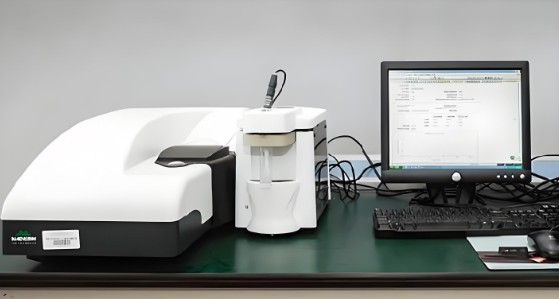
- Differential scanning calorimetry for melting point and crystallinity per ASTM D3418 and ISO 11357-3 — the melting endotherm and the heat of fusion are measured to verify the polyethylene wax grade and to predict the energy required for melting in hot-melt and compounding operations.
- Thermogravimetric analysis for thermal stability and volatiles per ASTM E1131 — the mass loss profile of the polyethylene wax is recorded up to 600 °C to quantify the moisture, low-molecular-weight fractions, and the onset of thermal decomposition, ensuring the wax is thermally stable at the intended processing temperature.
- Congelating point and cloud point per ASTM D938 and internal methods — the temperature at which the molten wax solidifies or becomes cloudy upon cooling is recorded to define the setting and solidification behaviour in adhesive and coating applications.
- Heat stability and color stability after thermal aging per ASTM D1981 and internal protocols — the polyethylene wax is held at an elevated temperature for a defined period, and the change in color and viscosity is measured to predict its resistance to yellowing and degradation during prolonged melt processing.
Chemical Purity Testing in Our Polyethylene Wax Testing Service
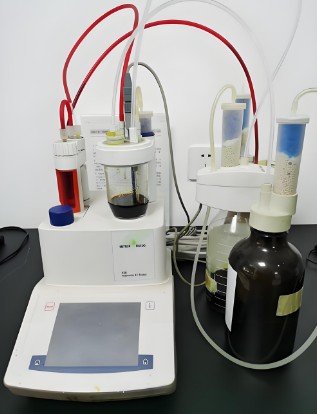
- Acid number and saponification value per ASTM D1386 and ISO 2114 — the quantity of free acid groups and ester groups in oxidized polyethylene wax is measured by titration, confirming the degree of oxidation and the wax's suitability for emulsification and pigment wetting.
- Ash content and inorganic residue per ASTM D5630 and ISO 3451-1 — the polyethylene wax is incinerated and the residual ash is weighed to quantify the catalyst residue or inorganic filler that would impair the clarity and dielectric properties of the wax in final applications.
- Molecular weight distribution by gel permeation chromatography per ASTM D6474 — the number-average and weight-average molecular weights and the polydispersity of the polyethylene wax are determined to predict viscosity, mechanical performance, and compatibility with host polymers.
- Bromine number and unsaturation per ASTM D1159 — the level of carbon-carbon double bonds in the polyethylene wax is quantified to assess its oxidative stability and its reactivity in grafting or cross-linking processes.
- Solubility and cloud point in solvents per ASTM D3235 and customer protocols — the polyethylene wax is dissolved in a range of process solvents and the temperature at which wax precipitation occurs is recorded to predict its behaviour in solvent-borne coatings and printing inks.
Heavy Metals and Restricted Substance Compliance in Our Polyethylene Wax Testing Service
- RoHS compliance per IEC 62321 and EU Directive 2011/65/EU — quantitative screening for lead, mercury, cadmium, hexavalent chromium, PBBs, and PBDEs in the polyethylene wax to ensure the material meets the maximum concentration values for unrestricted global trade.
- REACH Annex XVII and SVHC screening — targeted analysis of Substances of Very High Concern including specific phthalate plasticizers, organotin stabilizers, and short-chain chlorinated paraffins that may be present as contaminants or additives in the polyethylene wax.
- Polycyclic aromatic hydrocarbons per AfPS GS 2019:01 PAK — for carbon-black-pigmented or dark-colored polyethylene waxes, the 15 restricted PAHs are extracted and quantified to confirm compliance with European consumer product safety limits.
- Halogen content by combustion ion chromatography per EN 14582 — the total fluorine, chlorine, bromine, and iodine content is measured to support halogen-free declarations for electronics-grade and environmentally certified polyethylene wax products.
- Overall migration and specific migration for food contact per EU Regulation 10/2011 and FDA 21 CFR — for polyethylene waxes used in food packaging coatings, paperboard sizing, and fruit coatings, the wax is extracted with food simulants and the total extractable mass and specific migration of low-molecular-weight oligomers are quantified to confirm food safety compliance.
Report Recognition and ISO/IEC 17025 Compliance
All methods described in this polyethylene wax testing service are covered by our ISO/IEC 17025 scope of accreditation. Our test reports are accepted by European notified bodies for chemical products, by North American coatings and plastics manufacturers referencing ASTM and FDA standards, and by regulatory and customs authorities across the Middle East, Australia, and Asia. Whether you require a full qualification dossier for a new oxidized polyethylene wax grade, a batch release inspection for an export shipment, or a root cause failure analysis of a wax performance issue, our laboratory provides the measurement accuracy and technical expertise that the global specialty wax industry demands.