Plastic Sheet Testing Service for Global Manufacturing and Construction Markets
As an ISO/IEC 17025 accredited laboratory, we deliver a comprehensive plastic sheet testing service that verifies mechanical strength, thermal stability, weathering resistance, optical clarity, and chemical compliance. Our plastic sheet testing service supports manufacturers and exporters of acrylic, polycarbonate, PVC, HDPE, and engineering plastic sheets who must demonstrate conformity to ASTM, ISO, EN, and regional building and product safety regulations across the European Union, North America, the Middle East, and Asia. Every test is performed under our CNAS-accredited quality system, producing reports accepted by notified bodies, customs authorities, and global procurement teams.

Product Samples We Regularly Test in Our Plastic Sheet Testing Service
- Acrylic (PMMA) sheets — cast and extruded sheets for signage, displays, glazing, and aquariums
- Polycarbonate sheets — solid, multiwall, and corrugated sheets for roofing, machine guards, and security glazing
- PVC sheets — rigid and foamed PVC sheets for cladding, furniture, and chemical tanks
- High-density polyethylene sheets — for cutting boards, wear strips, and marine applications
- ABS sheets — for thermoformed automotive parts, luggage, and appliance housings
- Polypropylene sheets — for chemical tank lining, orthotics, and packaging
- PET and PETG sheets — for food packaging, medical trays, and point-of-sale displays
- Multi-layer and coextruded plastic sheets — for specific barrier, strength, or aesthetic requirements
- Anti-static, UV-resistant, and flame-retardant plastic sheets — for electronics, outdoor, and public space applications
Physical and Mechanical Property Testing for Plastic Sheets
- Tensile strength, elongation at break, and modulus of elasticity per ISO 527-2 and ASTM D638 — measuring the force, stretch, and stiffness of the sheet material to verify it can withstand forming, fabrication, and service loads without yielding or fracturing.
- Flexural strength and flexural modulus per ISO 178 and ASTM D790 — three-point bending tests determine the sheet's resistance to bending and its stiffness, critical for glazing, roofing, and structural panels.
- Impact resistance by Izod and Charpy methods per ISO 180, ISO 179-1, and ASTM D256 — the energy absorbed during high-speed fracture is measured at ambient and low temperatures to ensure the sheet resists accidental impacts and does not shatter.
- Dart drop impact per ASTM D1709 and ISO 7765-1 — a weighted dart strikes the sheet to simulate the effect of falling objects, verifying sufficient toughness for roofing and overhead glazing.
- Compressive strength per ISO 604 and ASTM D695 — the sheet is compressed to failure to confirm its load-bearing capacity in structural applications such as machine guards and partition walls.
- Hardness by Rockwell, Shore D, and Barcol methods per ISO 2039-2, ASTM D785, and ASTM D2240 — the surface hardness is measured to predict scratch and indentation resistance during handling and use.
- Tear resistance per ISO 6383-2 and ASTM D1922 — the force required to propagate a tear from an initial slit is measured to ensure the plastic sheet resists failure during cutting, drilling, and thermoforming.
Thermal and Dimensional Stability Testing of Plastic Sheets
- Heat deflection temperature and Vicat softening point per ISO 75-2 and ISO 306 — the temperature at which the sheet deflects or softens under a defined load is measured to determine the maximum service temperature and to predict behaviour during hot forming.
- Coefficient of linear thermal expansion per ISO 11359-2 and ASTM E831 — the dimensional change with temperature is measured to verify compatibility with frames, sealants, and adjoining materials in building and automotive applications.
- Shrinkage and dimensional stability under heat per ASTM D1204 and ISO 11501 — the sheet is exposed to elevated temperature and the percentage shrinkage is recorded to ensure it remains flat and dimensionally accurate during thermoforming or outdoor exposure.
- Differential scanning calorimetry for glass transition and melting point per ISO 11357-2 and ASTM D3418 — the thermal transitions of the plastic sheet are identified to define processing windows and to detect material degradation or contamination.
- Thermogravimetric analysis for composition and filler content per ASTM E1131 — the weight loss profile quantifies polymer content, carbon black, inorganic fillers, and volatiles that affect sheet quality and performance.
Weathering and Environmental Durability Testing for Plastic Sheets
- Accelerated weathering by xenon-arc exposure per ISO 4892-2 and ASTM G155 — the sheet is exposed to simulated sunlight, heat, and moisture cycles to evaluate colour change, gloss loss, chalking, and retained mechanical properties after years of outdoor service.
- UV resistance by fluorescent lamp exposure per ASTM G154 — isolating the ultraviolet degradation effect to measure yellowing and embrittlement of the plastic sheet surface.
- Neutral salt spray and cyclic corrosion resistance per ISO 9227 and ASTM B117 — for coated or metallized plastic sheets, the resistance to salt fog is evaluated to verify durability in coastal and industrial environments.
- Moisture absorption and water immersion per ASTM D570 and ISO 62 — the mass of water absorbed by the sheet after immersion is measured to predict dimensional stability and mechanical property retention in wet or humid conditions.
- Resistance to chemicals, cleaning agents, and graffiti removers per ISO 175 and ASTM D543 — the sheet surface is exposed to common industrial and household chemicals to verify no staining, softening, or stress cracking occurs.
Optical and Surface Quality Inspection for Plastic Sheets
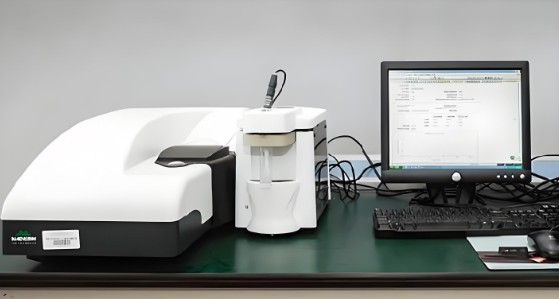
- Total luminous transmittance and haze per ASTM D1003 and ISO 14782 — the percentage of light transmitted and scattered is measured using a spectrophotometer with an integrating sphere to ensure clarity for glazing, display, and optical applications.
- Gloss and surface reflectance per ASTM D2457 and ISO 2813 — specular gloss at defined angles is measured to match the aesthetic requirements of signage, furniture, and consumer products.
- Colour measurement and colour difference per ISO 7724 and ASTM E308 — CIE L*a*b* coordinates and delta E values are determined to verify colour consistency across batches and to ensure printed graphics reproduce correctly.
- Refractive index per ISO 489 and ASTM D542 — for optical-grade acrylic and polycarbonate sheets, the refractive index is measured to confirm the material meets the optical specification.
- Surface roughness and texture per ISO 4287 — stylus profilometry quantifies the micro-surface finish, ensuring the sheet meets the specified gloss, matte, or textured appearance.
Flammability and Fire Safety Testing of Plastic Sheets
- UL 94 vertical and horizontal burning classification per ASTM D3801 and IEC 60695-11-10 — the sheet specimen is exposed to a defined flame and the afterflame time, afterglow, and burning rate are recorded to classify the material as V-0, V-1, V-2, or HB.
- Limiting oxygen index per ISO 4589-2 and ASTM D2863 — the minimum oxygen concentration that supports combustion is measured to rank the intrinsic fire resistance of different plastic sheet formulations.
- Surface flame spread and smoke developed index per ASTM E84 — the Steiner tunnel test provides the flame spread and smoke generation data required for building material classification in North America.
- Glow-wire ignitability per IEC 60695-2-11 — the sheet is subjected to a glow-wire at defined temperatures to simulate the effect of an overheated electrical component, verifying it does not ignite or self-sustain combustion.
- Smoke density and toxicity per ISO 5659-2 and ASTM E662 — for plastic sheets used in enclosed public spaces and transport, the smoke obscuration and toxic gas release are measured to support life safety assessments.
Chemical Safety and Regulatory Compliance for Plastic Sheets
- RoHS compliance per IEC 62321 and EU Directive 2011/65/EU — quantitative screening for lead, mercury, cadmium, hexavalent chromium, PBBs, and PBDEs in the plastic sheet, pigments, and any surface coatings.
- REACH Annex XVII and SVHC screening — targeted analysis of Substances of Very High Concern including specific phthalates, organotin stabilizers, and short-chain chlorinated paraffins in the plastic formulation.
- Phthalates and plasticizers per CPSC-CH-C1001-09.4 and EN 14372 — GC-MS determination of the six restricted phthalates in flexible plastic sheets intended for children's products or food contact.
- Overall migration and specific migration for food contact per EU Regulation 10/2011 and FDA 21 CFR — the plastic sheet is exposed to food simulants and the total extractable mass and specific levels of restricted monomers or additives are quantified.
- Polycyclic aromatic hydrocarbons per AfPS GS 2019:01 PAK — for carbon-black-coloured or recycled-content plastic sheets, the 15 restricted PAHs are extracted and quantified.
- Halogen content by combustion ion chromatography per EN 14582 — total fluorine, chlorine, bromine, and iodine content is measured to support halogen-free declarations for environmentally conscious manufacturing.
- Formaldehyde and VOC emissions per ISO 16000-3 and EN 16516 — chamber emission testing verifies that the plastic sheet does not release harmful volatile organic compounds into indoor air.
Report Recognition and ISO/IEC 17025 Compliance
All methods described in this plastic sheet testing service are included within our ISO/IEC 17025 scope of accreditation. Our test reports are accepted by European notified bodies for construction products and food contact materials, by North American building officials and retailers, and by regulatory and customs authorities across the Middle East, Australia, and Asia. Whether you require a complete qualification dossier for a new plastic sheet, a batch release inspection for an import shipment, or a root cause investigation of a field performance defect, our laboratory provides the measurement accuracy and technical depth that the global plastics industry demands.