Plastic Pallet Inspection Service for Global Logistics and Material Handling Compliance
As an ISO/IEC 17025 accredited laboratory, we deliver a comprehensive plastic pallet inspection service that verifies the dimensional accuracy, load-bearing capacity, impact resistance, material durability, chemical safety, and long-term reliability of plastic pallets used in global supply chains. Our plastic pallet inspection service supports manufacturers and exporters who must demonstrate conformity to ISO 8611, ASTM D1185, EN 15512, and regional logistics and material handling standards across the European Union, North America, the Middle East, and Asia. Every test is performed under our CNAS-accredited quality system, producing reports accepted by notified bodies, logistics operators, and procurement teams worldwide.

Product Samples We Regularly Test in Our Plastic Pallet Inspection Service
- High-density polyethylene and polypropylene pallets — for general logistics, export shipping, and automated warehouse systems
- Recycled and blended plastic pallets — for sustainable supply chains and closed-loop distribution
- Nestable and stackable plastic pallets — for efficient empty return and storage footprint reduction
- Rackable and heavy-duty plastic pallets — with steel or fiberglass reinforcement for high-load racking applications
- Hygienic and food-grade plastic pallets — for pharmaceutical, food processing, and cold chain environments
- Anti-static and conductive plastic pallets — for electronics, chemical, and explosive atmosphere logistics
- Custom-designed and OEM-specific plastic pallet systems — with integrated RFID tags, reinforcements, or special deck configurations
Dimensional and Geometrical Inspection for Plastic Pallets
- Overall length, width, height, and squareness measurement per ISO 8611 and customer drawings — laser distance meters, coordinate measuring machines, and calibrated straightedges verify the pallet dimensions and diagonal tolerance, ensuring compatibility with forklift, pallet jack, and automated conveyor systems.
- Fork entry opening height, width, and location verification per ISO 8611 — the fork pockets are measured to confirm correct entry geometry for standard forklift tines, pallet jacks, and automated guided vehicles.
- Deck thickness, wall thickness, and rib geometry inspection per customer specifications — ultrasonic thickness gauges and optical comparators verify the structural cross-sections, ensuring the plastic pallet meets the specified stiffness and load distribution design.
- Flatness and deck surface profile per ISO 12781 — the deviation of the pallet deck from a perfect plane is measured to ensure stable load support and to prevent product tipping or damage during stacking and transport.
- Weight and density uniformity verification — the pallet mass is measured to confirm batch consistency and to detect any material variation or molding defects that would affect structural performance.
Load-Bearing and Structural Strength Testing for Plastic Pallets
- Static racking load test per ISO 8611 and ASTM D1185 — the loaded pallet is supported only at its ends to simulate racking conditions, and the deflection and permanent set are measured to verify the pallet safely supports the rated racking load without excessive bending or creep.
- Static floor stacking load test per ISO 8611 — a defined uniformly distributed load is applied to the pallet deck to simulate bottom-pallet loading in a stack, verifying the pallet withstands the maximum static stacking weight without failure.
- Dynamic impact and drop testing per ASTM D880 and customer protocols — the loaded pallet is subjected to forklift impacts, corner drops, and edge drops to simulate rough handling in the logistics chain, with post-test inspection for cracking, deformation, and loss of structural integrity.
- Bending and flexural strength of the pallet deck per ASTM D790 — three-point or four-point bending tests measure the deck's resistance to bending under concentrated loads from product feet, wheels, or uneven support.
- Fork tine puncture and point load resistance per internal protocols — a defined concentrated load is applied through a fork tine or small contact area to verify the deck and top surface resist localized indentation and puncture during loading operations.
- Fatigue and repeated loading endurance per ISO 8611 — the plastic pallet is subjected to thousands of load cycles representing repeated racking, stacking, and handling, and the structural condition is monitored to predict the service life and to detect any crack initiation or deformation accumulation.
Impact and Drop Resistance Testing for Plastic Pallets
- Falling weight impact test per ASTM D5420 and ISO 6603-2 — a weighted striker is dropped onto the pallet deck and corners to simulate accidental impacts from tools, products, and handling equipment, with post-impact inspection for cracking and structural damage.
- Cold temperature impact and drop testing per ASTM D2137 — the pallet is conditioned at sub-zero temperatures and subjected to impact or drop tests to verify it remains ductile and does not shatter in cold storage and winter transport.
- Corner and edge drop testing per ISO 8611 — the empty pallet is dropped from defined heights onto its corners and edges to simulate rough handling during return and storage, ensuring no chipping or cracking that would reduce the pallet's service life.
- Forklift tine impact simulation per internal protocols — the pallet is struck by a simulated fork tine to verify the fork entry area withstands the repeated impacts of forklift insertion without cracking or deformation.
Material and Chemical Safety Testing for Plastic Pallets
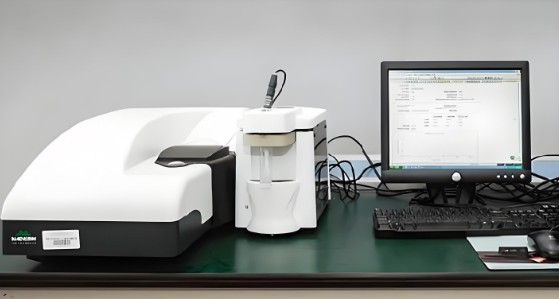
- Polymer identification by FTIR and DSC per ASTM E1252 and ISO 11357-3 — the base resin type (HDPE, PP, or blend) is confirmed to verify the declared material and to detect any unauthorized recycled content or polymer substitution.
- Melt flow rate and density per ASTM D1238 and ISO 1183 — the melt flow characteristics and density are measured to verify batch-to-batch consistency and to predict the pallet's processing quality and mechanical properties.
- Heavy metals and restricted substances per EU RoHS and REACH Annex XVII — ICP-OES screening quantifies lead, cadmium, mercury, hexavalent chromium, and other regulated metals in the plastic and any colorants.
- Food contact migration testing per EU Regulation 10/2011 and FDA 21 CFR — for pallets used in food and pharmaceutical logistics, the plastic material is tested with food simulants to verify that no harmful substances migrate into packaged products.
- Polycyclic aromatic hydrocarbons per AfPS GS 2019:01 PAK — for carbon-black-filled or dark-colored plastic pallets, the 15 restricted PAHs are extracted and quantified.
- Formaldehyde and volatile organic compound emission per ISO 16000-3 — chamber testing verifies that the plastic pallet does not release harmful VOCs or formaldehyde into the indoor air of warehouses and cold rooms.
- Heavy metals in packaging per EU Directive 94/62/EC — verification that lead, cadmium, mercury, and hexavalent chromium sum concentration in the pallet and its packaging is below the 100 ppm regulatory limit.
Environmental Durability and Weathering Testing for Plastic Pallets
- Accelerated weathering by xenon-arc exposure per ISO 4892-2 and ASTM G155 — the pallet is exposed to simulated sunlight, heat, and moisture cycles, and the color change, surface cracking, and retained mechanical strength are evaluated to predict outdoor storage life.
- UV resistance by fluorescent lamp exposure per ASTM G154 — isolating the ultraviolet degradation mechanism to verify the effectiveness of UV stabilizers and to detect embrittlement or fading.
- Resistance to oils, fuels, and cleaning agents per ISO 175 and ASTM D543 — the pallet surface is exposed to common industrial fluids and cleaning chemicals to verify no staining, softening, or stress cracking occurs during maintenance.
- Damp heat and condensation resistance per IEC 60068-2-78 — the pallet is exposed to high temperature and high humidity, followed by mechanical retests to confirm no moisture-induced degradation of the plastic or any reinforcement.
- Mold and fungal resistance per ASTM G21 and ISO 846 — the pallet is inoculated with fungal spores and incubated to confirm it does not support biological growth in humid warehouse environments.
- Low-temperature flexibility and cold impact resistance per ASTM D2137 — the pallet is conditioned at sub-zero temperatures and tested for brittleness to ensure reliable performance in cold chain logistics.
Hygienic and Cleanability Testing for Food-Grade Plastic Pallets
- Surface roughness and cleanability per ISO 4287 and EHEDG guidelines — the pallet surface is profiled to verify the specified smoothness for easy cleaning and to prevent the entrapment of food particles and microbial contamination.
- Antibacterial and antifungal activity per ISO 22196 and ASTM G21 — for pallets with antimicrobial additives, the reduction in bacterial and fungal populations is measured to verify the claimed hygienic performance.
- Resistance to steam cleaning and chemical disinfection per ISO 2812-1 — the pallet is subjected to repeated steam cleaning and disinfection cycles, and the surface condition and mechanical strength are retested to ensure long-term hygienic service.
Report Recognition and ISO/IEC 17025 Compliance
All methods described in this plastic pallet inspection service are covered by our ISO/IEC 17025 scope of accreditation. Our technical reports are accepted by European notified bodies for logistics and packaging products, by North American material handling and supply chain operators referencing ASTM and ISO standards, and by customs and procurement authorities across the Middle East, Australia, and Asia. Whether you require a complete qualification dossier for a new plastic pallet design, a batch release inspection for an export shipment, or a root cause failure analysis of a field-returned pallet, our laboratory provides the measurement accuracy and material handling expertise that the global logistics industry demands.