
Plastic Film Testing Service – Accredited Mechanical, Optical, Barrier and Thermal Evaluation for Global Markets
Our internationally accredited laboratory provides a comprehensive plastic film testing service that supplies packaging converters, polymer producers, food manufacturers, medical‑device companies and agricultural film users worldwide with the independent, traceable data they need to verify the strength, clarity, permeability and thermal behaviour of their flexible materials. Every measurement is performed under the rigorous framework of ISO/IEC 17025, and each report bearing the ILAC mark is unconditionally accepted by regulatory authorities, customs offices and notified bodies in all major economies. The plastic film testing programme quantifies the tensile properties, tear and puncture resistance, optical haze and transmittance, water‑vapour and oxygen barrier performance, heat‑shrinkage and heat‑seal strength, and surface friction characteristics. For a flexible‑packaging converter exporting to the European Union, a pharmaceutical producer needing FDA‑compliant barrier data, or a mulch‑film manufacturer certifying the durability of an agricultural grade, this service delivers the legally robust, defensible data that underpin product certification, material selection and regulatory compliance.
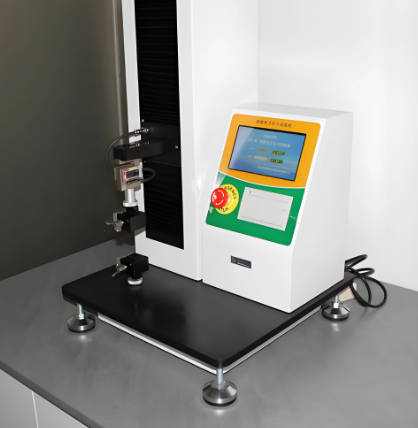
Product Samples We Regularly Subject to Plastic Film Testing
The specimen‑preparation and conditioning rooms in our facility handle films from a few microns to several millimetres thick. The following categories represent the most frequently tested items:
- Polyethylene films – low‑density, linear‑low‑density and high‑density polyethylene for shrink‑wrap, stretch‑wrap, carrier bags and agricultural mulch
- Polypropylene films – biaxially oriented, cast and metallised grades for food packaging, labels, cigarette overwrap and capacitor dielectrics
- Polyester films – polyethylene terephthalate for boil‑in‑bag pouches, lidding films, insulation and flexible electronics
- Polyamide and polyvinyl chloride films – barrier layers in multi‑layer laminates, blister packs, fresh‑meat wraps and pharmaceutical push‑through foils
- Ethylene‑vinyl alcohol and polyvinylidene chloride barrier films – oxygen‑barrier cores in co‑extruded structures for extended‑shelf‑life products
- Multi‑layer and laminated films – adhesive‑laminated and extrusion‑coated combinations of the above, including the metallised and the aluminium‑foil‑containing structures
- Biodegradable and compostable films – polylactic acid, polyhydroxyalkanoate and starch‑based materials evaluated for the mechanical and the barrier properties relative to the conventional plastics
Mechanical Properties – Plastic Film Testing According to ASTM D882, ISO 527‑3 and ASTM D1004
- Determination of the tensile strength, the elongation at break and the Young's modulus according to ASTM D882 (Standard Test Method for Tensile Properties of Thin Plastic Sheeting) and ISO 527‑3 (Plastics – Determination of tensile properties – Part 3: Test conditions for films and sheets): a strip specimen is gripped between the pneumatic clamps and stretched at a constant crosshead speed. The stress‑strain curve is recorded, and the yield strength, the ultimate tensile strength, the elongation at break and the secant modulus are reported for both the machine direction and the transverse direction. This plastic film testing provides the fundamental data that the converter uses to predict the film's behaviour on the form‑fill‑seal machine and to guarantee the puncture and the tear resistance of the finished package.
- Trouser‑tear and Elmendorf tear resistance according to ASTM D1938 (Standard Test Method for Tear‑Propagation Resistance of Plastic Film and Thin Sheeting by a Single‑Tear Method) and ASTM D1922 (Standard Test Method for Propagation Tear Resistance of Plastic Film and Thin Sheeting by Pendulum Method): the force required to propagate a pre‑cut slit through the film is measured, and the result in newtons or millinewtons is reported. The test characterises the resistance of the film to the catastrophic failure that can originate from a small puncture or a notch during the packaging process.
- Puncture and the slow‑rate penetration resistance according to ASTM D5748 (Standard Test Method for Protrusion Puncture Resistance of Stretch Wrap Film) and the internal procedures: a probe of a defined diameter and shape is driven through the film, and the maximum force, the energy to puncture and the elongation at the break are recorded, providing the data that the pallet‑wrap and the heavy‑duty‑sack manufacturers need to guarantee the load‑containment performance.
- Dart‑drop impact resistance according to ASTM D1709 (Standard Test Methods for Impact Resistance of Plastic Film by the Free‑Falling Dart Method): a hemispherical‑headed dart is dropped from a specified height onto the film specimen, and the mass that causes 50 % of the specimens to fail is reported, quantifying the film's ability to withstand the sudden shocks and the impacts during the transport and the handling.
Optical Properties – Plastic Film Testing According to ASTM D1003, ISO 13468 and ASTM D2457
- Measurement of the haze, the total luminous transmittance and the clarity according to ASTM D1003 (Standard Test Method for Haze and Luminous Transmittance of Transparent Plastics) and ISO 13468 (Plastics – Determination of the total luminous transmittance of transparent materials): the film specimen is placed at the entrance port of an integrating‑sphere spectrophotometer, and the percentage of the transmitted light that is scattered by more than 2.5° from the incident beam is reported as the haze, while the total transmittance is the fraction of the light that passes through the film. This plastic film testing is critical for the packaging that must display the product attractively and for the greenhouse films that must transmit the photosynthetically active radiation.
- Specular gloss at 20°, 60° and 85° according to ASTM D2457 (Standard Test Method for Specular Gloss of Plastic Films and Solid Plastics): the gloss meter measures the reflectance of the film surface, and the result is reported in gloss units, providing the data that the brand‑owner uses to ensure the visual appeal and the consistency of the printed or the metallised packaging.
- Colour and the yellowness index according to ASTM E313 (Standard Practice for Calculating Yellowness and Whiteness Indices from Instrumentally Measured Color Coordinates): the CIE L*a*b* colour coordinates and the yellowness index are measured by a spectrophotometer, and any deviation from the master standard or the colour shift after the ageing is quantified, supporting the quality assurance of the transparent and the white films.
Barrier Properties – Plastic Film Testing According to ASTM F1249, ASTM D3985 and ASTM E96
- Determination of the water‑vapour transmission rate by the modulated‑infrared‑sensor method according to ASTM F1249 (Standard Test Method for Water Vapor Transmission Rate Through Plastic Film and Sheeting Using a Modulated Infrared Sensor) and ASTM E96 (Standard Test Methods for Water Vapor Transmission of Materials): the film is clamped in a diffusion cell, and the mass of the water vapour that permeates through the film per unit area per day is measured under the controlled temperature and humidity. The WVTR in grams per square metre per day is reported, providing the critical shelf‑life prediction data for the moisture‑sensitive foods, the pharmaceuticals and the electronic components.
- Oxygen transmission rate by the coulometric sensor method according to ASTM D3985 (Standard Test Method for Oxygen Gas Transmission Rate Through Plastic Film and Sheeting Using a Coulometric Sensor) and ISO 15105‑2: the film is mounted in a permeation cell, and the oxygen that diffuses through the film is detected by a coulometric sensor, yielding the OTR in cm³ per square metre per day. This plastic film testing is mandatory for the qualification of the barrier laminates that protect the oxygen‑sensitive products from the oxidative degradation.
- Carbon‑dioxide and the nitrogen transmission rates for the modified‑atmosphere packaging applications: the transmission rate of the carbon dioxide or the nitrogen is measured by a gas‑chromatographic or a manometric method, supporting the design of the controlled‑atmosphere package for the fresh produce, the meat and the cheese.
Thermal and Surface Properties – Plastic Film Testing According to ASTM D2732, ASTM F88 and ASTM D1894
- Unrestrained linear thermal shrinkage according to ASTM D2732 (Standard Test Method for Unrestrained Linear Thermal Shrinkage of Plastic Film and Sheeting): a measured length of the film is immersed in a hot‑oil or a hot‑water bath at a specified temperature, and the percentage change in the length and the width is reported. The test predicts the dimensional stability of the shrink‑sleeve label, the shrink‑wrap and the retort‑pouch during the heating process.
- Heat‑seal strength and the hot‑tack performance according to ASTM F88 (Standard Test Method for Seal Strength of Flexible Barrier Materials) and ASTM F1921 (Standard Test Methods for Hot Seal Strength – Hot Tack and Heatsealability of Thermoplastic Polymers and Blends): a strip containing a factory‑produced or a laboratory‑produced seal is peeled apart in a tensile tester, and the force per unit width is recorded. The hot‑tack test measures the strength of the seal immediately after the sealing, while the film is still hot, simulating the conditions on the vertical‑form‑fill‑seal machine. This plastic film testing verifies that the packaging will not open or leak during the filling and the handling.
- Static and kinetic coefficients of friction according to ASTM D1894 (Standard Test Method for Static and Kinetic Coefficients of Friction of Plastic Film and Sheeting) and ISO 8295: a sled covered with the film or a standardised felt is pulled across a film‑covered plane, and the force required to initiate and to sustain the motion is measured. The coefficient of friction data are used to design the film‑feeding tracks, the formers and the guides of the packaging machinery, and to prevent the blocking and the slippage of the finished rolls.
- Surface wettability and the dyne‑level measurement according to ASTM D2578 (Standard Test Method for Wetting Tension of Polyethylene and Polypropylene Films): a series of the test inks of the known surface tension is applied to the film, and the highest value that wets the surface without beading is reported, ensuring that the corona or the flame treatment has produced the adequate surface energy for the printing and the lamination.
Report Acceptance and Global Regulatory Compliance
All measurements performed within our plastic film testing programme are executed under the fully accredited scope of our ISO/IEC 17025 quality management system. Each test report that carries the ILAC mark is therefore automatically recognised by regulatory authorities, notified bodies, customs offices and supply‑chain partners in all major economies. For film producers, packaging converters, food and pharmaceutical manufacturers and agricultural‑film users anywhere in the world, the report constitutes legally robust, internationally accepted evidence that the mechanical, optical, barrier, thermal and surface properties of the plastic film have been determined in accordance with the applicable ASTM, ISO, EN and customer‑specified methods. The documentation can be directly used to support CE marking under the EU Packaging and Packaging Waste Directive, the food‑contact material declaration, the issue of inspection certificates according to EN 10204 or equivalent national standards, and the resolution of commercial and technical disputes concerning the quality and the performance of any flexible plastic film.




