
Physical Properties Testing of Polypropylene Fibers – Accredited Mechanical, Thermal and Dimensional Evaluation for Global Markets
Our internationally accredited laboratory provides a comprehensive physical properties testing of polypropylene fibers service that enables textile mills, nonwoven producers, geotextile manufacturers, concrete reinforcement suppliers and polymer compounders worldwide to independently verify the tensile strength, elongation, linear density, crimp characteristics, thermal shrinkage and related performance parameters of their polypropylene staple fibers and continuous filaments. Every measurement is performed within the rigorous framework of ISO/IEC 17025, and each report bearing the ILAC mark is unconditionally accepted by regulatory authorities, notified bodies and supply‑chain partners in all major economies. The physical properties testing of polypropylene fibers quantifies the fundamental fibre attributes that govern the processability, the dimensional stability of the finished fabric, the durability of the geotextile and the reinforcement efficiency in a concrete matrix. By employing calibrated vibroscopes, tensile testers with pneumatic clamps, thermal‑shrinkage oil baths, differential scanning calorimeters and crimp‑elasticity testers, we deliver the legally robust, defensible data that underpin product specification, quality assurance and compliance with the relevant ISO, ASTM, EN and customer‑specified standards.
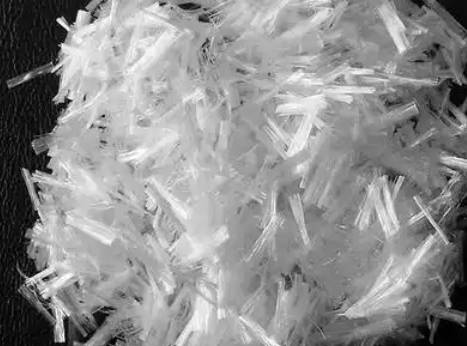
Product Samples We Regularly Subject to Physical Properties Testing of Polypropylene Fibers
The specimen‑preparation and conditioning laboratories in our facility accommodate polypropylene fibres in every commercially available form. The following categories represent the most frequently tested items:
- Polypropylene staple fibres – cut lengths from 3 mm to 150 mm for needle‑punched nonwovens, thermal‑bonded wipes, hygiene products, automotive carpets and concrete reinforcement
- Polypropylene continuous multifilament yarns – bulked continuous filament, fully drawn yarn and partially oriented yarn for weaving, knitting, rope‑making and geotextile weaving
- Polypropylene monofilaments – large‑diameter monofilaments for industrial brushes, artificial turf, filter fabrics, insect screens and paper‑machine clothing
- Polypropylene split‑film and fibrillated tape yarns – tapes for woven sacks, carpet backing, baler twine, artificial grass and geotextile reinforcement
- Polypropylene bicomponent and sheath‑core fibres – low‑melt binder fibres for thermal‑bonded air‑laid and wet‑laid nonwovens, where the sheath melting point and the core strength must be characterised
- Polypropylene micro‑ and nano‑fibres – melt‑blown fibres for filtration media, battery separators and oil‑sorbent materials
- Polypropylene fibres with functional additives – UV‑stabilised, flame‑retardant, anti‑microbial and colour‑pigmented fibres where the additive may influence the mechanical and the thermal properties
Fibre Linear Density, Tensile Strength and Elongation – Physical Properties Testing of Polypropylene Fibers According to ISO 1973, ISO 5079 and ASTM D3822
- Determination of the linear density of individual fibres by the vibroscope method according to ISO 1973 (Textile fibres – Determination of linear density – Gravimetric method and vibroscope method) and ASTM D1577: a single fibre is tensioned between a fixed clamp and a vibrating reed, and the fundamental resonant frequency is measured. The linear density is calculated in decitex or denier, and the mean, the standard deviation and the coefficient of variation are reported. This physical properties testing of polypropylene fibers provides the essential starting point for all subsequent strength calculations and is the primary metric for the quality control of the spinning and the drawing process.
- Determination of the breaking force and the elongation at break of single staple fibres and filaments according to ISO 5079 (Textile fibres – Determination of breaking force and elongation at break of individual fibres) and ASTM D3822: the fibre is mounted on a paper tab or a pneumatic‑clamp tensile tester with a gauge length of 10 mm or 20 mm, and it is stretched at a constant rate of extension until rupture. The breaking tenacity in centinewtons per tex, the percentage elongation at break and the initial modulus are reported. The test characterises the fundamental mechanical performance of the fibre and is used to verify that the drawing ratio and the thermal‑setting conditions have produced the specified orientation and crystallinity.
- Tensile testing of polypropylene yarns and tows according to ISO 2062 (Yarns from packages – Determination of single‑end breaking force and elongation at break) and ASTM D2256: a multifilament yarn is tested with a gauge length of 250 mm or 500 mm, and the breaking force in newtons, the tenacity, the elongation at break and the knot‑and‑loop strength are reported. The data are used by the weavers, the knitters and the rope‑makers to predict the yarn performance on the processing machines and to meet the minimum‑strength clauses of the purchase specification.
- Influence of the test speed and the gauge length on the measured tensile properties of polypropylene fibres: the breaking tenacity and the elongation are determined at several gauge lengths and strain rates, and the sensitivity to the test parameters is reported. This physical properties testing of polypropylene fibers enables the converter to select the correct reference conditions for the comparison of the different fibre batches and to understand the viscoelastic behaviour of the polypropylene.
- Tensile properties after exposure to the humidity, the elevated temperature and the UV‑radiation: the fibres are conditioned in a hot‑humid atmosphere or exposed to a xenon‑arc or a fluorescent‑UV lamp, and the retained tenacity and elongation are measured. The test quantifies the degradation of the mechanical integrity under the environmental stresses that the fibre will experience in the outdoor‑geotextile, the automotive‑interior and the marine‑rope applications.
Thermal Properties and Dimensional Stability – Physical Properties Testing of Polypropylene Fibers by Shrinkage, Melting and Thermal Analysis
- Determination of the thermal shrinkage of polypropylene fibres and yarns according to ASTM D4974 (Standard Test Method for Hot Air Thermal Shrinkage of Yarn and Cord Using a Thermal Shrinkage Oven) and ISO 17554 (Textiles – Determination of the shrinkage behaviour of yarns – Hot air shrinkage method): a measured length of the yarn or the fibre is exposed to a dry‑heat environment at a specified temperature – typically 130 °C or 150 °C – for a defined time, and the percentage change in length is reported. This physical properties testing of polypropylene fibers predicts the dimensional stability of the fabric during the heat‑setting, the coating and the lamination processes, and it is a critical parameter for the automotive‑moulded carpet and the hot‑fill filtration‑media applications.
- Hot‑oil and hot‑water shrinkage of polypropylene fibres: the specimen is immersed in a silicone oil or a water bath at a controlled temperature, and the shrinkage is measured, providing the data that the rope and the fishing‑net manufacturers need to pre‑shrink the fibre before the fabrication.
- Determination of the melting point and the crystallinity by differential scanning calorimetry according to ASTM D3418 (Standard Test Method for Transition Temperatures and Enthalpies of Fusion and Crystallization of Polymers by Differential Scanning Calorimetry) and ISO 11357‑3: a small sample of the fibre is heated at a controlled rate, and the melting‑peak temperature, the enthalpy of fusion and the crystallisation temperature on cooling are reported. The test identifies the homopolymer and the copolymer grades and verifies the consistency of the polymer composition.
- Thermogravimetric analysis for the filler‑content and the thermal‑decomposition temperature: the fibre is heated in a nitrogen or an air atmosphere, and the mass‑loss curve is recorded, providing the data on the moisture content, the volatile‑additive loss and the onset of the thermal degradation.
- Heat‑setting efficiency and the residual shrinkage after the heat‑setting treatment: the fibre is subjected to a controlled heat‑setting process in the laboratory, and the residual shrinkage is remeasured. This physical properties testing of polypropylene fibers optimises the heat‑setting temperature and the residence time for the production of the dimensionally stable yarns and the nonwoven webs.
Crimp, Surface Friction and Bulk Characteristics – Physical Properties Testing of Polypropylene Fibers for Processability
- Determination of the crimp frequency, the crimp stability and the crimp‑elasticity of staple fibres according to ISO 137 (Wool – Determination of fibre crimp characteristics, adapted for synthetic fibres) and ASTM D3937 (Standard Test Method for Crimp Frequency of Manufactured Staple Fibres): the number of crimps per unit length, the crimp‑elongation and the percentage of the crimp that is recovered after a defined extension are reported. This physical properties testing of polypropylene fibers quantifies the cohesion and the carding performance of the staple fibre and the bulk and the resilience of the nonwoven fabric.
- Measurement of the fibre‑to‑fibre and the fibre‑to‑metal static and dynamic friction coefficients by the capstan method according to ASTM D3108 (Standard Test Method for Coefficient of Friction of Yarn to Solid Material) and the internal procedures: the fibre or the yarn is drawn over a polished steel or a ceramic pin, and the input and the output tensions are measured, yielding the coefficient of friction. The data predict the running behaviour of the yarn on the knitting, the weaving and the braiding machines, and they support the selection of the spin‑finish lubricant.
- Determination of the bulk density and the packing fraction of the staple‑fibre bale or the opened flock: a known mass of the fibre is placed in a cylinder, and the volume under a defined compressive load is measured, providing the data that the nonwoven‑web former uses to set the card‑feed and the cross‑lapper parameters.
- Fibre diameter and the cross‑sectional shape by optical microscopy and image analysis: the mean diameter, the standard deviation and the shape factor – round, trilobal, triangular or hollow – are reported, supporting the prediction of the bending stiffness, the covering power and the filtration efficiency of the fibre.
Electrical Resistivity, Moisture Regain and Additional Physical Properties – Polypropylene Fiber Testing for Specialised Applications
- Determination of the electrical resistivity of polypropylene fibres and yarns according to ASTM D257 (Standard Test Methods for DC Resistance or Conductance of Insulating Materials) and the internal protocols for the textile structures: the volume and the surface resistivity of the fibre or the fabric are measured under the standard atmosphere and after the conditioning at a low humidity. This physical properties testing of polypropylene fibers is critical for the qualification of the fibres for the carpets and the upholstery that must dissipate the static charge, and for the filtration media that must avoid the electrostatic ignition of the dust.
- Moisture regain and the water‑absorption of the polypropylene fibre according to ASTM D2654 (Standard Test Methods for Moisture in Textiles) and the oven‑drying method: the negligible moisture regain of the polypropylene is verified, and the value is reported for the calculation of the conditioned mass in the commercial transactions.
- Determination of the specific gravity and the density of the polypropylene fibre by the density‑gradient column method according to ISO 1183‑1: the fibre is placed in a column containing a liquid with a density gradient, and the density is read from the equilibrium position, confirming that the fibre has been fully drawn and is free of the voids or the heavy filler.
- Assessment of the resistance to the micro‑organism attack and the soil‑burial test for the geotextile‑grade fibres: the fibre is exposed to a biologically active soil, and the retained tensile strength and the visual degradation are reported, supporting the specification of the stabiliser package for the long‑term civil‑engineering applications.
Report Acceptance and Global Regulatory Compliance
All measurements performed within our physical properties testing of polypropylene fibers service are executed under the fully accredited scope of our ISO/IEC 17025 quality management system. Each test report that carries the ILAC mark is therefore automatically recognised by regulatory authorities, notified bodies, customs offices and supply‑chain partners in all major economies. For polypropylene fibre producers, yarn spinners, nonwoven converters, geotextile manufacturers and compounders anywhere in the world, the report constitutes legally robust, internationally accepted evidence that the linear density, the tensile strength, the elongation, the thermal shrinkage, the crimp characteristics and the related physical properties of the fibre have been determined in accordance with the applicable ISO, ASTM, EN and customer‑specified methods. The documentation can be directly used to support CE marking, the issue of inspection certificates according to EN 10204 or equivalent national standards, the compilation of technical files for type‑examination, and the resolution of commercial and technical disputes concerning the quality and the performance of any polypropylene fibre product.




