Photovoltaic Support Structure Inspection Service for Global Solar Projects
As an ISO/IEC 17025 accredited laboratory, we deliver a comprehensive photovoltaic support structure inspection service that verifies structural integrity, material durability, corrosion resistance, load-bearing performance, and long-term reliability of mounting systems for ground-mounted, rooftop, and floating solar installations. Our photovoltaic support structure inspection service supports manufacturers and exporters of steel and aluminum racking systems, tracking structures, and fastening components who must demonstrate conformity to EN 1991-1-4, ASCE 7, ISO 1461, ASTM A370, and regional building codes across the European Union, North America, the Middle East, and Asia Pacific. Every test is performed under our CNAS-accredited quality system, producing reports accepted by notified bodies, EPC contractors, and procurement teams worldwide.

Product Samples We Regularly Test in Our Photovoltaic Support Structure Inspection Service
- Ground-mounted fixed-tilt steel support structures — hot-dip galvanized and zinc-aluminum-magnesium coated profiles, purlins, and columns for utility-scale solar farms
- Rooftop aluminum and steel racking systems — for flat concrete roofs, metal trapezoidal roofs, and residential pitched roofs
- Single-axis and dual-axis solar tracking structures — with drive mechanisms, slew bearings, and torque tubes for maximizing energy yield
- Floating photovoltaic support platforms — HDPE floats, aluminum frames, and anchoring systems for reservoirs and lakes
- Ground screws, pile foundations, and concrete anchor blocks — for soil and rock installation of PV support structures
- Module clamps, rail splices, and bolt assemblies — aluminum and stainless steel fastening hardware for panel mounting
- Customized and pre-assembled PV support structure kits — for commercial, industrial, and utility-scale solar applications
Material Verification and Corrosion Protection Testing in Our Photovoltaic Support Structure Inspection Service
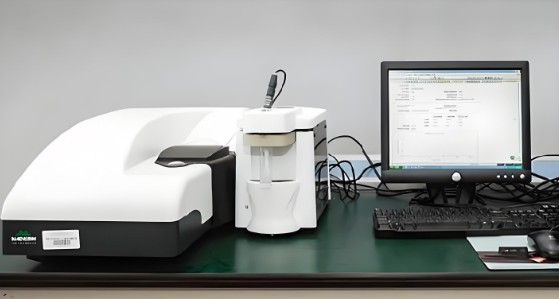
- Optical emission spectrometry for alloy grade confirmation per ASTM E415 and ISO 14284 — the chemical composition of steel and aluminum structural members is analyzed to confirm grades such as S355, S420, 6063-T6, or 6005-T5, ensuring the material meets the specified strength and corrosion resistance requirements for the intended installation environment.
- Hot-dip galvanized coating mass and thickness per ISO 1461 and ASTM A90/A90M — the zinc coating weight and local thickness are measured on steel support components to verify compliance with the minimum coating requirements for the specified corrosivity category, providing long-term protection in atmospheric, marine, and industrial environments.
- Zinc-aluminum-magnesium alloy coating analysis per ASTM A1046 and internal methods — for ZAM-coated steel support structures, the coating composition and thickness are determined to confirm the enhanced cut-edge protection and extended service life compared to conventional galvanizing.
- Anodized and powder-coated aluminum finish inspection per ISO 2360 and ISO 2178 — the anodic film thickness on aluminum rails and the dry film thickness of polyester or PVDF powder coatings are measured to verify the specified decorative and protective finish for rooftop and architectural PV installations.
- Neutral salt spray and cyclic corrosion testing per ISO 9227 and ASTM B117 — the complete PV support structure or representative coated specimens are exposed to salt fog for 1000 to 3000 hours, and the development of red rust, white corrosion, and blistering is evaluated to rank the corrosion resistance for coastal, desert, and industrial solar project sites.
- Intergranular corrosion testing for stainless steel fasteners per ASTM A262 and ISO 3651-2 — the sensitization resistance of 304 and 316 stainless steel bolts, clamps, and hardware is verified after welding or thermal processing to ensure long-term integrity in chloride-rich environments.
Mechanical and Structural Load Testing of Photovoltaic Support Structures
- Tensile strength, yield strength, and elongation of structural steel and aluminum per ISO 6892-1 and ASTM A370 — specimens are extracted from the support structure members and pulled to failure to measure the ultimate tensile strength and proof stress, confirming the material meets the minimum specified mechanical properties for the design load conditions.
- Flexural and bending moment capacity testing of rails, purlins, and beams per EN 1993-1-3 and ASTM D790 — full-scale sections are loaded in three-point or four-point bending to measure the bending stiffness, yield moment, and ultimate moment resistance, validating the structural design for wind and snow load resistance.
- Static load and deflection verification of complete support structure assemblies per EN 1991-1-4 and customer protocols — the assembled PV support structure is subjected to defined static loads representing wind uplift, downward pressure, and snow accumulation, and the maximum deflection and residual deformation are measured to verify compliance with serviceability limits.
- Pull-out and pull-over strength testing of module clamps and fasteners per ASTM E488 and customer specifications — the force required to pull a module clamp from the rail or to pull a bolt through the connected member is measured, ensuring the mechanical connection retains the solar panels under extreme wind events.
- Fatigue and cyclic loading endurance testing per ISO 12106 and ASTM E466 — the support structure and its connections are subjected to thousands of load cycles representing wind-induced vibration and daily thermal expansion, with post-test inspection for crack initiation and loosening at critical welded and bolted joints.
- Impact resistance and drop weight testing per ISO 6603-2 and ASTM D5420 — the structural members and clamps are subjected to controlled impacts to simulate handling damage, hail, and tool drops, verifying the system remains structurally sound after accidental impact events.
Wind, Snow, and Environmental Load Testing for Photovoltaic Support Structures
- Wind tunnel testing and aerodynamic load analysis per ASCE 7, EN 1991-1-4, and ISO 4354 — scale models of the PV support structure are tested in a wind tunnel to measure the pressure coefficients and the resulting wind uplift and downforce on the panel array, providing the design wind loads for the specific installation geometry and terrain category.
- Snow load simulation and distributed load testing per ISO 4355 and regional building codes — the support structure is subjected to uniform and non-uniform snow load patterns to verify the members and connections withstand the maximum ground snow load for the project location without exceeding allowable stresses or deflections.
- Seismic and vibration resistance testing per IEC 60068-2-6 and ASCE 7 — the support structure is vibrated and subjected to simulated seismic displacements to verify the connections remain intact and the structure does not collapse under earthquake loading, critical for solar farms in seismically active regions.
- Thermal expansion and contraction compatibility testing per customer and internal protocols — the support structure is cycled through the expected temperature range of the installation site, and the expansion joints, sliding connections, and bolt torque are verified to accommodate thermal movement without introducing excessive stress.
- Hail impact resistance of panel support interfaces per ASTM E822 and customer protocols — the structure is tested with simulated hail impacts to verify the clamps and rails do not loosen or damage the module frame under the most severe hail events.
Dimensional, Welding, and Non-Destructive Inspection in Our Photovoltaic Support Structure Inspection Service
- Dimensional verification and geometric tolerance measurement per ISO 2768 and customer CAD data — coordinate measuring machines, laser scanners, and digital callipers verify the length, width, hole positions, and profile dimensions of the support structure members, ensuring correct fit-up and alignment during field assembly.
- Straightness, camber, and twist inspection of structural members per EN 10219 and customer specifications — the deviation from a straight line and any cross-sectional twisting are measured to ensure the PV support structure assembles without binding or stress concentration.
- Weld visual inspection and weld size verification per ISO 5817 and AWS D1.1 — all welded connections are visually inspected for surface defects, and the weld throat thickness and leg length are measured with calibrated weld gauges to confirm conformance to the engineering drawing.
- Ultrasonic and magnetic particle inspection of critical welds per ISO 17640 and ISO 17638 — full-penetration welds on torque tubes, base plates, and lifting lugs are examined for internal and surface discontinuities, ensuring the structural integrity of the most highly stressed connections.
- Bolt torque and preload verification per ISO 16047 and customer protocols — the tightening torque and the resulting clamping force of the bolted connections are measured to verify the fasteners achieve the design preload without galling or over-tightening.
- Non-destructive thickness mapping of coated and galvanized surfaces per ASTM E797 — ultrasonic thickness gauges measure the remaining wall thickness of steel members after forming and welding, detecting any local thinning that could reduce the load-bearing capacity of the photovoltaic support structure.
Report Recognition and ISO/IEC 17025 Compliance
Every test method described in this photovoltaic support structure inspection service is covered by our ISO/IEC 17025 scope of accreditation. Our technical reports and certificates of analysis are accepted by European notified bodies for CE marking of construction products, by North American building officials and EPC contractors referencing ASCE and ASTM standards, and by customs and procurement authorities across the Middle East, Australia, and Asia. Whether you require a complete qualification dossier for a new PV mounting system, a batch release inspection for an export shipment, or a root cause failure analysis of a field-installed support structure, our laboratory provides the measurement accuracy and solar structural engineering expertise that the global renewable energy industry demands.