PVC Floor Leather Testing Service – Accredited Performance, Safety and Durability Evaluation for Global Markets
Our internationally accredited laboratory delivers a comprehensive PVC floor leather testing service that provides resilient‑flooring manufacturers, construction‑product suppliers, building‑contractors and regulatory compliance teams worldwide with the independent, traceable data they need to verify the mechanical strength, slip resistance, dimensional stability, chemical resistance, fire performance and indoor‑air‑quality compliance of their polyvinyl chloride floor coverings. Every test is conducted under the rigorous framework of ISO/IEC 17025, and each report bearing the ILAC mark is unconditionally accepted by regulatory authorities, notified bodies and supply‑chain partners in all major economies. The PVC floor leather testing programme subjects the sheet or the tile product to a complete suite of physical, chemical, thermal and environmental evaluations, quantifying the abrasion resistance, the indentation recovery, the tear strength, the volatile‑organic‑compound emissions, the reaction‑to‑fire classification, and the resistance to staining, chemicals and artificial weathering. For an exporter shipping luxury vinyl tiles to the European Union, a hospital specifying a hygienic flooring solution, or a retailer certifying a product to a green‑building scheme, this service provides the legally robust, defensible data that underpin CE marking, product certification and compliance with the relevant ASTM, ISO, EN and customer‑specified standards.
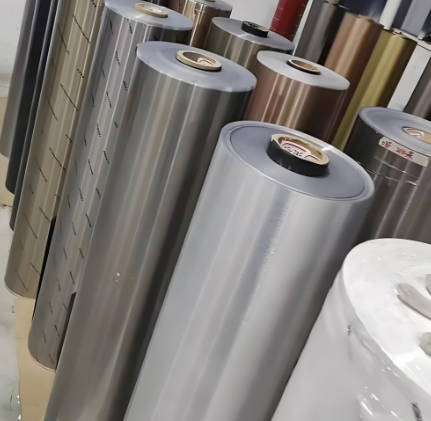
Product Samples We Regularly Subject to PVC Floor Leather Testing
Our tensile testers, abrasion‑resistance rigs, micro‑slip meters, environmental‑emission chambers and spectrophotometers accommodate a vast variety of PVC‑based resilient floor coverings. The following categories represent the most frequently tested items:
- Heterogeneous PVC floor coverings – multi‑layer sheets and tiles with a PVC‑foam or a compact‑PVC backing, a printed decorative film and a transparent PVC or a polyurethane wear‑layer, designed for the commercial, the healthcare and the educational sectors
- Homogeneous PVC floor coverings – single‑layer calendered or pressed tiles and sheets, with the colour and the pattern extending through the entire thickness, specified for the heavy‑traffic and the industrial applications
- Luxury vinyl tiles and planks – rigid‑core, click‑lock and loose‑lay luxury vinyl tiles, often with a stone‑polymer‑composite or a wood‑plastic‑composite core, evaluated for the dimensional stability and the indentation resistance
- PVC safety and anti‑slip flooring – products with an embossed, a silicon‑carbide‑particle‑coated or a polyurethane‑textured surface, intended for the wet‑room, the pool‑side and the commercial‑kitchen applications
- PVC sheet flooring for the transportation sector – fire‑retardant and low‑smoke grades for the rail, the bus and the marine interiors, which must meet the stringent sector‑specific fire‑and‑toxicity standards
- PVC flooring accessories and welded joints – the welding rods, the skirting profiles, the stair‑nosings and the hot‑air‑welded seams that are installed with the sheet flooring, tested for the seam strength and the visual compatibility
Mechanical and Physical Performance – PVC Floor Leather Testing According to EN 660, ASTM D2047 and ISO 24343
- Determination of the abrasion resistance by the Taber‑type or the rolling‑drum method according to EN 660‑1 (Resilient floor coverings – Determination of wear resistance – Part 1: Stuttgart test) and EN 660‑2 (Frick‑Taber test): a specimen is subjected to a defined number of abrasive cycles under a specified load, and the mass loss or the thickness reduction is measured. The result is reported in grams per 100 revolutions or in millimetres, and the product is classified into the wear‑group T, P, M or F according to the EN 685 classification system. This PVC floor leather testing provides the essential durability rating that the architect uses to select the correct wear‑layer thickness for the expected foot‑traffic intensity.
- Measurement of the residual indentation and the recovery after a static or a dynamic load according to EN 433 (Resilient floor coverings – Determination of residual indentation after static loading) and ISO 24343 (Resilient and laminate floor coverings – Determination of indentation and residual indentation): a cylindrical foot is pressed into the flooring surface with a specified force for a defined time, and the depth of the indentation is measured immediately after the removal of the load and after a recovery period. The residual indentation in millimetres is reported, and the product must meet the maximum‑allowable value for its class to prevent the permanent furniture‑leg marks.
- Tear strength and the peel adhesion of the multi‑layer PVC floor coverings according to ASTM D751 (Standard Test Methods for Coated Fabrics) and EN 431 (Resilient floor coverings – Determination of peel resistance): the force required to propagate a tear in the sheet or to separate the wear‑layer from the backing is measured, providing the data that the installer needs to guarantee the integrity of the welded seams and the resistance to the mechanical damage during the handling and the fitting.
- Flexibility and the resistance to the bending at the low temperature according to EN 435 (Resilient floor coverings – Determination of flexibility): a strip of the flooring is bent around a mandrel of a specified diameter at a low temperature, typically -20 °C, and the surface is inspected for the cracking, ensuring that the product can be unrolled and installed in the cold‑weather conditions without the damage.
- Determination of the slip resistance and the dynamic coefficient of friction according to ASTM D2047 (Standard Test Method for Static Coefficient of Friction of Polish‑Coated Flooring Surfaces as Measured by the James Machine) and EN 13893 (Resilient, laminate and textile floor coverings – Measurement of dynamic coefficient of friction on dry floor surfaces): the frictional force between a standardised slider and the flooring surface is measured under the dry, the wet and the oil‑contaminated conditions, and the slip‑resistance classification is reported, providing the safety data for the compliance with the building‑code and the workplace‑safety requirements.
Dimensional Stability, Thermal Performance and Moisture Resistance – PVC Floor Leather Testing According to EN 434, ISO 23999 and ASTM F2199
- Determination of the dimensional stability after the exposure to the elevated temperature according to EN 434 (Resilient floor coverings – Determination of dimensional stability after exposure to heat) and ISO 23999: a precisely measured specimen is heated in an oven at a specified temperature – typically 80 °C – for a defined period, and the percentage change in the length and the width is reported. This PVC floor leather testing verifies that the tile or the sheet will not shrink or expand excessively when installed over a floor‑heating system or in a sun‑exposed area, preventing the gapping and the buckling.
- Resistance to the moisture and the curling after the immersion in the water according to ASTM F2199 (Standard Test Method for Determining the Dimensional Stability of Resilient Floor Tile after Exposure to Heat and Moisture) and the internal procedures: the specimen is immersed in water at a defined temperature, and the change in the dimensions, the edge‑curl and the formation of the blisters are evaluated, ensuring the suitability of the product for the bathroom, the laundry and the basement installations.
- Heat‑resistance and the behaviour under a burning‑cigarette or a hot‑object contact: a lit cigarette or a heated metal cylinder is placed on the flooring surface, and the degree of the scorching, the melting and the colour change is assessed, providing the data that the specifier uses to approve the product for the areas where the accidental cigarette‑burns or the hot‑pot‑spills can occur.
- Assessment of the surface‑roughness and the micro‑texture change after the accelerated‑wear and the maintenance‑cycle simulation: the flooring is subjected to a repeated brushing, a mopping and a detergent‑cleaning sequence, and the retention of the slip resistance and the gloss is measured, predicting the long‑term maintainability of the surface.
Chemical, Stain and Disinfectant Resistance – PVC Floor Leather Testing According to EN 423, ISO 26987 and ASTM F925
- Determination of the resistance to the chemical agents and the staining liquids according to EN 423 (Resilient floor coverings – Determination of the effect of chemicals) and ASTM F925 (Standard Test Method for Resistance to Chemicals of Resilient Flooring): a series of standardised chemical reagents – acids, alkalis, disinfectants, food‑stuffs, urine, iodine and the common cleaning solvents – are applied to the flooring surface under a watch‑glass for a defined contact time, and the visible change, the swelling, the blistering and the colour‑transfer are evaluated and rated. This PVC floor leather testing provides the mandatory stain‑resistance classification for the healthcare, the veterinary and the food‑processing environments.
- Resistance to the hospital disinfectants and the aggressive cleaning protocols: the flooring is repeatedly wiped with the high‑concentration bleach, the hydrogen‑peroxide‑based or the quaternary‑ammonium disinfectants, and the surface degradation, the gloss loss and the colour change are monitored, ensuring the compatibility with the infection‑control practices.
- Colour fastness to the artificial light and the accelerated xenon‑arc weathering according to ISO 105‑B02 (Textiles – Tests for colour fastness – Part B02: Colour fastness to artificial light: Xenon arc fading lamp test) and the internal procedures: the flooring is exposed to a filtered xenon‑arc source, and the colour difference ΔE and the blue‑wool‑scale rating are reported, predicting the resistance to the fading in the day‑lit interiors.
- Determination of the plasticiser‑migration and the staining of the adjacent materials: the PVC flooring is placed in contact with a white‑PVC or a white‑painted reference panel under a load and at an elevated temperature, and the degree of the plasticiser‑migration and the discolouration of the reference panel is measured, ensuring the compatibility of the flooring with the skirting, the sealant and the furniture.
Reaction‑to‑Fire, Smoke Emission and Indoor‑Air Quality – PVC Floor Leather Testing According to EN 13501‑1, ISO 9239‑1 and ISO 16000
- Determination of the reaction‑to‑fire classification according to EN 13501‑1 (Fire classification of construction products and building elements) using the data from the EN ISO 11925‑2 small‑flame test and the EN ISO 9239‑1 radiant‑panel test: the ignitability, the flame‑spread, the critical radiant flux and the smoke‑production are measured, and the product is classified into the Euroclass Bfl‑s1, Cfl‑s1, Dfl‑s1 or Efl, as required by the building regulations for the specific occupancy and the escape‑route application. This PVC floor leather testing is mandatory for the CE marking of the resilient floor coverings under the Construction Products Regulation.
- Measurement of the volatile‑organic‑compound and the formaldehyde emissions according to ISO 16000‑6 (Indoor air – Determination of volatile organic compounds in indoor and test chamber air) and the European flooring‑industry AgBB scheme: a sample of the flooring is placed in a controlled‑emission chamber, and the air is sampled after 3 days and 28 days. The concentrations of the individual VOCs, the total VOC, the formaldehyde and the acetaldehyde are quantified by the GC‑MS and the HPLC, and the results are compared with the strict limit values of the French VOC‑labelling regulation, the German AgBB and the US CDPH Standard Method v1.2, supporting the LEED, the BREEAM and the WELL certification credits.
- Determination of the specific optical density of the smoke and the toxicity of the fire effluents for the transport‑sector floorings according to ASTM E662 (Standard Test Method for Specific Optical Density of Smoke Generated by Solid Materials) and the EN 45545‑2 railway‑fire‑safety requirements: the smoke density and the concentration of the toxic gases – carbon monoxide, hydrogen cyanide, hydrogen chloride and nitrogen oxides – are measured, certifying the PVC flooring for the use in the rail, the bus and the marine interiors.
- Resistance to the burning‑metal‑wheel and the ignition by the radiant heat for the industrial and the cleanroom floorings: the flooring is exposed to a simulated welding‑spatter or a high‑intensity radiant‑heat source, and the time to the ignition and the extent of the flame‑spread are recorded, providing the data for the safety‑floor specification in the manufacturing and the laboratory spaces.
Report Acceptance and Global Regulatory Compliance
All measurements performed within our PVC floor leather testing service are executed under the fully accredited scope of our ISO/IEC 17025 quality management system. Each test report that carries the ILAC mark is therefore automatically recognised by regulatory authorities, notified bodies, customs offices and supply‑chain partners in all major economies. For PVC‑flooring manufacturers, building‑contractors, healthcare‑facility specifiers and construction‑product importers anywhere in the world, the report constitutes legally robust, internationally accepted evidence that the mechanical strength, the slip resistance, the dimensional stability, the chemical and stain resistance, the fire performance and the indoor‑air‑quality compliance of the PVC floor covering have been determined in accordance with the applicable EN, ISO, ASTM and customer‑specified methods. The documentation can be directly used to support CE marking under the Construction Products Regulation, the issue of inspection certificates according to EN 10204 or equivalent national standards, the compilation of the technical file for the type‑examination, and the resolution of commercial and technical disputes concerning the quality, the safety and the long‑term performance of any PVC‑based resilient floor covering.