PTFE Plastic Plate Testing Service – Accredited Mechanical, Thermal and Chemical Evaluation for Global Markets
Our internationally accredited laboratory delivers a specialist PTFE plastic plate experiment service that enables manufacturers of chemical‑processing equipment, aerospace components, electrical insulators, food‑processing machinery and medical devices worldwide to independently verify the mechanical strength, thermal stability, chemical resistance and dielectric properties of their polytetrafluoroethylene sheet materials. Every measurement is performed within the rigorous framework of ISO/IEC 17025, and each report bearing the ILAC mark is unconditionally accepted by regulatory authorities, notified bodies and supply‑chain partners in all major economies. The PTFE plastic plate experiment subjects the material to a comprehensive programme of tensile, compressive, hardness, density, thermal‑expansion, dielectric‑strength and chemical‑immersion tests, providing the legally robust, traceable data that design engineers and quality managers need to certify that the PTFE sheet meets the demanding requirements of ASTM D6456, ISO 13000‑1 and the relevant customer specifications for gaskets, seals, bearings, linings and high‑frequency circuit boards.
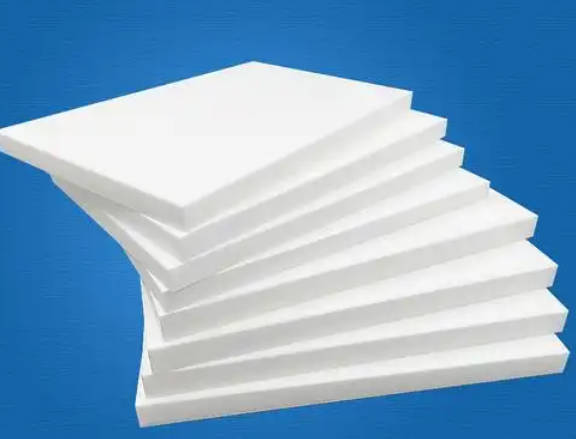
Product Samples We Regularly Subject to PTFE Plastic Plate Experiments
Our specimen‑preparation workshop and calibrated testing machines accommodate PTFE sheets from a few tenths of a millimetre to over 100 mm thick. The following categories represent the most frequently tested items:
- Virgin PTFE sheets and skived films – unfilled, granular‑ or dispersion‑polymerised PTFE in sheet, tape and film form for food‑grade seals, chemical‑pipe linings and release‑liner applications
- Filled PTFE compounds – PTFE loaded with glass fibre, carbon, graphite, bronze, molybdenum disulphide or polyimide to improve the creep resistance, the thermal conductivity or the wear behaviour
- Modified PTFE grades – chemically modified PTFE with a reduced crystallinity and a lower melt viscosity, offering improved weldability and a lower permeation rate
- Expanded PTFE (ePTFE) sheets and membranes – microporous, fibrillated PTFE films for waterproof‑breathable textiles, filtration media and implantable medical barriers
- Skived PTFE sheets and roll‑stock – continuous‑skived films and sheets for capacitor dielectrics, cable‑wrap insulation and adhesive‑tape backings
- Moulded and compression‑moulded PTFE slabs – thick, void‑free blocks and billets intended for machining into valve seats, piston rings and bearing pads
- Bondable and surface‑treated PTFE sheets – sodium‑etched or plasma‑treated PTFE plates prepared for adhesive bonding to metal or composite substrates
Mechanical and Physical Properties – PTFE Plastic Plate Experiment According to ASTM D6456 and ISO 13000‑1
- Tensile strength and elongation at break according to ASTM D4894 (PTFE granular moulding and ram extrusion materials) and ASTM D638: micro‑tensile specimens are die‑cut from the PTFE sheet and loaded to failure at a constant crosshead speed. The tensile yield strength, the ultimate tensile strength and the percentage elongation at break are reported. This PTFE plastic plate experiment verifies that the sheet possesses the minimum mechanical strength required for the intended gasket or diaphragm service.
- Compressive strength and compressive modulus according to ASTM D695 and ISO 604: cylindrical or prismatic specimens are compressed between two hardened anvils, and the compressive stress at a defined deformation – typically 1 %, 10 % or 25 % – is measured and reported, providing the design data for PTFE bearing pads and structural supports.
- Indentation hardness (Shore D and Durometer D) according to ASTM D2240 and ISO 868: the hardness of the PTFE surface is measured with a calibrated durometer, and the result is reported on the Shore D scale, allowing the rapid, non‑destructive verification of the grade and the filler content.
- Density and specific gravity determination according to ASTM D792 (Method A) and ISO 1183‑1: the density of the PTFE sheet is measured by water displacement or by a density‑gradient column, and the value is compared with the specification for the virgin or the filled grade. A density outside the allowed range indicates porosity, incomplete sintering or an incorrect filler loading.
- Flexural modulus and deformation under load according to ASTM D790: a three‑point‑bending test measures the flexural modulus and the strain at a given stress, providing the data that the design engineer needs to calculate the deflection of a PTFE‑lined pipe or a tank under the hydrostatic pressure.
- Coefficient of friction and wear rate against a steel counter‑face according to ASTM D3702 (thrust‑washer wear test) and internal procedures: a PTFE disc is rotated against a steel thrust washer under a defined load and speed, and the dynamic coefficient of friction and the wear volume are reported, supporting the selection of the correct PTFE compound for dry‑running bearings and slide plates.
Thermal Performance and Dimensional Stability – PTFE Plastic Plate Experiment for Elevated‑Temperature Service
- Heat deflection temperature and Vicat softening point according to ASTM D648 and ISO 75: the temperature at which a loaded PTFE specimen deflects by a specified amount or is penetrated by a flat‑ended needle is measured, defining the upper service temperature for the PTFE component under load.
- Coefficient of linear thermal expansion (CLTE) according to ASTM E831 and ISO 11359‑2: the change in the length of the PTFE specimen is recorded by a dilatometer as the temperature is ramped from -50 °C to +250 °C. The CLTE in ppm/K is reported, and the data are used to design the clearance and the preload in PTFE‑sealed flanges and valve seats that experience wide temperature swings.
- Thermal conductivity according to ASTM C177 (guarded‑hot‑plate) or the laser‑flash method (ASTM E1461): the through‑thickness thermal conductivity of the PTFE sheet is measured at several temperatures, providing the data that the heat‑exchanger or the electronics‑cooling‑system designer needs to predict the thermal resistance of a PTFE insulator or a gasket.
- Dimensional stability and shrinkage after thermal cycling: a marked PTFE coupon is cycled several times between -40 °C and +200 °C, and the permanent change in the length and the width is measured. This PTFE plastic plate experiment verifies that the sheet will not warp or shrink excessively during the thermal cycling of the process equipment.
- Thermo‑oxidative stability and weight loss on heating according to ASTM D4591 (for fluoropolymers): the PTFE sample is heated in air at 260 °C for a defined period, and the percentage loss of mass and any discolouration are reported, confirming the purity and the thermal resistance of the polymer.
Chemical Resistance and Fluid Compatibility – PTFE Plastic Plate Experiment for Aggressive Environments
- Chemical‑immersion test according to ASTM D543 (Standard Practices for Evaluating the Resistance of Plastics to Chemical Reagents): the PTFE specimen is completely immersed in a specified chemical – concentrated sulfuric acid, nitric acid, sodium hydroxide, hydrocarbon solvents or a mixed‑acid etchant – at a controlled temperature for 7, 14 or 28 days. The change in the mass, the dimensions, the tensile strength and the hardness is measured, and the specimen is inspected for any blistering, cracking or discolouration. This PTFE plastic plate experiment verifies the near‑universal chemical resistance of the virgin PTFE and identifies any susceptibility of a filled grade to the attack by a specific process fluid.
- Gas and liquid permeation rate according to ASTM D1434 (Determination of the Gas Permeability of Plastic Films and Sheeting) and ISO 15105‑1: the oxygen, nitrogen, water‑vapour or the process‑gas transmission rate through the PTFE sheet is measured by a manometric or an electrolytic method, and the permeability coefficient is reported, providing the data that the lining designer needs to guarantee the containment of the corrosive or the high‑purity fluid.
- Resistance to stress‑cracking and environmental‑stress‑cracking in the presence of a surfactant or a process‑fluid: a bent PTFE strip is immersed in the test medium at an elevated temperature, and the time to the first appearance of cracks or the change in the flexural strength is recorded, qualifying the sheet for the long‑term service in the presence of a detergent, a cooling lubricant or a hydraulic fluid.
- Hydrolytic stability and water‑absorption test according to ISO 62 (Method 1): the PTFE specimen is immersed in distilled water at 23 °C and 100 °C, and the mass gain after 24 hours and after saturation is reported, confirming the negligible water absorption of the pure PTFE.
Electrical Insulation and Dielectric Strength – PTFE Plastic Plate Experiment for Electrical and Electronic Applications
- Dielectric breakdown voltage and dielectric strength according to ASTM D149 and IEC 60243‑1: the PTFE sheet is placed between two electrodes in a transformer‑oil bath, and a 50 Hz AC voltage is increased at a controlled rate until the electrical breakdown occurs. The dielectric strength in kilovolts per millimetre is reported, providing the essential data for the specification of the PTFE as an insulator in high‑voltage connectors, stand‑offs and capacitor films.
- Volume resistivity and surface resistivity according to ASTM D257 and IEC 60093: a DC voltage is applied to the PTFE specimen in a guarded‑electrode fixture, and the steady‑state current is measured. The volume resistivity in ohm‑metres and the surface resistivity in ohms per square are reported, verifying the extremely high electrical insulation resistance of the material.
- Dielectric constant and dissipation factor at frequencies from 1 kHz to 10 GHz according to ASTM D150 and IEC 60250: the capacitance and the loss tangent of the PTFE sheet are measured by an impedance analyser or a resonant‑cavity method, and the relative permittivity εr and the dissipation factor tan δ are reported. This PTFE plastic plate experiment qualifies the sheet for use as a substrate or a radome material in the microwave, the radar and the 5G‑communication frequency bands.
- Arc resistance and tracking resistance according to ASTM D495 and IEC 60112: the time to the formation of a conductive path on the surface of the PTFE under a high‑voltage, low‑current arc is measured, confirming the outstanding arc‑tracking resistance of the PTFE for the switchgear and the circuit‑breaker applications.
Report Acceptance and Global Regulatory Compliance
All measurements performed within our PTFE plastic plate experiment service are executed under the fully accredited scope of our ISO/IEC 17025 quality management system. Each test report that carries the ILAC mark is therefore automatically recognised by regulatory authorities, notified bodies, customs offices and supply‑chain partners in all major economies. For PTFE sheet manufacturers, chemical‑plant equipment producers, aerospace component suppliers and electrical‑insulation designers anywhere in the world, the report constitutes legally robust, internationally accepted evidence that the mechanical, thermal, chemical and electrical properties of the PTFE plate have been determined in accordance with the applicable ASTM, ISO, IEC and customer‑specified methods. The documentation can be directly used to support CE marking, the issue of inspection certificates according to EN 10204 or equivalent national standards, the compilation of technical files for type‑examination, and the resolution of commercial and technical disputes concerning the performance and the quality of any polytetrafluoroethylene sheet material.